Composite Fillings vs Amalgam: What’s the Difference?
Explore composite fillings vs amalgam differences with GB Dentistry in Memorial. Discover safe, tooth-colored composite resin fillings today.
Are whitening strips safe is often the first question people ask before trying to brighten their smile at home. In Memorial and nearby areas like Energy Corridor, Nottingham Forest, and Bunker Hill Village, whitening strips are easy to find and even easier to use. That convenience, however, doesn’t always come with clarity about safety.
Dental whitening has expanded far beyond professional settings, and at-home products now feel routine. Still, teeth are not all the same. What works comfortably for one person in Hunters Creek Village may cause sensitivity or irritation for someone else in Piney Point Village or Hedwig Village. Understanding how whitening strips affect teeth is essential before committing to them.
This section sets the foundation. The next section takes a deeper look at what safety truly means when it comes to whitening strips, and how Dentists at GB Dentistry approach whitening decisions for patients across the 77079 area.
When people ask are whitening strips safe, they are usually thinking about whether the product will damage their teeth. In dentistry, safety is not defined by one factor alone. It involves enamel strength, gum health, nerve response, and how teeth behave weeks or even months after whitening.
Teeth whitening relies on a chemical reaction. Most whitening strips use peroxide-based agents that penetrate the enamel and break apart stains. This process, known as teeth bleaching, can be effective, but it also temporarily alters the tooth surface. That change is where safety considerations begin.
Whitening strips are generally lower risk for individuals with healthy enamel, no active cavities, and minimal gum recession, which is why many people asking are whitening strips safe fall into this category. Used exactly as directed and for limited periods, they may not cause lasting harm. For some patients, whitening strips can be a short-term cosmetic option when expectations are realistic and enamel health is already strong.
That said, tolerance varies. Someone in Memorial with thick enamel and no history of sensitivity may feel little to no discomfort, while another person with early enamel wear may experience sharp sensitivity after only a few applications. This variability is why safety cannot be generalized.
Issues usually appear when whitening strips are overused or combined with other whitening products, which often leads people to question again are whitening strips safe after discomfort begins. Applying strips too frequently, leaving them on longer than recommended, or stacking them with other dental whitening methods increases stress on the enamel and gums, raising the likelihood of sensitivity and irritation.
Because whitening strips are not customized, they often fail to fit evenly. This can allow bleaching gel to seep onto the gums, leading to irritation. Dentists at GB Dentistry frequently see uneven whitening patterns and sensitivity caused by this lack of precision.
A dental whitening dentist approach begins with assessment, not assumptions, especially for patients who are unsure are whitening strips safe for their specific teeth. Tooth color, existing dental work, sensitivity history, and enamel condition are evaluated before any whitening plan is recommended. This level of oversight significantly reduces risk and removes much of the guesswork associated with at-home whitening.
In-office options, including laser teeth whitening, use stronger whitening agents but apply them in a controlled environment. The teeth are protected, exposure time is monitored, and results are more predictable. For many patients in Carverdale and surrounding Memorial neighborhoods, this controlled approach feels safer and more comfortable than repeated use of strips.
The real concern behind are whitening strips safe is not just about today’s results. It’s about whether whitening choices will compromise comfort or tooth health in the future. Short-term brightness should never come at the cost of weakened enamel or chronic sensitivity.
Safe whitening is about balance. Whether someone chooses strips or professional teeth bleaching, understanding the risks, limits, and alternatives helps protect the smile long after the whitening shade settles.

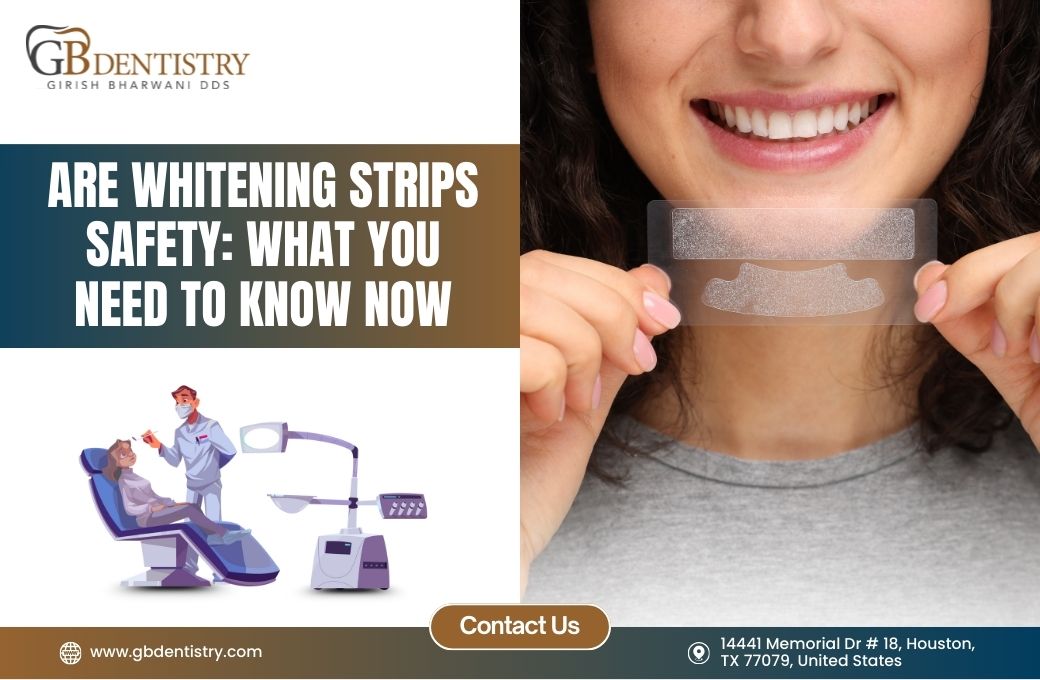
Whitening strips rely on peroxide-based compounds to change tooth color. Most commonly, this is hydrogen peroxide or carbamide peroxide. These ingredients are also used in professional dental whitening, but the concentration and delivery method are very different. In strips, the whitening agent is pre-applied to a thin, flexible layer designed to stick to the teeth.
When people ask are whitening strips safe, the ingredients themselves are often the first concern. On their own, these compounds are widely studied and considered effective for stain removal. The safety question usually comes down to how consistently and evenly those ingredients contact the teeth and gums.
Teeth bleaching is a chemical process, not a scrubbing or polishing action, which is important to understand when evaluating are whitening strips safe. The peroxide penetrates the enamel and releases oxygen molecules. These molecules break down darker stain compounds into smaller, lighter fragments, which makes the teeth appear whiter without physically wearing away enamel.
This process does not remove enamel, but it does temporarily make enamel more porous. That increased porosity is why teeth can feel sensitive during or after whitening. In professionally supervised dental whitening, this reaction is carefully timed and controlled. With strips, the process is less precise, which can influence comfort and results.
Whitening strips are designed to work on natural tooth enamel only. They can lighten stains caused by coffee, tea, wine, or smoking. However, they do not change the color of crowns, veneers, or fillings. This can create uneven color if dental work is present.
A dental whitening dentist approach takes these limitations into account before recommending any whitening method. Without that evaluation, some people are surprised by patchy or inconsistent results and then wonder again are whitening strips safe for their specific situation.
Professional options such as laser teeth whitening use similar whitening agents but apply them under controlled conditions, a key distinction for those comparing options and asking are whitening strips safe by comparison. The teeth are isolated, the gums are protected, and exposure time is adjusted based on response. This allows the whitening reaction to occur more efficiently and evenly, often with fewer side effects.
For patients at GB Dentistry in Memorial and nearby neighborhoods, understanding how whitening strips work compared to in-office treatments helps set realistic expectations and reduces unnecessary risks tied to improper use.
Tooth sensitivity is the most frequently reported side effect of whitening strips. It occurs because the whitening agents temporarily open microscopic pathways in the enamel, allowing stimuli to reach the inner tooth layer more easily. Cold air, cold drinks, or even breathing through the mouth can trigger discomfort.
Sensitivity usually fades once whitening stops, but repeated exposure can make it more intense. This is often the point where patients begin asking are whitening strips safe if they cause ongoing discomfort. The answer depends on how quickly sensitivity resolves and whether enamel health is being compromised.
Another common side effect is gum irritation, and it often plays a role in why people begin asking are whitening strips safe after starting treatment. Whitening strips are designed to fit a wide range of smiles, but mouths are not one-size-fits-all. When the strip overlaps onto the gums, the bleaching agent can irritate soft tissue, causing redness or soreness.
In professional dental whitening, the gums are shielded before whitening begins. Without that protection, strips can expose the gums repeatedly, especially when used too often. Dentists at GB Dentistry often see irritation that stems from poor strip placement rather than the whitening agent itself.
Uneven whitening is less talked about but very common, especially among those who question are whitening strips safe after seeing patchy results. Teeth are not perfectly flat, and strips may not adhere evenly across curves or near the gumline. This can leave lighter and darker patches that become more noticeable after treatment ends.
This effect can be frustrating and is one reason many people explore laser teeth whitening or custom whitening trays after trying strips. Controlled application produces more uniform results and reduces the chance of color irregularities.
Short-term sensitivity or mild irritation can be expected with many whitening methods. However, sharp pain, lingering sensitivity, or visible gum damage are signs to pause whitening altogether. These symptoms may indicate enamel weakness or underlying dental issues.
At that stage, continuing to whiten at home increases risk. A dental whitening dentist evaluation helps determine whether whitening should continue, pause, or switch methods. Understanding these signals helps answer are whitening strips safe not just in theory, but in real-life use.
Whitening should enhance confidence, not create ongoing discomfort, which is why side effects matter when deciding are whitening strips safe to continue using. Side effects are not always dangerous, but they are informative. They show how the teeth and gums are responding to teeth bleaching and whether adjustments are needed to protect long-term oral health.
For patients in Memorial, Energy Corridor, and surrounding areas, recognizing these side effects early allows for smarter decisions. Whether whitening continues at home or transitions into professional care, comfort and tooth health should always guide the process.
People with enamel wear are often the first to question are whitening strips safe for them personally. Enamel that has thinned due to grinding, acidic diets, or previous dental work is more vulnerable to whitening agents. When teeth bleaching agents penetrate weakened enamel, sensitivity can feel sharper and last longer.
In Memorial and surrounding areas like Nottingham Forest and Piney Point Village, Dentists at GB Dentistry often see patients who already experience cold sensitivity before whitening. For these individuals, whitening strips may intensify discomfort rather than deliver a comfortable cosmetic improvement.
Gum recession exposes the root surface of the tooth, which is not protected by enamel. Whitening strips are designed for enamel, not roots. When bleaching gel reaches these exposed areas, irritation and pain are more likely.
This situation often leads patients to reconsider are whitening strips safe when gum health is already compromised. In a dental whitening dentist setting, whitening plans can be adjusted or postponed until the gums are stable, reducing unnecessary risk.
Teeth with untreated cavities or microcracks allow whitening agents to penetrate deeper than intended, a situation that often raises concerns about are whitening strips safe in compromised teeth. This can irritate the inner tooth structure and cause lingering pain. Whitening strips do not distinguish between healthy enamel and compromised areas, which increases risk when underlying issues are present.
Professional dental whitening begins with identifying and addressing these concerns first. Without that step, whitening may worsen existing problems, making results uncomfortable and unpredictable.
Crowns, veneers, and fillings do not respond to whitening strips. As natural teeth lighten, restorations remain the same color, creating visible contrast. This uneven appearance often surprises patients after treatment.
This is another moment when people revisit are whitening strips safe, not because of pain, but because of aesthetics. A comprehensive whitening approach considers how all visible teeth will look together after whitening.
Not all whitening strips are created equal, and product differences matter when evaluating are whitening strips safe for home use. Concentration levels, adhesive quality, and application time vary. Selecting a product with moderate strength and clear instructions helps reduce risk, as more is not always better when it comes to whitening.
People often assume faster results mean better results, but aggressive whitening increases sensitivity. Understanding realistic outcomes helps users decide if whitening strips fit their goals or if professional dental whitening may be a better option.
Using whitening strips exactly as directed is essential. Extending wear time or applying strips more frequently than recommended stresses the enamel. Teeth need time to rehydrate and recover between applications.
Overuse is one of the main reasons patients later ask are whitening strips safe after experiencing discomfort. Spacing dental treatments appropriately helps maintain comfort and reduces cumulative irritation.
Gentle preparation matters. Whitening immediately after aggressive brushing can make teeth more sensitive. Allowing time between brushing and whitening helps minimize irritation. Keeping strips aligned to avoid gum overlap also reduces the chance of soreness.
In professional settings, gums are protected before whitening begins. At home, careful placement is the only line of defense, which requires patience and attention.
Mild sensitivity can be expected, but pain that lingers or worsens is a sign to stop. Whitening should never feel unbearable. When discomfort persists, continuing to bleach teeth can cause more harm than benefit.
This is often when patients explore alternatives like custom trays or laser teeth whitening at GB Dentistry. A dental whitening dentist evaluation can determine whether whitening should continue, pause, or shift to a different method altogether.
Whitening works best when it is part of a broader oral care plan. Limiting stain-causing foods, maintaining clean teeth, and choosing whitening methods that match enamel health all contribute to better results.
For many patients across Memorial, Energy Corridor, and the 77079 area, safety comes from balance. Understanding limits, listening to discomfort signals, and knowing when whitening strips are no longer the right choice helps answer are whitening strips safe in a practical, personalized way.
Whitening strips are often chosen because they are accessible and easy to use, but they are only one part of the broader dental whitening spectrum. They deliver a fixed amount of whitening agent in a generalized way, without accounting for individual enamel thickness, sensitivity levels, or existing dental work.
Professional dental whitening takes a more tailored approach. Dentists at GB Dentistry evaluate tooth color, enamel condition, and overall oral health before recommending a method. This personalization often leads to more predictable results and fewer side effects, especially for patients who have already questioned are whitening strips safe for long-term use.
In-office teeth bleaching uses higher-strength whitening agents than over-the-counter strips, yet it is often more comfortable. This is because the whitening process is monitored, and the teeth and gums are protected throughout treatment. Exposure time is carefully managed to reduce sensitivity.
Patients in Memorial, Bunker Hill Village, and Hunters Creek Village often notice that professionally supervised whitening produces more even results in a shorter timeframe. The controlled environment reduces many of the risks associated with repeated strip use at home.
Laser teeth whitening is a more advanced option within professional whitening. It uses a concentrated whitening gel that is activated to accelerate the bleaching process. Despite its strength, this method is designed to minimize enamel stress through precision and isolation.
For individuals who have tried strips and still wonder are whitening strips safe compared to other options, laser teeth whitening often feels like a more confident solution. It is especially appealing for those seeking faster, noticeable results for events or professional milestones.
Busy schedules, social habits, and cosmetic goals all influence whitening choices. Some people prefer gradual whitening at home, while others want immediate improvement under professional care. The key difference lies in guidance.
A dental whitening dentist approach helps align whitening methods with real-life needs. Instead of trial and error, patients receive recommendations based on what will be effective and safe for their specific smile.
Read Also: Benefits of Professional Dental Bleaching Over Kits
Successful whitening begins before any bleaching agent is applied. Clean teeth, healthy gums, and stable enamel create the best environment for whitening. Without this foundation, even the most advanced whitening method can cause discomfort or uneven results.
This is often where people reassess are whitening strips safe when used without preparation. Whitening works best when it follows good oral care and professional evaluation, not when it replaces them.
Not all stains respond the same way to whitening. Surface stains from coffee or tea behave differently than deeper discoloration. Lifestyle habits also play a role, as frequent exposure to staining foods can shorten whitening longevity.
Dentists at GB Dentistry help patients in Memorial and nearby areas choose whitening options that match both tooth characteristics and daily routines. This approach reduces the urge to overuse products and protects enamel over time.
Whitening does not need to be constant to be effective. Once a desired shade is achieved, maintenance becomes the priority. Overusing whitening strips to maintain brightness can gradually increase sensitivity.
Professional dental whitening plans often include maintenance strategies that preserve results without repeated bleaching. This balance helps answer are whitening strips safe when used sparingly rather than continuously.
The ultimate goal of whitening is confidence, not just color change. A plan that respects enamel health, minimizes sensitivity, and delivers consistent results is more satisfying in the long run.
For many patients across Energy Corridor, Piney Point Village, Hedwig Village, and Carverdale, whitening success comes from choosing methods that feel comfortable and sustainable. Whether whitening begins at home or in-office, safety and strategy should guide every step of the process.
At GB Dentistry, Dr. Girish Bharwani often reminds patients that whitening should never feel rushed or risky. Many people come in asking are whitening strips safe because they’ve already experienced sensitivity or uneven results. That concern is valid. Teeth are living structures, and every whitening method interacts with them differently.
Dental whitening works best when it respects enamel health first. Whitening strips may seem simple, but simplicity does not always equal suitability. Some smiles respond well to them, while others require a more controlled approach. That difference is why careful evaluation matters before continuing or escalating any whitening routine.
Dr. Bharwani believes whitening should fit the patient, not the other way around. Teeth bleaching and laser teeth whitening are tools, not shortcuts. When used thoughtfully, they can brighten smiles comfortably and predictably. When used without guidance, they can lead to unnecessary discomfort.
For patients in Memorial, Energy Corridor, and surrounding communities, the goal is long-term confidence. Whether whitening begins at home or in the office, Dentists at GB Dentistry focus on helping patients choose options that feel safe, comfortable, and sustainable for their unique smiles.
Are whitening strips safe for enamel is one of the most searched questions related to dental whitening. Whitening strips do not physically remove enamel, but they temporarily change its structure by increasing porosity during the teeth bleaching process. For healthy enamel, this change is usually reversible when strips are used as directed. However, enamel that is already thin or worn may react more strongly, leading to sensitivity or discomfort. This is why a dental whitening dentist evaluation can be helpful before repeated use. At GB Dentistry, patients are often advised to consider enamel condition first, especially if they live with ongoing sensitivity or grind their teeth at night.
Using whitening strips every day is rarely recommended, even if the packaging suggests short-term daily use. The reason people ask are whitening strips safe with daily application is because repeated exposure can overstress enamel and gums. Teeth need time to rehydrate and recover between whitening sessions. Daily use increases the risk of sensitivity and irritation, especially without professional oversight. Dentists at GB Dentistry often recommend spacing treatments or exploring alternatives like professional dental whitening for safer, more consistent results.
Permanent damage from whitening strips is uncommon, but misuse can lead to lasting sensitivity or enamel weakness. Teeth bleaching agents are powerful, and overuse can push teeth beyond their comfort threshold. When people experience lingering pain, they often worry are whitening strips safe long term. The answer depends on how they are used and the condition of the teeth beforehand. A dental whitening dentist can identify early warning signs and suggest safer options, including laser teeth whitening when appropriate.
Sensitivity happens because whitening agents temporarily open pathways in the enamel, allowing stimuli to reach the inner tooth layer more easily. This is a normal reaction to teeth bleaching, but intensity varies. If sensitivity is mild and fades quickly, it is usually not harmful. Persistent or sharp pain, however, may signal enamel stress. Patients at GB Dentistry are often surprised to learn that professional dental whitening can feel more comfortable than strips because exposure is controlled and customized.
Yes, gum irritation is a common side effect when strips overlap onto soft tissue. Whitening gels are formulated for enamel, not gums. When irritation occurs, people often question are whitening strips safe for regular use. Proper placement can reduce risk, but it cannot eliminate it entirely. In professional settings, gums are protected before whitening begins. This is one reason many patients transition from strips to supervised whitening methods for better comfort.
Tooth whitening only affect natural tooth enamel. Crowns, veneers, and fillings do not change color, which can result in uneven appearance after whitening. This cosmetic mismatch often leads patients to reconsider are whitening strips safe for their overall smile. A dental whitening dentist approach considers existing dental work before whitening begins. At GB Dentistry, this evaluation helps ensure results look balanced and natural.
It may seem logical that lower-strength products are safer, but that is not always the case. Laser teeth whitening uses stronger agents, yet it is carefully controlled and monitored. Whitening strips rely on repeated exposure without customization. When people ask are whitening strips safe compared to professional options, the answer often lies in control rather than strength. Supervised dental whitening reduces guesswork and limits unnecessary exposure.
Some people view strips as a first step, while others skip them entirely. The question are whitening strips safe enough to try first depends on enamel health, sensitivity history, and expectations. For some, strips are tolerated well. For others, they create problems that could have been avoided. Dentists at GB Dentistry help patients decide which path makes sense based on comfort, goals, and long-term oral health.