A Complete Guide to Preventive Dental Care for Healthy Teeth
Explore a complete guide to preventive dental care with GB Dentistry in Memorial. Learn expert tips for healthy teeth, sealants, and teeth grinding prevention.
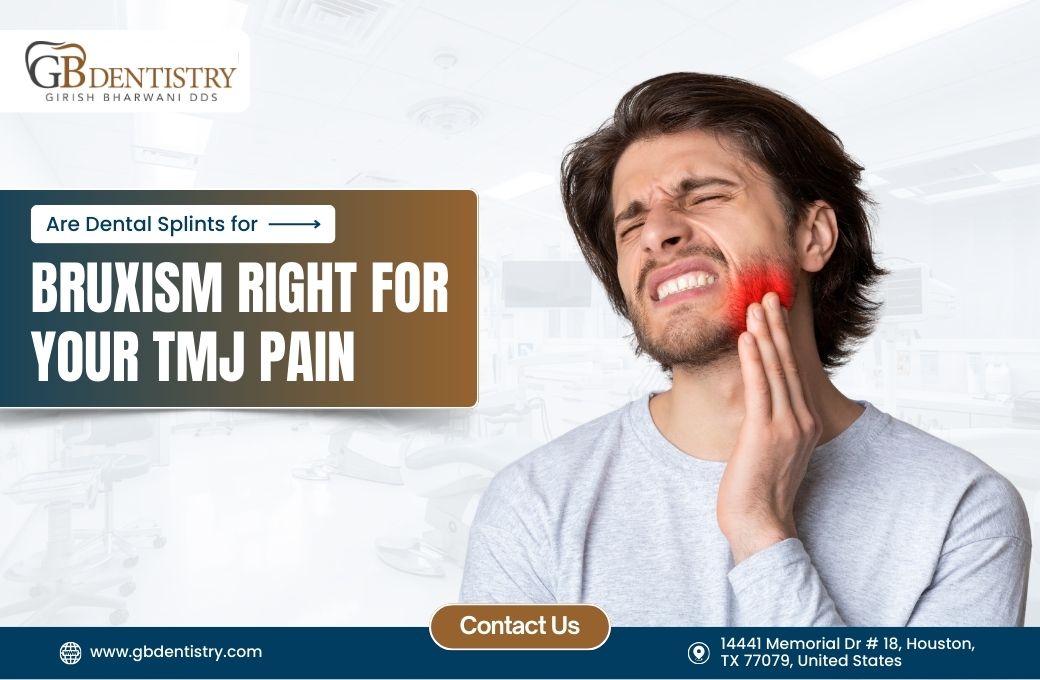
Dental splints for bruxism are often the first solution people explore when jaw pain, morning headaches, or persistent clenching begins affecting daily life. In Memorial and nearby areas like Nottingham Forest, Energy Corridor, Bunker Hill Village, Hunters Creek Village, Piney Point Village, Hedwig Village, and Carverdale, these symptoms are extremely common.
Many individuals don’t initially realize that bruxism and TMJ irritation often occur together, creating a cycle of muscle strain and joint stress. Because every patient’s pattern of clenching or grinding is different, many residents in the 77079 area seek clarity from Dr. Bharwani at GB Dentistry before choosing a treatment.
This guide will help you understand whether splint therapy is the right approach for your TMJ discomfort and how personalized care can make all the difference.
Dental splints for bruxism are custom-made appliances designed to protect the teeth and support the jaw joints. While they may resemble simple mouthguards, the purpose behind them is far more sophisticated. The intention is not only to shield the teeth but also to interrupt harmful force patterns that irritate the jaw.
Clenching and grinding create intense pressure in the jaw muscles and TMJ. These forces are transferred directly into the joint, which can lead to inflammation and discomfort. By altering how the teeth come together, dental splints for bruxism help distribute pressure more evenly. This reduces the strain placed on the jaw joints during sleep.
When the pressure becomes more balanced, patients often notice less stiffness and more ease in opening and closing the mouth. Over time, this relief helps break the cycle of joint irritation.
Bruxism often leads to flattened teeth, small fractures, or worn enamel. A splint forms a physical barrier that absorbs grinding forces, sparing the natural teeth. Instead of enamel grinding against enamel, dental splints for bruxism take the impact and protect the smile from long-term damage.
This protective effect is especially valuable for patients who have crowns, fillings, or veneers. Preserving these restorations prevents additional dental work and helps maintain long-term oral health.
Jaw muscles such as the masseters and temporalis can become overactive due to continuous clenching. This tension contributes to morning headaches, facial soreness, and even tenderness around the temples. By reducing the intensity of clenching, dental splints for bruxism help calm these overworked muscles.
Splints reduce the efficiency of the clenching motion, which helps the muscles relax. With less muscle hyperactivity at night, patients frequently report improved comfort during the day and fewer headaches in the morning.
Splint therapy produces the best results when bruxism is a significant contributor to TMJ discomfort. Not every TMJ condition originates from grinding. For example, joint degeneration, arthritis, or trauma may require different management, even when dental splints for bruxism offer partial relief.
This is why an evaluation with Dr. Bharwani is important. Identifying the origin of your discomfort ensures that splint therapy is used only when it is genuinely beneficial.
There are cases where splints reduce symptoms but do not resolve them entirely. In these situations, complementary therapies can provide additional relief. These may include targeted exercises, posture improvements, or adjustments to daily habits that work alongside dental splints for bruxism.
At GB Dentistry, the goal is always long-term comfort, not just minimizing symptoms. A well-fitted splint may be one key part of a broader personalized plan.
Many patients in the Memorial area experience jaw pain without realizing whether it is caused by grinding, joint inflammation, or both. This uncertainty is common because bruxism and TMJ irritation often overlap. Understanding the difference is essential before choosing treatment such as dental splints for bruxism.
Bruxism involves clenching or grinding, usually during sleep. Most people don’t realize they grind until symptoms begin affecting everyday life.
One of the most common red flags is waking up with tightness or stiffness in the jaw muscles. These muscles work continuously during grinding episodes, leaving them fatigued by morning.
Many patients notice wear patterns they cannot explain. Shortened edges, chips, or sensitivity may indicate constant grinding pressure through the night. In these cases, dental splints for bruxism can help protect the enamel from further damage.
Clenching strains not only the teeth but the surrounding muscles, especially the ones near the temples. This can cause tension headaches that feel like a dull, persistent ache.
TMJ irritation involves the joints that help your jaw open and close. When these joints become strained, the symptoms are different from pure bruxism.
A clicking jaw suggests that the joint is not moving smoothly along its normal path. This may or may not be painful, but it signals stress inside the joint. When paired with dental splints for bruxism, monitoring these sounds helps guide effective TMJ care.
Some patients describe a tight or restricted feeling when eating or speaking. This limitation often shows that inflammation is present.
The TMJ sits close to the ear canal. When the joint becomes irritated, the sensation often feels like ear blockage without any infection.
Many patients assume grinding is the primary issue when the TMJ itself may be the source of discomfort. Others believe they have a joint problem even when clenching habits are to blame. Dental splints for bruxism can help only when the true cause is identified correctly.
This is why an evaluation with Dr. Bharwani becomes important. When residents search for a bruxism dentist or a bruxism dentist near you in the Memorial region, they often need someone who can analyze bite motion, muscle behavior, and joint stability. A proper diagnosis leads to a treatment plan that truly fits the patient rather than relying on guesswork.
Not all splints serve the same purpose. While over-the-counter guards may look similar, custom devices are designed with far more precision. Different types of splints support different goals, whether that means protecting the teeth, easing muscle strain, or helping stabilize the TMJ. Understanding the options ensures you receive the appliance that matches your symptoms.
Stabilization splints cover the entire upper or lower arch. They provide a smooth, even surface that helps prevent strong clenching forces during sleep. Because these splints create balanced contact, dental splints for bruxism often reduce stress on the TMJ and help manage muscle tightness.
Patients who struggle with nighttime grinding often respond well to this type of splint. By limiting the ability to clench with full force, the muscles begin to relax, and morning discomfort lessens.
These splints guide the lower jaw slightly forward. This position can relieve pressure on specific parts of the TMJ, especially when the joint disc is slipping or not aligning properly. When appropriate, dental splints for bruxism in this design can reduce joint strain significantly.
Patients who experience clicking or popping may benefit from this design. However, repositioning splints must be crafted carefully to avoid creating unwanted bite changes. This is why guidance from an experienced provider such as Dr. Bharwani is important.
Partial-coverage devices are designed for very specific cases. They may cover only a portion of the teeth to influence muscle activity in a targeted way. These splints are often used temporarily or as part of a more complex TMJ treatment plan that may also include dental splints for bruxism.
They require close monitoring to ensure the bite remains stable. When used correctly, they can ease symptoms that more traditional splints may not address as effectively.
Soft splints are flexible and cushionlike, while hard splints are rigid and shaped to create stable contact. Soft options can feel more comfortable at first, but they sometimes encourage more clenching because they act like a chewable surface. Hard splints offer more control over bite forces and jaw movement, making them ideal for long-term TMJ management.
Store-bought guards cannot match the precision of a custom device. A personalized splint made for you at GB Dentistry is shaped to your bite, your jaw position, and your grinding patterns. This is especially important when the goal is not just protecting teeth but relieving TMJ discomfort, which dental splints for bruxism are specifically designed to support.
Dr. Bharwani evaluates how your jaw moves, how your teeth meet, and where the tension originates before recommending a splint. This ensures that the device supports your long-term comfort rather than simply masking symptoms.

Residents throughout Memorial and nearby areas often seek treatment because jaw discomfort, clenching, and disrupted sleep begin affecting daily routines. Many have already tried home remedies or over-the-counter guards without lasting improvement.
This is where personalized evaluation becomes important, especially for anyone considering dental splints for bruxism as part of a long-term plan.
The first step is understanding your symptoms and patterns. Some patients clench during stressful moments, while others grind heavily during sleep without realizing it. TMJ discomfort may appear unrelated at first, such as ear pressure or headaches, which is why evaluating the need for dental splints for bruxism becomes an essential part of the process.
During your visit, Dr. Bharwani listens closely to how long the symptoms have been occurring, when they feel worse, and what daily activities trigger them.
A careful review of the bite reveals signs that grinding has been active for months or years. Flattened teeth, chipped enamel, or muscle tenderness can indicate long-standing bruxism. Dr. Bharwani also evaluates jaw movement, listening for clicking or popping and checking for restricted opening, all of which help determine whether dental splints for bruxism are appropriate.
This analysis helps determine whether the discomfort is muscle-driven, joint-driven, or a combination of both.
Jaw muscles often reveal what the teeth cannot. Tightness, tenderness, or knots in specific muscles may show the intensity of clenching episodes. These findings guide the decision on whether dental splints for bruxism can help ease muscle strain and stabilize the TMJ.
Once the cause of discomfort is clear, the next step involves building a plan that fits your needs. Many patients receive custom splints because they protect the teeth and reduce clenching, but additional therapy may be recommended depending on your symptoms. Dental splints for bruxism often become the foundation of this plan.
This individualized approach is one reason so many residents searching for a bruxism dentist or a bruxism dentist near you in the Memorial area choose GB Dentistry for long-term care.
Over-the-counter guards often shift or compress during sleep. They are not designed to influence muscle activity or joint stability. A custom appliance made at GB Dentistry fits securely and is crafted to align with your bite, making it more effective for reducing strain and encouraging healing, especially when used as dental splints for bruxism.
The correct device, paired with the right monitoring, ensures that your symptoms are not only reduced but prevented from worsening.
Once your custom splint is ready, the adjustment period begins. Many people wonder how long it will take to notice relief and what the first days will feel like. Understanding this transition helps you use the device correctly and confidently.
Most patients adjust within a few days. The splint may initially feel foreign, but this sensation fades as your jaw becomes familiar with the new position. Mild pressure is normal, especially if the muscles have been strained for a long time.
This early stage is important because the body is learning to relax instead of clench, and the splint guides this process.
Some patients notice that their jaw feels looser in the morning. Others report fewer headaches or less tenderness in the temples. These are signs that the muscles are not contracting as forcefully overnight because dental splints for bruxism have reduced the intensity of clenching.
The splint also protects the teeth from grinding damage during this period, giving the enamel a break from constant pressure.
A splint should never cause sharp pain or new discomfort. If it feels uneven or if your bite changes noticeably, contacting GB Dentistry allows Dr. Bharwani to adjust the device.
Minor refinements are normal, especially in the first few weeks, and they often enhance comfort and effectiveness.
Consistency determines success. Wearing the splint nightly allows the jaw muscles to remain stable and retrains the clenching pattern. Missing nights can interrupt progress and slow down improvement, especially when relying on dental splints for bruxism for long-term protection.
Patients seeking steady relief often notice better results when they commit to a routine.
A custom splint requires simple care. Rinsing it after use, keeping it in a protective case, and bringing it to appointments ensures it remains in good condition. These steps help maintain hygiene and protect the shape of the appliance.
A well-cared-for splint can last years, especially when monitored during follow-ups at GB Dentistry.
As weeks pass, subtle improvements usually become more noticeable. Reduced morning tension, easier jaw movement, and fewer episodes of nighttime grinding show that the splint is performing its role.
Together with professional guidance from a bruxism dentist or a bruxism dentist near you in the Memorial region, these changes help protect the TMJ and maintain long-term oral comfort.
While dental splints for bruxism are highly effective for many patients, there are situations where splint therapy alone may not fully resolve TMJ discomfort. This happens because jaw pain can come from multiple sources, and not all of them respond the same way to splints. Understanding where splints help and where additional treatment may be needed ensures that your care plan remains complete and effective.
Some patients experience improvements in morning tension or tooth protection but still notice stiffness in the jaw joint. This often occurs when inflammation inside the TMJ has progressed beyond what splint therapy can handle alone. Grinding may initiate the problem, but the joint tissues may require additional care before symptoms calm down.
In some cases, the jaw muscles have adapted to years of clenching. This means that even though the splint reduces grinding, the muscles remain tight. If these muscles are conditioned to stay contracted, tension may persist despite nightly splint use.
This is why ongoing evaluation by Dr. Bharwani is important, especially for patients searching for a bruxism dentist or a bruxism dentist near you who can provide long-term, tailored support.
There are treatments that work well alongside dental splints for bruxism. These options help address the parts of the jaw that the splint cannot reach.
Guided exercises can improve range of motion and strengthen the muscles that support the TMJ. These routines help the jaw relax naturally instead of relying on splint therapy alone.
Some patients benefit from muscle release techniques, posture adjustments, or mobility work. When the neck and shoulders are tense, the jaw often becomes strained as well.
Many clenching habits occur during the day. Patients may tense their jaw when stressed, working, or concentrating. Identifying these patterns helps reduce strain, especially when combined with splint therapy such as dental splints for bruxism.
If the bite is uneven or if tooth wear has shifted how the teeth meet, small adjustments may improve comfort. At GB Dentistry, these refinements are always approached conservatively and only when beneficial.
If you notice increasing pain, locking, or new bite changes, contacting GB Dentistry promptly is essential. Early intervention prevents minor issues from turning into long-term joint complications. Dr. Bharwani carefully evaluates whether your symptoms are still aligned with expected progress or whether your treatment plan should be expanded.
Read Also: Jaw Pain or Headaches? Here’s What a TMJ Consultation Can Reveal
Finding the right provider for TMJ and grinding-related discomfort is important because follow-up care plays a major role in long-term relief. For many residents in Memorial, Nottingham Forest, Energy Corridor, Bunker Hill Village, Hunters Creek Village, Piney Point Village, Hedwig Village, and Carverdale, the search often begins by looking for a bruxism dentist or a bruxism dentist near you who understands the connection between TMJ pain and grinding habits.
TMJ discomfort and bruxism are not conditions that resolve overnight. They require monitoring, adjustments, and periodic evaluations. When a provider is close to home, patients are more likely to maintain follow-ups and stay on track with their treatment.
Because jaw tension can shift subtly over time, having a professional nearby allows for timely refinements to dental splints for bruxism, ensuring that the device continues to support proper jaw function.
Patients throughout the 77079 area value personalized care that focuses on identifying the exact cause of their discomfort rather than applying a one-size-fits-all approach. At GB Dentistry, the emphasis is always on understanding why the jaw is strained, how the teeth meet, and what the muscles are doing during clenching episodes.
This detailed approach ensures that treatment not only reduces symptoms but also protects long-term jaw health.
The Memorial region is large and diverse, and residents from nearby communities often seek treatment when jaw discomfort begins interfering with daily life. Whether someone lives near Nottingham Forest or closer to the Energy Corridor, or in areas like Bunker Hill Village, Hunters Creek Village, Piney Point Village, Hedwig Village, or Carverdale, GB Dentistry provides access to TMJ and bruxism-focused care designed around their needs.
Easy scheduling, thoughtful follow-up visits, and careful monitoring play a major role in helping patients stay consistent with their treatment plans. This convenience is especially meaningful for anyone using dental splints for bruxism because adjustments and fine-tuning are part of achieving long-term relief.
Patients often find that local care helps them maintain progress more effectively than relying on distant clinics or inconsistent treatment sources.
The pathway to relief looks different for every patient. Having a provider who understands TMJ mechanics, bite behavior, and grinding patterns ensures that your plan remains aligned with your symptoms. This is why so many individuals searching for a bruxism dentist or a bruxism dentist near you trust GB Dentistry to guide them through this process.
Caring for patients with TMJ discomfort and grinding habits has shown me how deeply these problems can affect everyday life. Many individuals from Memorial and surrounding communities arrive unsure why their jaw hurts or why mornings feel so tense.
What they often discover is that small patterns—like nighttime clenching or daytime muscle tightening—have slowly overloaded the jaw joints. This is why identifying these habits early and choosing effective solutions such as dental splints for bruxism can make a meaningful difference.
As treatment progresses, I see patients experience relief not only in their jaw but in their overall comfort. They sleep better. They wake with fewer headaches. They feel more at ease during conversations or meals. These improvements are reminders that TMJ discomfort does not have to be a permanent part of someone’s life. With the right guidance and the correct device, it becomes possible to restore balance to the jaw and protect the teeth from further wear.
If you live in Memorial or nearby communities like Nottingham Forest, Energy Corridor, Bunker Hill Village, Hunters Creek Village, Piney Point Village, Hedwig Village, or Carverdale, I encourage you to explore your options. Whether your discomfort comes from grinding, joint tension, or both, seeking help from a dedicated provider is the first step toward understanding your condition fully.
Many people search for a bruxism dentist or a bruxism dentist near you because they want answers that are specific to their symptoms, not generic advice. My goal is to offer clarity, solutions, and a personalized plan that supports long-term jaw health.
If you have been wondering whether splint therapy might help you, I invite you to take that next step. Together, we can evaluate your jaw movement, assess your bite, and determine whether splints or other therapies will provide the relief you deserve.
Dental splints for bruxism are often effective for easing TMJ discomfort because they reduce grinding forces and help stabilize jaw movement. By guiding how the teeth contact each other, the splint minimizes muscle strain that contributes to joint irritation. Many patients in Memorial and surrounding communities experience noticeable improvement within weeks, especially when the splint is custom-made. Working with a bruxism dentist ensures the device fits correctly and supports long-term jaw health.
Store-bought guards offer general cushioning, but they do not influence how the jaw functions during sleep. Dental splints for bruxism are custom-made to support proper alignment and reduce harmful forces that aggravate the TMJ. Because they match your exact bite, they stay secure and guide the jaw into a stable position. Over-the-counter versions can shift or encourage more clenching. A bruxism dentist near you can evaluate your grinding patterns and recommend the right device for your needs.
For many patients, early improvements appear within the first few weeks. The jaw muscles begin to relax, morning headaches lessen, and grinding episodes gradually decrease. However, full relief can take longer when the TMJ has been irritated for months or years. The consistency of nightly use plays a major role in how quickly results appear. Regular follow-ups with a bruxism dentist help ensure the splint continues performing as intended and remains aligned with your bite.
When properly designed and monitored, dental splints for bruxism should not cause permanent bite changes. Temporary adjustments in how the teeth feel in the morning are normal, but they typically fade within minutes. Issues arise only when the device is poorly fitted or not customized to the patient’s jaw. This is why working closely with a bruxism dentist or a bruxism dentist near you is important. They ensure the splint protects your teeth and supports your TMJ without creating new problems.
Over-the-counter guards may offer temporary cushioning, but they are not designed to address TMJ strain or specific grinding patterns. Dental splints for bruxism made at GB Dentistry provide precise control over how the jaw rests and how forces distribute during sleep. This is essential for patients with significant grinding, facial tension, or clicking joints. Custom devices also last longer and remain more stable, making them a better long-term solution for protecting the jaw and teeth.
Costs vary depending on the type of splint and the complexity of your condition. Custom devices require detailed measurements, impressions, and adjustments over time. In the Memorial and 77079 region, patients typically find that custom splints offer better value because they provide structural protection and consistent relief. GB Dentistry ensures every device is tailored to your jaw, making it more effective than generic alternatives. A consultation with a bruxism dentist provides a clear cost breakdown.
If grinding habits continue without the protection of a splint, symptoms often return. Many patients experience tightness, headaches, or tooth sensitivity when they stop using the device too early. Dental splints for bruxism work by retraining the muscles and protecting the joint, but stopping prematurely may undo progress. Regular follow-ups with a bruxism dentist ensure you know when it is safe to reduce use or transition into a different phase of treatment.
If you experience jaw pain, morning tension, headaches, worn teeth, clicking, or facial soreness, it may be time to consult a professional. Many people in Memorial and surrounding areas wait too long, hoping symptoms will disappear. A bruxism dentist or a bruxism dentist near you can evaluate whether dental splints for bruxism or other therapies will relieve your discomfort. Early assessment often prevents more complex issues and helps stabilize the jaw before long-term damage occurs.