Root Canal vs Extraction: Which Is Better for Your Tooth?
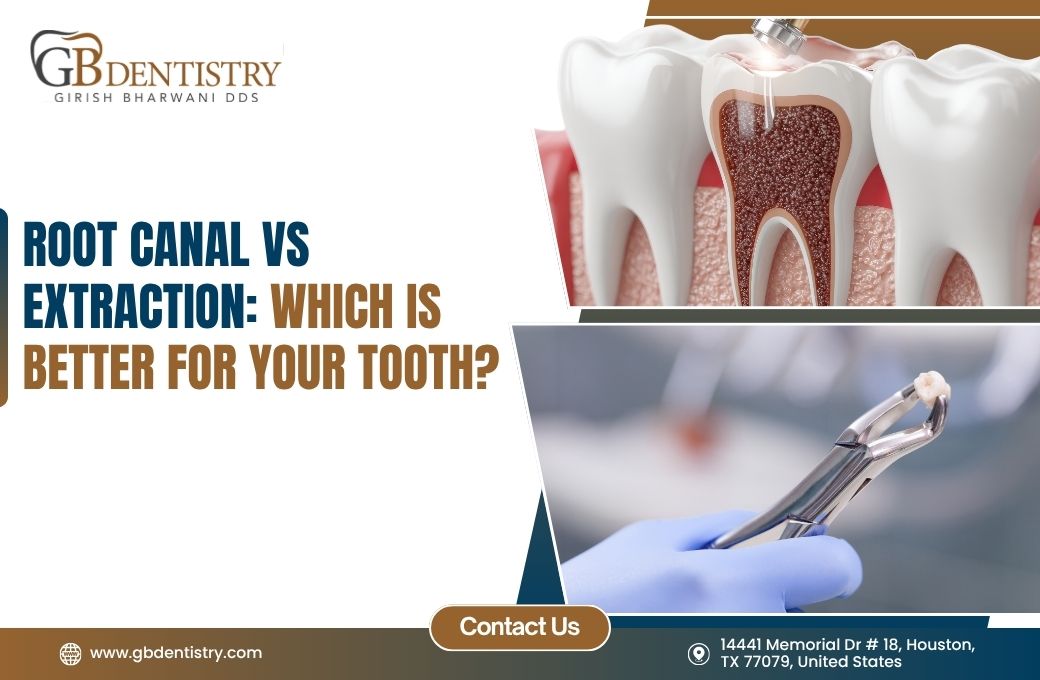
Root canal vs extraction explained by GB Dentistry. Learn about infection, recovery, retreatment, driving, and choosing care in Memorial, Texas, with clarity.
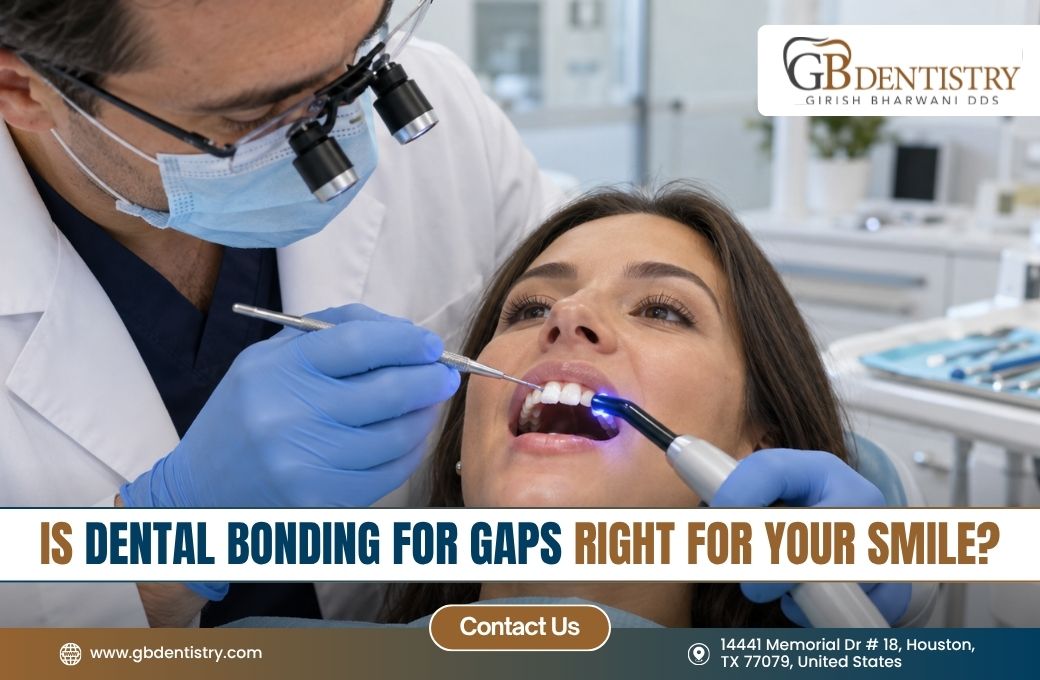
Dental bonding for gaps can be a practical way to make a small space between teeth look less noticeable without removing much natural tooth structure.
If you are considering bonding, the important question is not simply whether the material can close a gap, but whether it fits your bite, tooth shape, oral health, and expectations. This detail matters when considering dental bonding for gaps.
At GB Dentistry, we help patients in Memorial, Texas, and nearby communities compare cosmetic options with those factors in mind.
This guide explains how bonding works, when it may be appropriate, what dental bonding before and after changes can realistically look like, how cost is determined, and when another approach may make more sense.
Dental bonding uses a tooth-colored resin that is carefully placed, shaped, and hardened on the tooth. For a small or moderate space between teeth, Dr. Bharwani may use the material to build up the sides of the teeth so they appear closer together.
The resin is matched as closely as practical to the surrounding enamel and polished for a natural-looking surface. Planning dental bonding for gaps should account for this factor.
Bonding is often appealing because it can be conservative and relatively straightforward. However, it is not the right answer for every gap.
The size and location of the space, the proportions of the teeth, the way the upper and lower teeth meet, and the health of the surrounding gums all affect the decision.
Bonding is generally easier to consider when the gap is limited, the adjacent teeth are healthy, and adding a small amount of material will not make the teeth look overly wide.
A space between the upper front teeth is a common example, but gaps can occur in other areas as well. For patients asking about dental bonding for gaps, this is an important point to discuss.
The dentists at GB Dentistry will also consider why the gap exists. Some spaces are simply part of a person’s natural tooth shape.
Others may be related to a missing tooth, gum changes, tooth movement, a bite issue, or an unusually large frenum—the fold of tissue connecting the lip to the gum. Treating only the visible space may not address the underlying reason it developed.
For example, if a gap has recently become larger or teeth are shifting, it is worth evaluating the cause before choosing cosmetic treatment.
Bonding may improve the appearance temporarily or permanently enough for the individual situation, but it will not straighten the roots or stop a condition that is continuing to change tooth position. A consultation about dental bonding for gaps can help place this detail in context.
Tell us about your smile goals, and let’s find the care that fits you.
Resin can alter the visible width and contour of a tooth, but it does not move the tooth through the jaw. It also does not replace missing support, treat active decay, or correct every bite problem.
If closing a space would require adding too much bulk, the result may look disproportionate or feel uncomfortable when you speak or bite.
Bonding may not be the best fit when:
These limitations are not reasons to dismiss bonding. They are reasons to plan carefully. During an evaluation, Dr. Bharwani can explain whether the treatment would address the appearance you want without creating a new functional problem.
This is one reason dental bonding for gaps should be tailored to the shape, bite, and condition of the teeth.

The best way to judge candidacy is to look beyond the gap itself. A successful plan has to balance appearance, function, tooth preservation, maintenance, and the reason you want the change.
A small space that bothers you in photographs may call for a different plan than a space associated with tooth movement or discomfort. Understanding this point can make dental bonding for gaps easier to discuss with your dentist.
Before cosmetic bonding, the teeth and gums involved should be assessed for decay, inflammation, cracks, worn edges, and other concerns. Resin placed over an unhealthy surface may hide a problem rather than solve it. Addressing that issue first can improve the safety and predictability of the overall plan.
Your daily habits matter, too. Frequent nail biting, chewing ice, opening packages with the teeth, or clenching and grinding can place extra stress on bonded areas.
These habits do not automatically rule out treatment, but they should be part of the conversation so the material, tooth design, and expectations are realistic. At GB Dentistry, dental bonding for gaps is considered alongside the examination findings and cosmetic goals.
Closing a gap means adding width to one or both teeth. If too much resin is added to a short or narrow tooth, the result can look broad compared with neighboring teeth. If the addition is too subtle, the space may remain visible and the change may not feel worthwhile.
The dentists at GB Dentistry can assess tooth length, width, symmetry, gumline position, and the amount of tooth that shows when you smile.
A natural result usually depends on fitting the new contour into the entire smile rather than treating the empty space as an isolated measurement. This factor can influence how dental bonding for gaps is planned.
Before an appointment, consider what you want to change. Are you hoping to reduce a small space in photographs, improve symmetry, repair an edge, or make several teeth look more even? Knowing your priority helps Dr. Bharwani explain what bonding can realistically accomplish.
It is also helpful to decide how much maintenance you are comfortable with. Bonding may preserve more natural tooth structure than some alternatives, but the resin can stain, chip, wear, or require repair over time.
If maximum stain resistance or a particular level of durability is your priority, veneers or orthodontic treatment may deserve discussion, depending on your circumstances. Questions about dental bonding for gaps often come back to details like this.
Bonding is only one possible approach. Orthodontic treatment moves teeth and may be more appropriate when spacing, alignment, or bite relationships are central to the concern.
Porcelain Veneers cover the front surface of a tooth and may offer a different approach to color and shape, but they involve different preparation, cost, maintenance, and replacement considerations. A crown is usually reserved for a tooth needing more extensive structural protection rather than a simple cosmetic gap.
There is no universal “best” option. The practical choice depends on how much tooth movement or reshaping is needed, the condition of the teeth, the forces on the smile, the desired appearance, and the long-term maintenance you are willing to manage.
That context is useful when evaluating dental bonding for gaps.
Understanding the process can make the decision easier because it shows where planning matters. Bonding is often completed in a focused visit, but the exact number and length of appointments depend on the number of teeth, the complexity of the design, and whether other dental care is needed first.
GB Dentistry can explain the expected process after examining your smile rather than assigning a fixed timeline in advance.
Dr. Bharwani begins by reviewing your goals and examining the teeth, gums, bite, and spacing pattern. The evaluation may include photographs or other records when they are useful for planning.
The purpose is to determine how much material would be needed and whether the planned shape would work during speaking, chewing, and cleaning. This detail matters when considering dental bonding for gaps.
This step is also where you can ask to see the proposed change in practical terms. Questions about tooth width, edge shape, shade, the number of teeth involved, and possible maintenance are more useful when discussed before resin is placed.
The tooth surface is cleaned and prepared so the bonding material can adhere. Depending on the situation, little or no enamel removal may be needed, but that should not be assumed for every case.
The amount of preparation varies with the tooth’s existing shape, the desired contour, and the material’s placement. Planning dental bonding for gaps should account for this factor.
The teeth must remain reasonably dry during the procedure. Moisture control is important because contamination can interfere with adhesion. This is one reason an appointment should allow enough time for careful isolation and shaping rather than treating bonding as simply filling an empty space.
Dr. Bharwani applies the tooth-colored composite resin in small amounts and sculpts it to the planned contour. The material is hardened with a curing light, then refined and polished.
The bite is checked so the new edges do not receive unnecessary contact during normal function. For patients asking about dental bonding for gaps, this is an important point to discuss.
The finishing stage deserves attention. A gap can appear closed when viewed straight on, but the teeth may still feel too thick from the side or interfere when you bite. Careful contouring helps balance appearance and comfort.
Mild sensitivity or an unfamiliar feeling around the treated teeth may occur, although experiences vary. If the bite feels uneven, the tooth feels too bulky, or the material catches when you floss, contact GB Dentistry so the area can be evaluated.
Do not try to file or adjust bonded resin yourself. A consultation about dental bonding for gaps can help place this detail in context.
For routine care, brush with a soft-bristled toothbrush, clean between the teeth as recommended, and continue regular dental visits. Be cautious with very hard foods and avoid using bonded teeth as tools.
These steps cannot eliminate the possibility of wear or repair, but they can reduce avoidable stress. This is one reason dental bonding for gaps should be tailored to the shape, bite, and condition of the teeth.
Let’s talk about your concerns and create a care plan that fits you.
Dental bonding before and after images can help you understand the type of change bonding may create, but photographs should be viewed carefully.
Results vary because every smile has different tooth proportions, shade, spacing, gum contours, lighting, and facial features. An image is useful for discussing shape and general expectations, not for predicting an identical result.
The goal is usually not to make the teeth look as wide as possible or to erase every visible distinction between treated and untreated teeth. The goal is to create a contour that fits the smile.
That may mean sharing the space between two teeth, adjusting the edges of several teeth, or choosing not to close the entire gap if complete closure would make the proportions look unnatural. Understanding this point can make dental bonding for gaps easier to discuss with your dentist.
Shade matching can also be nuanced. Composite resin is selected to blend with the surrounding teeth, but natural teeth have variation in translucency and color. Existing staining, future teeth whitening, and differences between the resin and enamel can affect how the result looks over time.
Bonding can stain or lose its polish, particularly around habits involving coffee, tea, red wine, tobacco, or strongly pigmented foods. The resin does not respond to whitening in the same way natural enamel does.
If you are considering whitening, discuss the sequence with Dr. Bharwani before bonding so the shade can be planned appropriately. At GB Dentistry, dental bonding for gaps is considered alongside the examination findings and cosmetic goals.
Chipping is another possibility. A bonded edge may be stressed by hard foods, accidental impact, or clenching. Minor damage may be repairable, but the appropriate response depends on how much material and tooth structure are involved.
A repair is not always identical to placing new bonding, and repeated repairs may prompt a broader treatment discussion.
How long dental bonding lasts depends on the tooth’s location, the amount of resin used, biting forces, oral hygiene, diet, and habits such as grinding or chewing hard objects.
Many bonded areas remain useful for years, but no exact lifespan can be promised for every person or tooth. This factor can influence how dental bonding for gaps is planned.
Front teeth often face different forces than back teeth. A small addition on an incisor edge may chip more readily than material placed in a lower-stress area, while a person who clenches may place unusual pressure on either location.
Follow-up evaluations allow the dentists at GB Dentistry to check margins, polish, wear, and the condition of nearby teeth.
Good home care is important, but it is not the only factor. Keep regular preventive appointments, mention any new sensitivity or bite change, and seek an evaluation if the material chips or loosens.
Avoid biting ice, pens, fingernails, or packaging with the treated teeth. Questions about dental bonding for gaps often come back to details like this.
If you participate in activities with a risk of facial impact, ask whether protective equipment is appropriate. If nighttime grinding is suspected, Dr. Bharwani can discuss whether additional protection or another treatment consideration is warranted.
Dental bonding cost varies because treatment is customized. The total may depend on the number of teeth involved, the amount of resin needed, the complexity of shaping, whether an existing restoration must be addressed, and whether preventive or restorative care is needed first. When considering why choose teeth bonding near me, patients can benefit from a convenient location, personalized treatment planning, and professional guidance based on their dental needs.
A single small area and a multi-tooth smile design are not comparable procedures. That context is useful when evaluating dental bonding for gaps.
An estimate should be connected to a defined plan. Ask which teeth are included, whether the fee covers the complete shaping and polishing process, and what may happen if a repair is needed later.
Coverage also varies. Some insurance plans may treat bonding differently depending on whether the procedure is cosmetic, restorative, or related to damage.
GB Dentistry can review the recommended treatment and discuss financial questions after the clinical evaluation.
Because fees and coverage depend on the individual plan and current office information, it is better to confirm details directly than rely on a general online price range. This detail matters when considering dental bonding for gaps.
The least expensive option at the beginning is not automatically the least expensive over time. A conservative treatment that requires occasional polishing or repair may suit one person, while another may prefer a different option because of staining concerns, heavy bite forces, or a need to change tooth alignment.
Consider the full decision: how much natural tooth structure is preserved, how the material may age, how easily it can be repaired, whether future whitening is important, and whether the treatment addresses the reason for the gap.
These factors help put dental bonding cost into context. Planning dental bonding for gaps should account for this factor.
Bonding can also be used for a chipped tooth when the remaining structure is healthy and the repair is appropriate for the location and bite.
Sometimes a chipped edge makes a gap look more noticeable, so repairing the contour may improve both concerns at once. Other chips may involve a crack, deeper structural damage, or a bite problem that requires a different approach.
If a chip occurs suddenly, save any detached piece if practical and contact GB Dentistry for guidance. Do not assume that every chip should be repaired with cosmetic bonding.
Dr. Bharwani or the dentists at GB Dentistry need to evaluate the tooth before recommending the material and design. For patients asking about dental bonding for gaps, this is an important point to discuss.
If you are in Memorial or a nearby area and are unsure whether bonding is appropriate, schedule a consultation focused on the gap and your overall smile goals.
Bring questions about appearance, maintenance, dental bonding cost, and alternatives. A useful consultation should leave you understanding not only what can be done, but also what may not be worth doing in your particular situation.
Dental bonding for gaps can be a conservative way to change the appearance of a smile, but the best plan begins with an honest assessment of tooth health, proportions, bite, and long-term expectations.
Bonding is not simply a matter of filling space; the shape and function of the treated teeth matter just as much as the immediate appearance. A consultation about dental bonding for gaps can help place this detail in context.
I encourage you to ask how the gap developed, how much resin would be needed, how the result may be maintained, and whether orthodontic treatment, veneers, or another approach would better fit your goals.
At GB Dentistry, we can evaluate those questions with you and help you make a thoughtful next-step decision based on your smile rather than on a generic before-and-after image. This is one reason dental bonding for gaps should be tailored to the shape, bite, and condition of the teeth.


No. It may suit small gaps between healthy teeth, but tooth shape, bite forces, gum health, spacing cause, and cosmetic goals must be evaluated by Dr. Bharwani or the dentists at GB Dentistry.
Tooth-colored composite resin is applied to the sides or edges of adjacent teeth, shaped to improve their proportions, hardened with a curing light, and polished for a smoother appearance. Understanding this point can make dental bonding for gaps easier to discuss with your dentist.
Dental bonding cost varies with the number of teeth, amount of resin, complexity, and any needed treatment beforehand. GB Dentistry can discuss fees after examining your smile and defining the plan.
Bonding can remain useful for years, but longevity varies with biting forces, grinding, diet, hygiene, and tooth location. Chipping, staining, or wear may eventually require polishing, repair, or replacement. At GB Dentistry, dental bonding for gaps is considered alongside the examination findings and cosmetic goals.
Sometimes, but adding enough resin to close a large space may make the teeth look too wide or affect function. Orthodontic treatment or another option may be more appropriate after evaluation.
It may repair a suitable chip while improving a nearby space, but sudden or extensive damage must be evaluated first. Cracks, weak tooth structure, or heavy bite forces may call for another approach. This factor can influence how dental bonding for gaps is planned.
You may see a less noticeable gap and improved tooth contours, but results depend on shade, proportions, gumline, and bite. Before-and-after images illustrate possibilities rather than guarantee an identical outcome.
GB Dentistry serves patients in Memorial, Texas, and nearby communities. Contact the office to confirm current availability, schedule an evaluation, and discuss whether bonding fits your oral health and smile goals. Questions about dental bonding for gaps often come back to details like this.