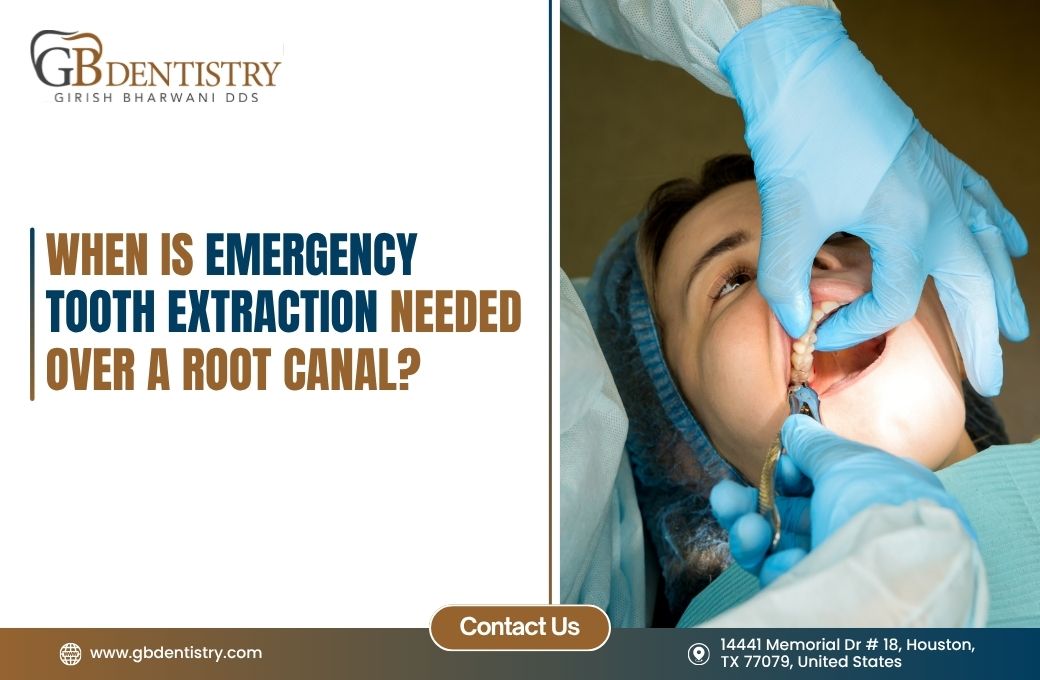
When Is Emergency Tooth Extraction Needed Over a Root Canal?
Learn when emergency tooth extraction may be needed instead of a root canal, what symptoms require prompt care, and how GB Dentistry can help in Memorial, TX.
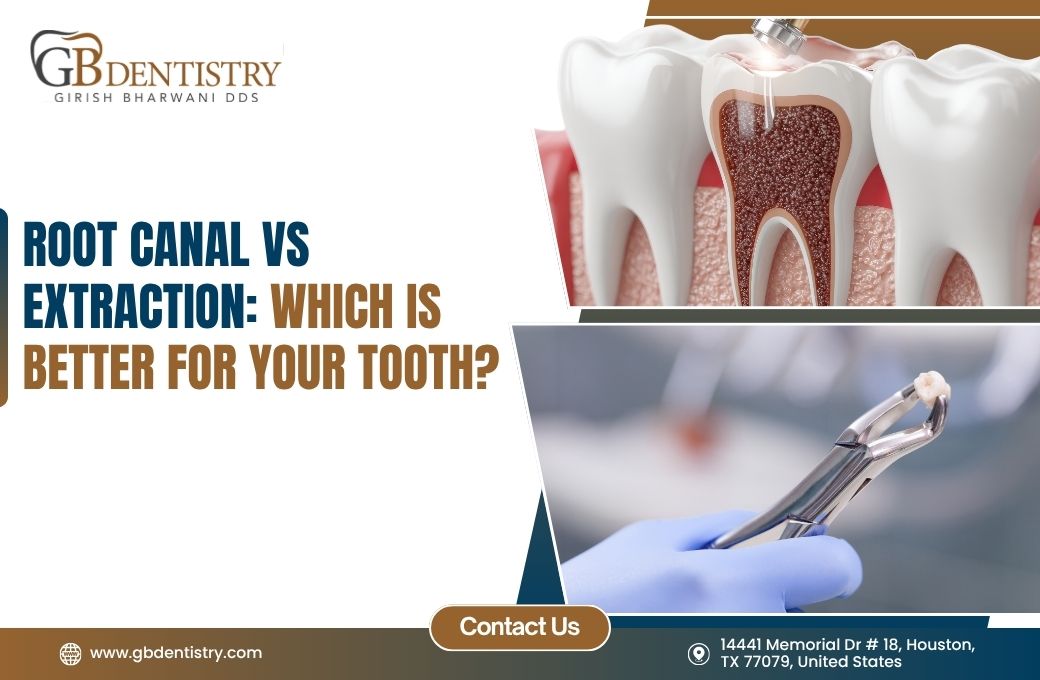
Root canal vs extraction can be a difficult decision when a tooth is painful, infected, or badly damaged, especially when you want relief without giving up a natural tooth.
The right choice depends on the condition of the tooth, the surrounding bone and gums, your overall oral health, and whether the tooth can be restored reliably. This detail matters in a root canal vs extraction decision.
At GB Dentistry, patients in Memorial, Texas, and nearby communities can discuss both options with Dr. Bharwani or the dentists at GB Dentistry before committing to treatment.
This guide explains how each procedure works, what root canal recovery time may involve, when extraction is more practical, and what questions can help you make a well-informed decision.
Root canal treatment and extraction solve the same immediate problem in different ways: they address a tooth that can no longer recover on its own, often because decay, trauma, or a root canal infection has affected the inner pulp.
A root canal removes the infected tissue while preserving the tooth. An extraction removes the entire tooth. A careful root canal vs extraction discussion should account for this factor.
The choice is not simply about which procedure is faster. It is about whether keeping the tooth creates a predictable, functional result or whether removal followed by tooth replacement offers a better long-term plan.
During root canal treatment, Dr. Bharwani or the dentists at GB Dentistry create access to the inner chamber of the tooth, remove inflamed or infected pulp, clean the root canals, and seal the space.
The tooth then usually needs a durable final restoration, such as a crown or another restorationf selected according to the amount of remaining tooth structure. This is one reason root canal vs extraction decisions depend on the full clinical picture.
The goal is to preserve the natural root and the portion of the tooth that remains above the gumline. Keeping that structure can help maintain normal chewing and avoid an immediate gap.
However, root canal treatment cannot rebuild tooth structure that has already been lost, and a severely weakened tooth may still require removal if it cannot support a dependable restoration.
An extraction removes the tooth from its socket. It may be recommended when the tooth is fractured below the gumline, has insufficient supporting bone, has extensive decay, or cannot be restored predictably.
In some situations, removing an unhealthy tooth also allows the surrounding tissues to heal more effectively. In a root canal vs extraction evaluation, details like this can influence the recommendation.
Extraction is not always the end of treatment. A missing tooth can affect chewing, neighboring tooth movement, and the way the bite distributes force.
Depending on your circumstances, the next discussion may involve a dental implant, bridge, partial denture, or another replacement option. The appropriate choice depends on bone, gum health, adjacent teeth, medical history, timing, and personal priorities.
Root canal treatment generally involves preserving the tooth and planning a final restoration. Tooth Extraction may remove the immediate source of infection but can create a replacement decision.
A tooth that appears easier to remove may require more appointments, healing time, and planning later if you want to restore the space. Understanding this point makes a root canal vs extraction conversation more useful.
That does not mean saving every tooth is always best. A tooth with a poor structural outlook may require repeated procedures and expense without a reliable result. The practical question is whether the tooth can be cleaned, sealed, restored, and maintained well enough to justify preservation.
A root canal is often considered when the tooth has enough healthy structure and support to function after treatment. The diagnosis should come from an examination rather than symptoms alone.
Severe pain does not automatically mean the tooth must be removed, and minimal pain does not prove that the tooth is healthy. Questions about root canal vs extraction often depend on factors like this.
Dr. Bharwani or the dentists at GB Dentistry may evaluate the remaining tooth structure, root shape, bone support, gum condition, bite forces, and the extent of decay or cracking.
A root canal may be reasonable when the infection is inside the pulp but the tooth can still receive a secure final restoration.
Common findings that can lead to a root canal front tooth include lingering sensitivity to hot or cold, pain with biting, spontaneous tooth pain, swelling near the tooth, or a darkened tooth after trauma. These symptoms can have several causes, so they should not be used as a self-diagnosis.
A tooth that has developed a root canal infection may sometimes cause a pimple-like bump on the gum, an unpleasant taste, tenderness, or swelling.
In other cases, the nerve may have died and symptoms may temporarily lessen. That apparent improvement does not necessarily mean the infection has resolved. This factor is worth discussing when considering root canal vs extraction treatment.
Root canal treatment addresses the inside of the tooth, but the tooth still needs protection from chewing forces. The type and timing of the final restoration depend on how much tooth remains and which tooth is involved.
Back teeth commonly experience substantial pressure during chewing, so Dr. Bharwani may discuss a restoration that protects the remaining structure.
Delaying the final restoration can leave a treated tooth vulnerable to leakage, new decay, or fracture.
The treatment plan should therefore include not only the root canal itself but also how the tooth will be sealed and maintained afterward. At GB Dentistry, root canal vs extraction options are considered alongside the examination findings.
A root canal may not be a dependable option if the tooth has a deep vertical root fracture, too little structure above the gumline, severe loss of supporting bone, or decay that extends too far below the gumline.
Some complex root shapes or previously treated teeth may also require evaluation by an appropriate specialist before a final decision.
Preservation also becomes less practical when the tooth cannot be restored to normal function or when maintaining it would interfere with a broader treatment plan.
The goal is not merely to keep a tooth present; it is to keep a tooth that can be cleaned, restored, and used comfortably over time. That context can matter when reviewing root canal vs extraction options.
Tell us about your smile goals, and let’s find the care that fits you.
 Let’s Take Care of Your Smile
Recovery is an important part of the root canal vs extraction decision, but there is no single recovery schedule that applies to every patient. The procedure, the presence of infection, the tooth’s location, the restoration required, and your individual healing response all influence what to expect.
Root canal recovery time is often affected by whether the tooth was already painful or infected, how complex the canals were, and whether a temporary or final restoration was placed.
Mild tenderness with biting can occur after treatment because the tissues around the root may remain irritated for a short period.
Follow the specific instructions provided by Dr. Bharwani or the dentists at GB Dentistry, including guidance about chewing and medications. This point can help clarify a root canal vs extraction recommendation.
A treated tooth should not be used to test hard or sticky foods while a temporary restoration is in place. Contact GB Dentistry if discomfort is worsening, significant swelling develops, the temporary restoration comes loose, or symptoms do not follow the expected pattern discussed at your visit.
After an extraction, the socket must heal. Early care may include protecting the blood clot, avoiding actions that disturb the area, and following instructions about eating, cleaning, and activity.
The healing period varies according to the tooth, the reason for extraction, and your health. This detail matters in a root canal vs extraction decision.
The longer-term plan matters as much as the extraction itself. If a replacement is being considered, the timing may depend on socket healing, bone volume, gum health, and the selected restoration. An extraction can therefore be a reasonable clinical choice while still requiring more planning after the procedure.
Can you drive after a root canal? Many people can drive after routine root canal treatment when only local anesthetic was used and they feel alert and comfortable.
You should not drive if sedation was used, if prescribed medication affects alertness, or if Dr. Bharwani gives different instructions. A careful root canal vs extraction discussion should account for this factor.
Driving decisions should be based on the actual anesthetic or sedation plan, not on the name of the procedure alone. Ask before the appointment if you need to arrange transportation. After extraction, the same principle applies: sedation, medication, dizziness, bleeding concerns, or discomfort may make driving inappropriate.
Do not place aspirin directly on the gum or take medication that conflicts with your medical history or current prescriptions. Use only medication guidance provided by a qualified clinician.
If you develop facial swelling, difficulty breathing or swallowing, uncontrolled bleeding, fever, or rapidly worsening symptoms, seek urgent medical attention rather than waiting for a routine appointment. This is one reason root canal vs extraction decisions depend on the full clinical picture.

Most treatment decisions should include a plan for monitoring the tooth after care is completed. Persistent or returning symptoms do not automatically mean that extraction is the only option. They do mean the tooth needs reassessment so the cause can be identified before another procedure is chosen.
Failed root canal symptoms may include continued or renewed pain with biting, swelling, drainage, a recurring gum bump, tenderness, or signs of infection around the root.
A new cavity, a loose or leaking restoration, an untreated canal, a complex canal shape, or a crack can each affect the outcome. In a root canal vs extraction evaluation, details like this can influence the recommendation.
Symptoms alone cannot determine whether treatment has failed. Dr. Bharwani or the dentists at GB Dentistry may review your history, examine the tooth and gums, and use dental imaging when appropriate. The assessment may also consider whether the discomfort comes from a nearby tooth, the bite, or another oral condition.
Root canal retreatment means reopening a previously treated tooth to remove the existing filling material, locate and clean areas that may not have been adequately treated, and reseal the canals.
The feasibility of retreatment depends on the tooth’s remaining structure, the cause of the problem, access to the canals, the presence of a fracture, and the quality of the final restoration. Understanding this point makes a root canal vs extraction conversation more useful.
Retreatment may be discussed when the tooth is structurally sound and the source of persistent infection appears treatable. In more complex cases, an endodontic evaluation may help clarify whether retreatment, a surgical approach, or extraction is more appropriate. No option should be selected without considering the tooth’s long-term restorability.
Extraction may be recommended when a tooth is cracked beyond repair, cannot be adequately sealed, has inadequate support, or has a poor outlook after previous treatment.
If removal is selected, ask how the space will be managed and what timing considerations apply to replacement. Questions about root canal vs extraction often depend on factors like this.
It is also reasonable to ask what could happen if you postpone treatment. An untreated infection can progress, but the speed and severity vary.
Delaying care may also allow a crack or cavity to worsen, potentially reducing the available options. If you have swelling, fever, trouble swallowing, or difficulty breathing, seek urgent care immediately.
Let’s talk about your concerns and create a care plan that fits you.
 Ready to Feel Good About Your Smile?
The best choice in a root canal vs extraction discussion comes from combining clinical findings with your practical needs.
You should understand what can realistically be restored, what follow-up is required, and what happens if the tooth is removed or preserved. This factor is worth discussing when considering root canal vs extraction treatment.
Bring these questions to your consultation with Dr. Bharwani or the dentists at GB Dentistry:
A useful decision is not based on procedure length alone. Consider the expected number of visits, the restoration or replacement plan, your ability to maintain the area, the condition of neighboring teeth, and the consequences of postponing care.
If the options remain unclear, asking for an explanation of the findings and alternatives can make the decision easier.
The financial comparison between root canal treatment and extraction is more than the cost of the first appointment. Root canal treatment may involve a final crown or restoration. Extraction may involve healing and later replacement, which can add separate planning and treatment costs.
Fees and insurance contributions vary, so request a written estimate based on your specific plan rather than relying on a general online figure. At GB Dentistry, root canal vs extraction options are considered alongside the examination findings.
Your oral health goals matter too. Some people place a high value on preserving a natural tooth when the outlook is reasonable.
Others may prefer removal when the tooth cannot be restored reliably or when a replacement plan better fits their circumstances. Dr. Bharwani can explain the clinical trade-offs without treating one option as appropriate for every patient.
If you are in Memorial or a nearby Houston community and have tooth pain, swelling, or a broken tooth, contact GB Dentistry for an evaluation rather than waiting for symptoms to settle.
The dentists at GB Dentistry can help determine whether the concern requires root canal treatment, extraction, restoration, or another type of care.
Bring a list of medications, relevant medical conditions, and information about when symptoms started. If you have had previous root canal treatment on the tooth, mention when it was completed and whether a crown or other restoration is present.
These details can help Dr. Bharwani focus the evaluation and explain the next reasonable step. That context can matter when reviewing root canal vs extraction options.
When patients ask about root canal vs extraction, I encourage them to look beyond immediate pain relief and consider whether the tooth can be restored, sealed, and maintained reliably.
Preserving a natural tooth can be worthwhile when the structure and support are favorable, but extraction may be the more responsible option when a tooth cannot provide a predictable result.
At GB Dentistry, we will review the findings with you, explain the alternatives, and discuss what recovery and follow-up may involve.
If you have pain, swelling, a broken tooth, or symptoms after previous treatment, please arrange an evaluation so you can make a decision based on your tooth’s actual condition rather than guesswork. This point can help clarify a root canal vs extraction recommendation.


A root canal may be preferable when the tooth can be restored predictably and you want to preserve it. Extraction may be more practical when the tooth is fractured, unsupported, or too damaged to restore.
Pain, swelling, lingering sensitivity, pain with biting, drainage, or a gum bump can indicate a root canal infection, but symptoms vary. Dr. Bharwani or the dentists at GB Dentistry must evaluate the tooth. This detail matters in a root canal vs extraction decision.
Recovery varies with the tooth, infection, treatment complexity, and restoration. Temporary tenderness may occur, but follow the instructions from GB Dentistry and report worsening pain, swelling, or a loose restoration.
Many people can drive after routine root canal treatment using local anesthetic if they feel alert. Do not drive after sedation or when medication affects alertness; confirm transportation instructions before treatment. A careful root canal vs extraction discussion should account for this factor.
Possible failed root canal symptoms include renewed pain with biting, swelling, drainage, a recurring gum bump, or tenderness. These signs require evaluation because cracks, leakage, or another tooth can have similar symptoms.
Root canal retreatment reopens and cleans a previously treated tooth before resealing it. It may be considered when the tooth remains structurally sound, but the outlook depends on cracks, support, access, and the final restoration. This is one reason root canal vs extraction decisions depend on the full clinical picture.
Extraction may take less time initially, but healing and tooth replacement can require additional planning. Root canal treatment may involve a final restoration, so compare the complete treatment plan rather than only the first visit.
Patients in Memorial and nearby areas can discuss root canal vs extraction with Dr. Bharwani or the dentists at GB Dentistry. An examination can clarify the tooth’s condition, treatment options, and next steps. In a root canal vs extraction evaluation, details like this can influence the recommendation.