What Can You Eat With Dentures? Foods and Helpful Tips
Can you eat with dentures? Learn easier foods, what to avoid, and how proper fit, repairs, and long-term care support comfortable eating at GB Dentistry.
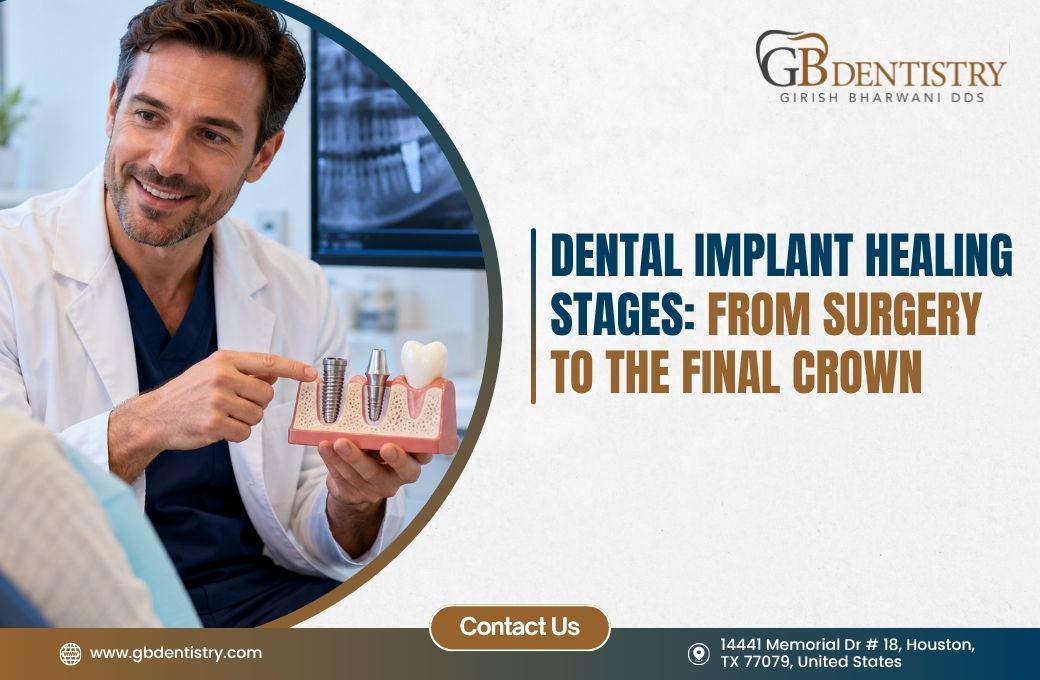
Dental implant healing stages can feel uncertain when you are trying to understand what happens between implant surgery and the final crown. Knowing what each phase involves can help you plan appointments, protect the healing site, and recognize when a question deserves prompt attention.
The healing process is not identical for everyone.
In this guide, we explain the surgical phase, osseointegration, the role of a dental implant healing cap, possible bone grafting, temporary and final restorations, recovery guidance, and practical questions to discuss with Dr. Bharwani or the dentists at GB Dentistry in Memorial, Texas.
Dental implant treatment is completed in stages because dental implants in Memorial need time to become stable within the jaw before supporting a final crown.
The exact sequence depends on the condition of your bone, the health of the surrounding gums, the location of the missing tooth, and the type of restoration being planned.
During implant surgery, the implant post is positioned in the jawbone. The surgical site is then protected while the surrounding gum and bone begin to recover. Choosing the right dental implants specialist is also important to ensure proper treatment planning, implant placement, and long-term results.
Mild soreness, swelling, tenderness, or a feeling of pressure can occur after the procedure, but the expected level of discomfort varies by the number of implants, the surgical approach, and your individual health. The early dental implant healing stages focus on protecting the surgical site as tissues recover.
The first several days are focused on protecting the site. Follow the written instructions provided by the clinical team at GB Dentistry, take medications only as directed, and avoid disturbing the area with your fingers or tongue.
Depending on the treatment plan, you may be advised to choose softer foods temporarily and avoid chewing directly over the surgical site.
Initial gum healing does not mean the implant is already ready for a permanent crown. The surface of the implant and the surrounding bone still need to complete a deeper healing process.
Osseointegration is the process in which living bone grows around and bonds with the implant surface. This is one of the most important dental implant healing stages because it provides the foundation for later restoration.
The implant may feel relatively comfortable before osseointegration is complete, but comfort alone cannot confirm that healing has finished.
Healing time varies. A straightforward case may progress differently from treatment involving a recently removed tooth, limited bone, infection concerns, multiple implants, or a bone graft.
Dr. Bharwani evaluates the healing process before moving forward rather than relying on a fixed calendar date for every person. Individual healing can influence the dental implant healing stages and restoration schedule.
During this phase, continue normal oral hygiene around the areas that the clinical team has approved. Do not assume that vigorous brushing, hard foods, smoking, or returning immediately to every usual habit is harmless.
Small disruptions can matter while the tissues are healing. Osseointegration is central to the dental implant healing stages because it supports long-term stability.
A dental implant healing cap is a small component that may be placed over the implant to help guide the gum tissue as healing continues. It can also play a role in the overall treatment process for full mouth dental implants, helping prepare the area for the final restoration.
It may be visible above the gumline, or the implant may remain covered beneath the gum for part of the healing period, depending on the surgical plan. The dental implant healing stages should be reviewed with the team before treatment begins.
The cap is not the final tooth and should not be treated like one. Avoid pulling at it, repeatedly checking it with your tongue, or using it as a chewing surface.
If it feels loose, causes persistent irritation, or becomes covered by swollen tissue, contact GB Dentistry for guidance rather than trying to adjust it yourself.
In some treatment plans, the healing cap is placed during a later visit after the implant has had time to integrate. In others, it is included as part of the initial procedure.
The timing is based on clinical findings and the way the implant was placed. A healing cap may be part of the dental implant healing stages, depending on the treatment plan.
Tell us about your smile goals, and let’s find the care that fits you.
 Let’s Take Care of Your Smile
Patients often want one exact answer for how long dental implant healing takes. A more useful approach is to identify the factors that can lengthen or change the sequence.
A treatment plan should account for the condition of the mouth before surgery, not just the appointment when the implant is inserted. The dental implant healing stages are not identical for every patient or every implant location.
An implant needs adequate bone support. If the jawbone has narrowed after tooth loss or does not have sufficient volume in the planned location, a bone graft for dental implant treatment may be recommended.
Grafting adds a separate healing consideration because the grafted area must mature before, or sometimes while, the implant is supported. A bone graft can change the dental implant healing stages by adding another period of recovery.
A graft does not automatically mean treatment will be unsuccessful, and avoiding a recommended graft does not necessarily shorten the process in a helpful way.
The important question is whether the available bone can support the planned implant safely and predictably. Dr. Bharwani can explain whether grafting is part of your proposed sequence and which healing milestones will be checked.
Healthy gum tissue supports a cleaner, more stable environment around an implant. Existing inflammation, untreated dental disease, or difficulty cleaning the area may need attention before implant treatment or during follow-up.
Medical conditions and medications can also affect surgical planning and recovery, so provide complete health information to the clinical team. Your medical history and daily habits can influence how the dental implant healing stages progress.
Smoking and nicotine exposure deserve particular attention. They can interfere with wound healing and may increase complications, although the level of risk depends on individual circumstances. Ask Dr. Bharwani for specific guidance before surgery rather than waiting until the implant has been placed.
Nutrition, sleep, oral hygiene, and following post-operative instructions all influence how manageable recovery feels. These habits cannot guarantee a particular outcome, but they help reduce avoidable stress on the healing tissues. Good communication helps patients understand the dental implant healing stages without relying on a fixed calendar.
An implant in the front of the mouth may involve additional planning for gum contours and appearance. An implant in the back of the mouth may be influenced more by chewing forces, available bone, and the amount of space for the restoration. Understanding these factors is an important part of the ultimate guide to dental implants crowns, helping ensure the final restoration offers a natural appearance and proper function.
Neither location follows a universal schedule. The implant’s location may affect the dental implant healing stages and restoration schedule.
The number of implants and the type of final restoration also affect the plan. Replacing one missing tooth with a single crown is different from planning several implants or an implant-supported prosthesis.
Ask whether the proposed timeline includes every stage, including any temporary tooth, healing-cap visit, impression or digital scan, crown try-in, and final placement.

Protecting an implant is not limited to the first evening after surgery. The tissues may look better before the underlying healing is complete, so careful habits remain important throughout the process.
The instructions from GB Dentistry should take priority because they are based on your procedure and health history. Each of the dental implant healing stages calls for careful home care and appropriate follow-up.
Choose foods that are comfortable and appropriate for the healing stage. Avoid biting directly on the implant area until the clinical team confirms that it is ready for normal function. Hard, sharp, sticky, or very hot foods may be unsuitable early in recovery, depending on the location and procedure.
Clean the rest of your mouth as directed, and ask how to clean near the surgical site or healing cap. Brushing too aggressively can irritate healing tissue, while avoiding the area for too long can allow plaque to accumulate.
The goal is careful, consistent cleaning—not forceful scrubbing. The dental implant healing stages may require different instructions at different visits.
Do not use a temporary tooth, healing cap, or adjacent teeth to test whether the implant feels strong. Dental implants are meant to be evaluated through planned follow-up, not by applying extra pressure at home. Food choices and cleaning instructions may change as the dental implant healing stages progress.
Some swelling and tenderness can be expected after oral surgery, but symptoms that worsen instead of gradually settling should be discussed with the dentists at GB Dentistry.
Contact the office promptly if you notice significant bleeding that does not ease with the recommended pressure, increasing swelling, severe or escalating pain, fever, pus, a persistent unpleasant taste, numbness that concerns you, or an implant or healing cap that appears mobile.
New or worsening symptoms during the dental implant healing stages deserve a call to GB Dentistry.
A loose component does not always mean the implant itself has failed. A healing cap or another restorative component may be the issue. However, only a clinical examination can determine what is happening, so do not tighten, remove, or glue anything yourself.
Follow-up appointments allow the clinical team to inspect gum healing, assess the implant area, review cleaning, and determine whether the next stage is appropriate.
These visits are also an opportunity to address bite pressure, irritation from a temporary restoration, or concerns about the healing cap before they become more disruptive. Ask GB Dentistry how it will assess progress through the dental implant healing stages.
A missed appointment can make it harder to identify a problem early. If your schedule changes, contact GB Dentistry so the team can advise you about the next appropriate visit rather than abandoning the sequence altogether.
Follow-up visits help the team monitor the dental implant healing stages rather than relying on the calendar alone.
Let’s talk about your concerns and create a care plan that fits you.
 Ready to Feel Good About Your Smile?
The final crown is usually planned after the implant has healed sufficiently and the surrounding gum tissue is ready for the restoration. The crown is custom-made to fit the implant connection, neighboring teeth, bite, and visible contours.
It is not simply placed as soon as the surgical area feels comfortable. The final restoration comes after the relevant dental implant healing stages have progressed enough for loading.
Before the final crown is made or attached, Dr. Bharwani evaluates the implant and the tissues around it. The assessment may include an examination, review of healing, and imaging when clinically appropriate.
The purpose is to confirm that moving ahead makes sense for the specific treatment plan. How you care for the site can influence comfort during the dental implant healing stages.
If the implant or surrounding tissue needs more time, delaying the crown may be the more responsible choice.
This can be frustrating when you are ready to finish treatment, but a staged approach helps prevent a rushed decision based only on appearance or convenience. Before moving beyond the dental implant healing stages, the team checks the surrounding tissues and implant.
The restoration phase may involve a scan or impression, shade and shape decisions, a temporary restoration in some cases, and one or more visits to evaluate fit.
Tell the clinical team if the proposed tooth feels too high when you bite, catches food unusually, irritates the gum, or affects speech. Small fit concerns are worth discussing before you settle into regular use.
A crown should be cleaned as part of your normal oral hygiene routine, but the best technique depends on the design and surrounding anatomy.
The dentists at GB Dentistry can show you how to clean around the crown and implant without traumatizing the gum tissue. Crown design is planned around the outcome of the dental implant healing stages.
A new crown can feel different from a natural tooth because the implant does not respond to pressure in exactly the same way. Give yourself time to notice how your bite feels, but do not ignore ongoing discomfort, movement, repeated gum bleeding, or difficulty chewing.
The long-term condition of an implant-supported crown depends on more than the crown itself. Daily plaque control, professional monitoring, bite forces, gum health, and habits such as chewing ice or using teeth to open packages can all affect maintenance.
Ask about an appropriate follow-up and cleaning routine for your situation. Even after the dental implant healing stages are complete, ongoing oral hygiene remains essential.
When comparing dental implants near me, convenience matters, but it should not be the only factor. Implant treatment involves diagnosis, surgery, healing checks, restoration planning, and maintenance.
Choosing a practice that can explain the full sequence clearly may make it easier to understand what you are agreeing to and what questions to ask before treatment begins. A consultation can explain which dental implant healing stages apply to your treatment.
During a consultation with Dr. Bharwani or the dentists at GB Dentistry, ask which stages apply to your case and what could change the schedule. Useful questions include:
These questions help separate the surgical timeline from the restoration timeline. They also clarify whether a quoted plan includes every expected stage or whether additional procedures could be considered after examination. Ask how each of the dental implant healing stages might affect your personal timeline.
Dental implant cost in Memorial can vary because treatment is not one identical procedure for every person.
The total may depend on the examination, imaging, extraction if needed, implant placement, bone grafting, temporary restoration, abutment, final crown, follow-up care, and the complexity of the case. Cost planning should consider appointments associated with the dental implant healing stages.
A low initial figure may not represent the complete treatment sequence, while a higher estimate may include procedures that another plan lists separately.
Ask for a written explanation of what is included, what may be additional, and when payment or insurance questions should be addressed. GB Dentistry’s team can discuss the financial details available for your proposed care, but an accurate estimate requires an individualized evaluation.
A consultation is useful even when you are still comparing options. Bring a list of medications, relevant medical conditions, previous dental records when available, and questions about the healing stages.
If you are searching for dental implants near me because a missing tooth is affecting chewing, confidence, or daily comfort, explain those priorities directly. The dental implant healing stages are one part of the decision to proceed with a restoration.
At GB Dentistry in Memorial, the appropriate next step is a conversation with Dr. Bharwani or the dentists at GB Dentistry about whether implants fit your oral health, goals, and circumstances.
The decision should account for healing expectations, alternatives, maintenance, and the full treatment sequence—not just the surgery date or the appearance of the final crown.
Dental implant healing stages are easier to manage when you know what each phase is designed to accomplish. Implant placement, osseointegration, gum shaping, restoration, and follow-up are connected steps, and the right timing depends on your bone, gum health, medical history, and treatment goals.
I encourage you to ask questions before surgery and to report changes during healing rather than trying to interpret them alone.
At GB Dentistry, we can review your situation, explain whether a bone graft or healing cap may be part of the plan, and help you understand the next appropriate step toward a final crown in a careful, informed way.
I explain the dental implant healing stages so patients can follow the purpose of each visit.
— Dr. Girish Bharwani


Healing varies by bone quality, implant location, grafting, health, and treatment complexity. Dr. Bharwani confirms readiness for the crown through follow-up rather than using one schedule for everyone.
Osseointegration is the process in which bone grows around and bonds with the implant. It creates the foundation for a crown, but comfort alone cannot confirm that integration is complete.
A healing cap is a component that may guide gum tissue around an implant during healing. Do not pull, adjust, or chew on it; contact GB Dentistry if it feels loose or causes ongoing irritation.
Not everyone needs grafting. A bone graft may be recommended when the jaw lacks enough volume to support the planned implant. Dr. Bharwani determines this through an individualized examination and imaging.
The final crown is placed after the implant and surrounding tissues are sufficiently healed. The timing depends on your case, and the clinical team checks readiness before making or attaching the restoration.
Avoid disturbing the site, chewing directly on it before approval, smoking or nicotine exposure, and forceful cleaning. Follow the personalized instructions from GB Dentistry and ask before resuming normal habits.
Dental implant cost in Memorial varies with surgery, grafting, temporary teeth, the abutment, crown, imaging, and follow-up. Request an individualized estimate that explains included and possible additional services.
Look for a local practice that explains the complete process, evaluates your bone and gums, discusses alternatives and maintenance, and provides clear next steps. GB Dentistry serves patients in Memorial and nearby areas. GB Dentistry can explain the dental implant healing stages so you know what to expect between treatment visits.