Oral Cancer Screening: What Dentists Check During Your Visit
Learn what happens during an oral cancer screening, including symptoms, signs, VELscope technology, follow-up, and when to contact GB Dentistry in Memorial.
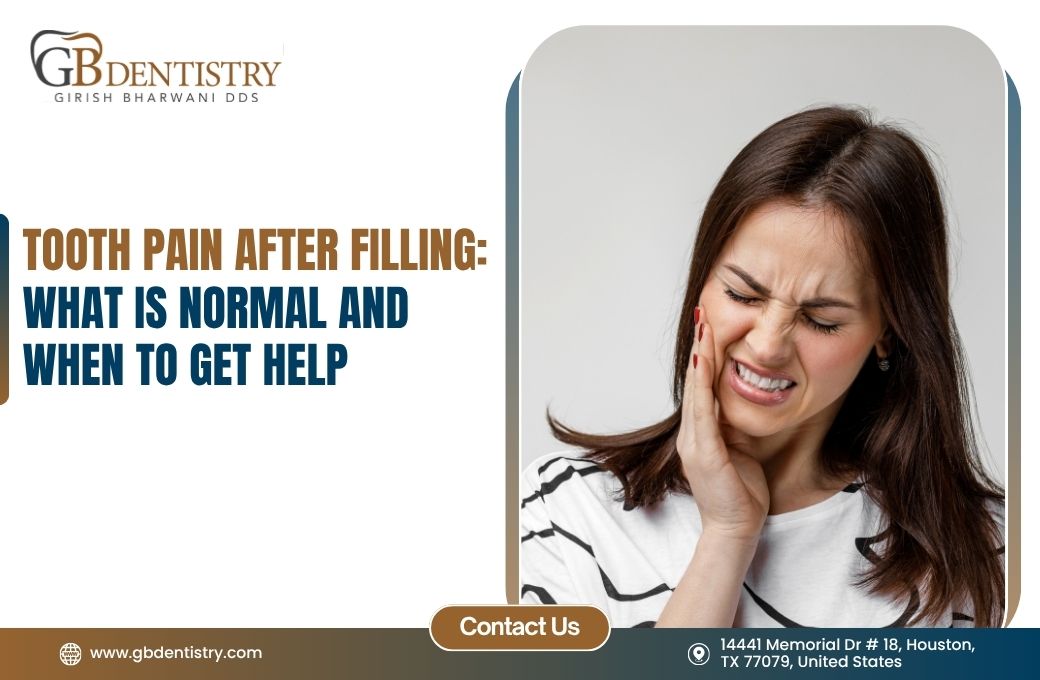
Tooth pain after filling can be unsettling, especially when a tooth remains sensitive to cold, pressure, or chewing after treatment. In many cases, short-term discomfort is part of normal healing, but the type, intensity, and pattern of pain matter.
At GB Dentistry in Memorial, we help patients understand what their symptoms may mean before deciding what to do next.
This guide explains common causes of tooth pain after a filling, how long sensitivity may last, which warning signs deserve prompt attention, and what tooth pain treatment in Memorial may involve.
Chipped tooth repair with a filling addresses damage caused by decay or minor fracture, but the tooth and surrounding tissues may remain irritated after the procedure. Understanding the source of that irritation can help you distinguish expected sensitivity from a problem that needs follow-up.
Removing decay and preparing a tooth requires work close to the sensitive inner layers. Even when the filling is placed carefully, the pulp—the living tissue inside the tooth—can become temporarily inflamed.
This may cause a brief response to cold drinks, hot foods, sweets, or pressure. Tooth pain after filling often reflects temporary irritation, but symptoms should gradually improve.
The injection, cheek or jaw muscle strain from keeping your mouth open, and normal manipulation of the tooth can also contribute to soreness. These effects usually improve as the tissues settle. A mild, gradually decreasing ache is generally less concerning than pain that becomes stronger each day.
Composite fillings, sometimes called tooth colored fillings, are made from a tooth-colored resin material. They allow the dentists at GB Dentistry to repair many cavities while maintaining a natural-looking appearance.
During placement, the material is bonded and hardened in stages. If tooth pain after filling follows treatment with a composite material, a clinical review can clarify the cause.
Some teeth may feel sensitive after this process, particularly when the cavity was deep or the tooth had already been irritated by decay.
Composite fillings can also be affected by how the bite comes together and by the condition of the surrounding tooth structure. Sensitivity does not automatically mean the filling has failed, but persistent or worsening symptoms should be evaluated.
A filling that sits slightly higher than the surrounding tooth can receive excess force when you close your teeth or chew. The tooth may feel bruised, tender, or painful specifically when biting down.
Some people describe the sensation as if the filled tooth touches first. Tooth pain after filling that is sharp with each bite may call for a bite check.
This issue is often difficult to judge at home because the difference may be very small. If the bite feels uneven after the numbness has worn off, contact GB Dentistry rather than repeatedly testing the tooth with hard foods.
Dr. Bharwani or the dentists at GB Dentistry can assess the bite and determine whether an adjustment is appropriate.
A cavity that has reached close to the pulp may leave the tooth inflamed even after the decay is removed and the filling is completed.
In some situations, the tooth settles with observation and routine care. In others, inflammation may continue or progress. Persistent tooth pain after filling deserves an assessment when it does not begin to settle.
Symptoms that can suggest a more significant concern include spontaneous throbbing, pain that lingers after hot or cold exposure, pain that wakes you from sleep, swelling, or increasing tenderness.
These signs do not establish a diagnosis by themselves, but they are reasons to arrange an evaluation instead of waiting indefinitely.
Tell us about your smile goals, and let’s find the care that fits you.
 Let’s Take Care of Your Smile
Mild sensitivity after dental work can improve over several days. A deeper filling may take longer to settle because the nerve was closer to the area being treated. A dentist can explain whether the expected recovery fits your particular filling and tooth.
What matters most is whether discomfort is becoming less frequent and less intense rather than steadily worsening. Tooth pain after filling should become less troublesome over time, although every tooth responds differently.
Cold drinks, sweet foods, and pressure may briefly trigger discomfort while the tooth settles. If tooth pain after filling continues, take note of how long each episode lasts and whether it occurs only with a clear trigger. Those details can help guide a dental examination.
A quick response to something cold is different from pain that continues well after the drink is gone. Writing down the trigger and duration of each episode can help you describe the pattern accurately when you speak with the clinical team at your next visit.
Sensitivity that gradually fades can be reassuring, while lingering heat sensitivity, spontaneous throbbing, or pain that interrupts sleep deserves a closer look. A clear record of tooth pain after filling can help the care team interpret your symptoms.
Patients sometimes assume that all soreness after a restoration is normal. Instead of judging one painful moment, consider the overall trend from day to day. If symptoms have not begun to improve or are becoming harder to manage, contact GB Dentistry for guidance.

Not every tender tooth needs emergency dentistry treatment, but a persistent problem should not be ignored. Tooth pain after filling may reflect a high bite, deeper inflammation, a crack, or another concern that requires an examination before the correct next step can be chosen.
If the filled tooth contacts the opposite tooth before the others, it can take more force with each bite. That may cause soreness when chewing. GB Dentistry can check the way the teeth meet and determine whether an adjustment or another evaluation is appropriate.
Do not try to file or reshape a filling at home. Even a small change in the biting surface can affect comfort and tooth strength.
Describe whether the pain occurs when you bite down, release pressure, or chew a particular type of food. Pain when chewing is one pattern of tooth pain after filling that may point to a bite concern.
Worsening pain, facial or gum swelling, fever, or a persistent bad taste should prompt a timely dental call. If swelling interferes with breathing or swallowing, seek emergency medical care. Professional guidance is especially important when these changes begin suddenly or interfere with eating and daily activities.
These symptoms deserve attention because they may indicate more than ordinary post-treatment sensitivity. Significant tooth pain after filling should not be treated with home adjustments to the restoration.
A dental team may ask whether the tooth hurts without a trigger, how long hot or cold discomfort lasts, and whether the area is swollen. Be specific. A clear symptom history can help Dr. Bharwani or the dentists at GB Dentistry choose an appropriate examination.
Let’s talk about your concerns and create a care plan that fits you.
 Ready to Feel Good About Your Smile?
While mild sensitivity settles, choose foods that are easier to chew and avoid temperatures that reliably trigger discomfort. Once the anesthetic has worn off, eat carefully so you do not accidentally bite your cheek or tongue. Continue cleaning your teeth as instructed.
For tooth pain after filling that is mild and improving, chewing on the other side for a short period may be more comfortable. Use a soft toothbrush and avoid biting very hard foods on the restored tooth until you know how it responds.
If you need pain relief, follow the instructions on medicines that are safe for you and ask a clinician or pharmacist when uncertain. Never place aspirin directly against the tooth or gum. Temporary comfort measures are not a substitute for examining symptoms that persist.
An appointment for tooth pain after filling begins with a discussion of the symptoms and the dental work performed. The dentist may examine the restoration, evaluate bite contacts, test the tooth’s response to pressure or temperature, and recommend imaging when clinically useful.
The findings guide the plan. Sometimes a minor bite adjustment is appropriate; other cases need monitoring or additional treatment.
GB Dentistry in Memorial can explain why an option is recommended and what signs should bring you back for an earlier review. GB Dentistry can review tooth pain after filling and discuss whether the restoration needs attention.
I want patients to know that discomfort after a filling should be understood in context. A little sensitivity that improves is different from pain that grows stronger or affects everyday life. When symptoms change, a careful examination helps us make a sound decision.
At GB Dentistry, we listen to your concerns, check the treated tooth, and explain the possibilities in plain language. If you notice tooth pain after filling in Memorial, please tell us how it feels and when it began so we can guide the next step.


Mild sensitivity may improve over several days, while deeper fillings can remain sensitive longer. Pain should generally trend downward; worsening, severe, or persistent symptoms warrant evaluation by Dr. Bharwani.
Short-term sensitivity to cold, sweets, or pressure can be normal after a filling. It is more concerning when discomfort lingers, occurs without stimulation, worsens, or is accompanied by swelling or fever.
Pain when chewing can occur if the filling changes the bite or if the tooth’s supporting tissues are irritated. The dentists at GB Dentistry can check the contact points and the tooth itself.
Composite fillings may be followed by temporary sensitivity, particularly after treatment of a deep cavity. Ongoing or increasing pain can have other causes and should be assessed rather than assumed to be material-related.
Arrange prompt dental attention for worsening pain, spontaneous throbbing, lingering hot or cold pain, swelling, fever, a bad taste, or trouble opening your mouth, swallowing, or breathing.
Choose softer foods, avoid extreme temperatures, chew on the opposite side, and follow medication directions that are safe for you. Do not place aspirin on the tooth or delay evaluation when symptoms worsen.
Yes, the bite can be evaluated when a filled tooth feels higher or hurts with pressure. If the filling is contacting too heavily, Dr. Bharwani may determine whether a minor adjustment is appropriate.
GB Dentistry serves patients in Memorial and nearby areas. Contact the practice to discuss your symptoms and arrange an evaluation with Dr. Bharwani or the dentists at GB Dentistry. If you have tooth pain after filling, GB Dentistry can evaluate possible causes and discuss the next step.