Dental Implant Healing Stages: From Surgery to the Final Crown
Learn the dental implant healing stages, from surgery and osseointegration to the final crown, with practical recovery and planning guidance in Memorial.
Chipped tooth repair can help restore a damaged tooth, but choosing between bonding, a veneer, and a crown depends on more than how noticeable the chip looks.
The location and size of the break, the health of the tooth, your bite, and whether the tooth is causing pain all affect the appropriate next step.
At GB Dentistry, patients in Memorial, Texas, and nearby communities can discuss their chipped tooth repair Options with Dr. Bharwani or the dentists at GB Dentistry.
This guide explains how each treatment works, when urgent evaluation may be needed, what can affect cost, and how to prepare for a practical treatment decision.
A small chip may look like a cosmetic concern, but the visible damage does not always show the full condition of the tooth.
Before deciding how to fix a chipped tooth, Dr. Bharwani or the dentists at GB Dentistry need to assess the remaining enamel, the bite, the tooth’s position, and any signs of deeper injury.
A minor chip on the edge of a front tooth may be repaired with a conservative cosmetic treatment in memorial. A larger break that affects a corner, a contact point between teeth, or a chewing surface may require a restoration that provides more structure and protection.
The location also changes the practical demands placed on the repair. Front teeth are highly visible and help guide certain jaw movements. Back teeth absorb stronger chewing forces.
A treatment that is reasonable for a small front-tooth chip may not provide enough support for a molar with a substantial fracture. The best chipped tooth repair approach depends on where the damage meets the bite.
During an examination, the dentists at GB Dentistry may consider:
An evaluation may involve visual inspection and, when clinically appropriate, dental imaging. The purpose is not simply to select a cosmetic material.
It is to determine whether the tooth is healthy enough for a direct repair, whether it needs additional protection, or whether another concern must be addressed first. An examination helps determine whether chipped tooth repair can be conservative or needs additional protection.
A chipped tooth is not automatically a dental emergency, especially when the chip is small and there is no pain.
However, prompt contact with GB Dentistry is sensible when the damage follows an accident or includes significant sensitivity, bleeding, swelling, severe pain, a loose tooth, a sharp fragment cutting the cheek or tongue, or difficulty closing the mouth.
If a piece of tooth has broken off, place it in a clean container with milk or saliva and bring it to the appointment if possible. Do not glue the fragment back yourself, chew on the damaged side, or place aspirin directly on the gum.
If facial trauma involves heavy bleeding, breathing difficulty, loss of consciousness, or a suspected jaw injury, seek emergency medical care immediately. Chipped tooth repair deserves prompt attention when the damage is accompanied by pain or injury.
Tell us about your smile goals, and let’s find the care that fits you.
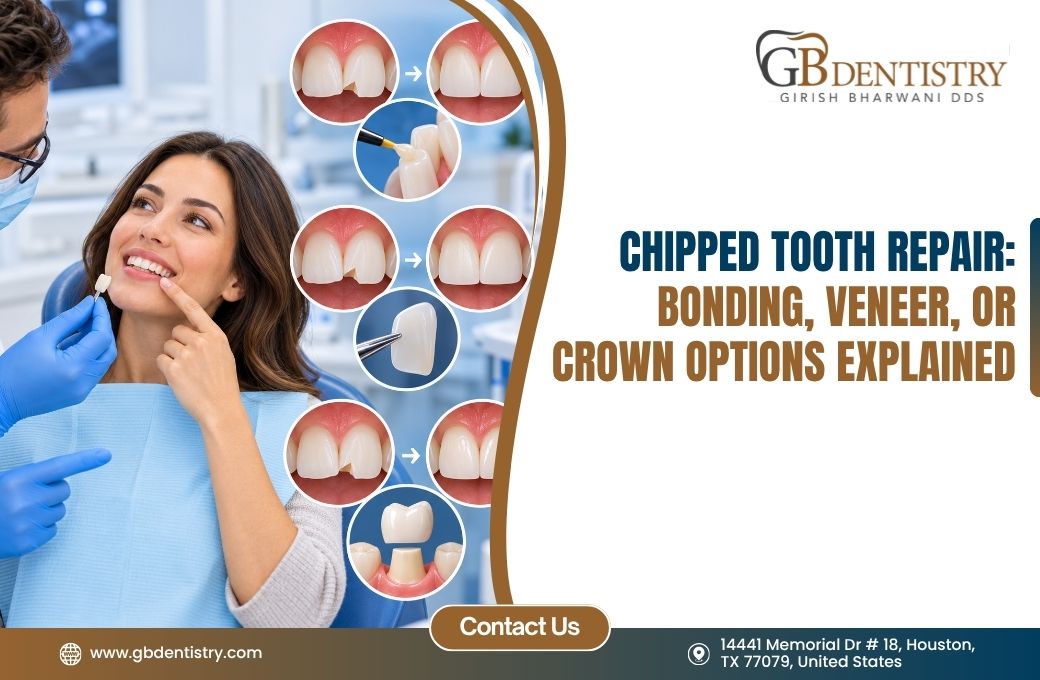
Dental bonding is often considered when the tooth has enough healthy structure and the repair does not need to withstand unusually heavy forces.
It uses tooth-colored composite material that is shaped directly on the tooth and hardened with a curing light. Because the material is placed directly rather than fabricated as a separate restoration, bonding may allow a relatively conservative approach.
Why choose cosmetic bonding? Bonding may be discussed for a small or moderate chip, particularly on a front tooth where the main goals are to rebuild an edge, smooth an irregular area, or improve the tooth’s visible shape. Cosmetic bonding offers a minimally invasive way to restore the tooth’s appearance while preserving as much natural tooth structure as possible.
It may also be useful when preserving as much natural enamel as possible is important. Chipped tooth repair with bonding is most useful when the remaining tooth can support the material.
The dentists at GB Dentistry will consider whether the repaired area can remain stable under your bite.
Habits such as nail biting, chewing ice, opening packages with the teeth, or clenching and grinding may increase the chance of another chip or wear.
Those factors do not automatically rule out bonding, but they can influence the recommendation and aftercare conversation. These habits matter for chipped tooth repair because repeated force may weaken a new restoration.
The tooth is prepared so the composite can adhere securely. Dr. Bharwani then selects and layers a shade-matched material, shapes it to fit the surrounding teeth, and hardens it before refining the surface.
The final step is checking the bite and polishing the repair so it feels natural against the tongue. The steps in chipped tooth repair depend on the shape and function of the damaged area.
Bonding generally preserves more tooth structure than treatments that require reshaping the tooth for a laboratory-made restoration. The trade-off is that composite can be more vulnerable to staining, edge wear, or fracture than some other options, especially when the repair is large or exposed to strong biting forces.
The main appeal of bonding is its conservative nature and flexibility for small cosmetic repairs. It may also be easier to modify if the shape or shade needs adjustment later. However, no repair is indestructible.
The expected service life depends on the tooth, the size and position of the restoration, oral habits, hygiene, and routine dental care. After chipped tooth repair, biting forces and daily habits may influence how long the restoration lasts.
Dental bonding in Memorial is not automatically the least expensive or most appropriate choice in every situation.
A repair that repeatedly breaks may require a different approach, and a chip caused by decay or a deeper crack cannot be solved by covering the visible area alone. That is why an examination matters before selecting treatment based only on appearance.

Veneers and crowns are both custom-made restorations, but they do different jobs. A veneer generally covers the front surface and part of the edge of a tooth. A crown covers more of the tooth and is intended to provide greater overall protection when the remaining structure needs support.
A veneer may be considered when a front tooth has enough healthy structure, the damage is primarily on the visible front or edge, and the tooth’s color or shape also needs to be addressed.
It can provide a carefully planned appearance because the restoration is designed outside the mouth before being bonded to the tooth. Chipped tooth repair should address the reasons the tooth broke, not only its appearance.
Veneers are not appropriate for every chipped tooth. The dentists at GB Dentistry will need to assess enamel availability, gum health, bite forces, tooth position, and habits such as grinding.
A veneer may be a poor fit when the tooth is significantly weakened, has untreated decay, or receives forces that could cause the restoration to fracture or detach. Front-tooth chipped tooth repair must account for appearance as well as the way the teeth meet.
Patients should also understand that veneer treatment may involve removing some enamel and may not be reversible in the same way as a very minor bonding repair.
The exact preparation depends on the tooth and the planned restoration. A discussion about shade, shape, maintenance, and the possibility of future replacement is part of responsible planning.
A crown may be discussed when a substantial portion of the tooth is missing, the tooth has a large existing filling, the remaining walls are weakened, or the damage extends into a chewing area that needs broader coverage.
Instead of repairing only the visible chip, a crown surrounds much of the tooth to help protect the remaining structure. Chipped tooth repair with a crown may be considered when the tooth needs broader coverage.
A crown is a more involved restoration than bonding. It generally requires careful preparation, an impression or digital scan, and a separate fabrication step before the final restoration is placed.
The tooth must have a suitable foundation. If the nerve is inflamed or infected, additional treatment may be necessary before a crown can be considered.
A crown can offer useful structural coverage, but it also requires more alteration of the tooth than a small composite repair. It should not be selected simply because it appears more substantial.
The least invasive option that adequately addresses the tooth’s condition is often a sensible starting principle, provided it can handle the functional demands placed on that tooth. Before chipped tooth repair, identifying any sensitivity helps shape the examination.
The following table highlights the main differences among bonding, veneers, and crowns. It is a quick guide, not a substitute for examining the tooth. The size of the chip, the bite, and the condition of the surrounding structure all shape a chipped tooth repair recommendation.
| Option | Often considered for | Main trade-off |
|---|---|---|
| Bonding | Small chips and conservative reshaping, especially on front teeth | May be more susceptible to staining, wear, or breaking in high-force situations |
| Veneer | Selected front-tooth damage involving appearance and part of the edge | Requires planning and may involve enamel preparation; not suitable for every bite or tooth |
| Crown | More extensive structural damage or a weakened tooth needing broader coverage | More tooth preparation and a more involved restorative process |
These categories are general starting points, not a diagnosis. A tooth that appears to need only a veneer may have a crack or nerve problem underneath. Conversely, a tooth with a small chip may not need a crown. The clinical findings should guide the decision.
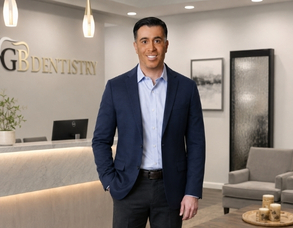
Let’s talk about your concerns and create a care plan that fits you.
Chipped tooth repair cost varies because the treatment is based on the tooth’s condition rather than a single standard procedure. The material, laboratory involvement, amount of preparation, number of teeth, need for imaging or additional treatment, and applicable dental benefits can all affect the estimate.
When discussing an estimate with GB Dentistry, ask what is included and whether the proposed treatment addresses only the chip or also an underlying problem. Useful questions include whether the fee covers the evaluation, imaging if needed, preparation, the restoration, adjustments, and follow-up care.
Coverage and out-of-pocket responsibility depend on the individual plan and should be confirmed with the insurance carrier and office team. With chipped tooth repair, the strongest-looking restoration is not always the best fit.
It is also reasonable to ask why one option is being recommended over another. For example, bonding may have a lower initial fee in some situations but may not be the best value if the repair is exposed to heavy forces and needs frequent replacement.
A veneer or crown may involve more planning and expense, but the clinical reason for that recommendation should be clear.
GB Dentistry can explain the available treatment plan for your situation, while your insurance carrier remains the source for benefit, eligibility, and claim determinations.
Avoid choosing based on price alone when a fracture, decay, or nerve concern may be involved. Before agreeing to chipped tooth repair, ask which parts of the estimate cover diagnosis and restoration.
A small, painless chip may allow time for a planned cosmetic consultation. A painful tooth, a sharp fracture, or damage after trauma should be assessed sooner.
The treatment itself may be completed in one visit or require multiple stages, depending on whether bonding, a laboratory-made veneer, or a crown is selected and whether other care is needed first.
Until evaluation, protect the area by eating softer foods, avoiding very hot or cold items if sensitivity is present, and not biting directly on the damaged tooth.
Keep the area clean, but do not aggressively brush a sharp edge or attempt to reshape it at home. Timely chipped tooth repair may help avoid continued irritation from a rough edge.
A small chip may remain stable, but a damaged edge can also catch on food, irritate soft tissue, or become more vulnerable to another break. Sensitivity may indicate exposed dentin, while pain on biting can point to a deeper crack or injury. Only an examination can clarify the cause.
If the chip is cosmetic and stable, scheduling a consultation is usually more appropriate than treating it as an emergency. If symptoms are progressing, contact GB Dentistry promptly so Dr. Bharwani or the dentists at GB Dentistry can determine how quickly the tooth should be evaluated.
When searching for chipped tooth repair near me, convenience matters, but the quality of the evaluation matters more. The right office should help you understand whether the priority is appearance, tooth strength, pain control, prevention of additional damage, or a combination of these goals.
Before visiting GB Dentistry, note when the chip occurred and whether it followed biting something hard, an injury, or gradual wear. Write down any sensitivity to cold, heat, sweets, or pressure. Bring information about a mouthguard, grinding, previous repairs, and relevant medical or dental history.
A clear description helps the dentists at GB Dentistry distinguish a recent isolated chip from a recurring pattern.
For example, repeated damage to several teeth may prompt discussion of bite forces or nighttime grinding, while one chip after trauma may require a different evaluation. Good photographs and symptom notes can make a chipped tooth repair consultation more productive.
You can ask Dr. Bharwani or the dentists at GB Dentistry:
The goal is not to select the most extensive treatment. It is to understand the reason for the recommendation, the alternatives, the limitations, and the maintenance involved. A clear chipped tooth repair plan should explain both the benefits and the limitations of each option.
Regardless of the material, treat the repaired tooth as part of your natural smile rather than as a tool. Do not use teeth to tear packaging, crack shells, or hold objects.
Limit habits that place repeated stress on the front teeth, and follow the cleaning and follow-up guidance provided by GB Dentistry.
Regular examinations can help identify worn edges, loose margins, tooth decay in memorial, or bite changes before they become more disruptive.
A nightguard may be discussed in some situations, but whether it is appropriate depends on your individual needs and should be evaluated by Dr. Bharwani or the dentists at GB Dentistry. Protecting the tooth after chipped tooth repair is part of maintaining the result.
A chipped tooth can be frustrating, especially when the damage is visible or the tooth suddenly feels sensitive. The right repair is not determined by appearance alone.
I look at the health and strength of the tooth, how it functions with your bite, and the level of treatment that reasonably fits your needs.
If you are considering chipped tooth repair in Memorial, Texas, bring your questions to GB Dentistry. An evaluation can help clarify whether bonding, a veneer, a crown, or another approach should be discussed, and whether the tooth needs prompt attention because of pain, trauma, or a possible deeper injury.

The appropriate option depends on the chip’s size, location, tooth strength, bite, and symptoms. Dr. Bharwani may discuss bonding, a veneer, or a crown after examining the tooth.
Do not reshape or glue the tooth yourself. Protect it from hard foods, save any broken fragment, and schedule an evaluation with GB Dentistry to determine whether bonding, a veneer, or a crown fits.
A small painless chip may not require emergency care, but severe pain, swelling, bleeding, a loose tooth, facial trauma, or difficulty closing your mouth warrants prompt evaluation.
Cost depends on the restoration, tooth preparation, laboratory work, imaging, additional treatment, and insurance benefits. GB Dentistry can discuss the proposed plan; your carrier confirms coverage.
Bonding is often more conservative for smaller chips, while a veneer may suit selected front-tooth damage involving appearance and the edge. Bite and tooth health determine candidacy.
A crown may be considered when substantial tooth structure is missing, the tooth is weakened, or the damage affects a chewing surface. The tooth’s foundation and nerve health must be evaluated first.
Timing depends on symptoms and the type of damage. Arrange prompt care for pain, sensitivity that worsens, trauma, or a sharp fracture; a small stable chip can usually be planned for evaluation.
GB Dentistry serves patients in Memorial, Texas, and nearby communities. Contact the office to discuss the chip, symptoms, and whether Dr. Bharwani or the dentists at GB Dentistry should evaluate it. GB Dentistry can discuss chipped tooth repair after examining the damaged tooth and your goals for treatment.