
Are Bruxism Treatments Right for Your Teeth Grinding?
Learn how bruxism treatments may protect teeth, ease jaw strain, and manage grinding, with mouth guard and care options at GB Dentistry in Memorial, Texas.
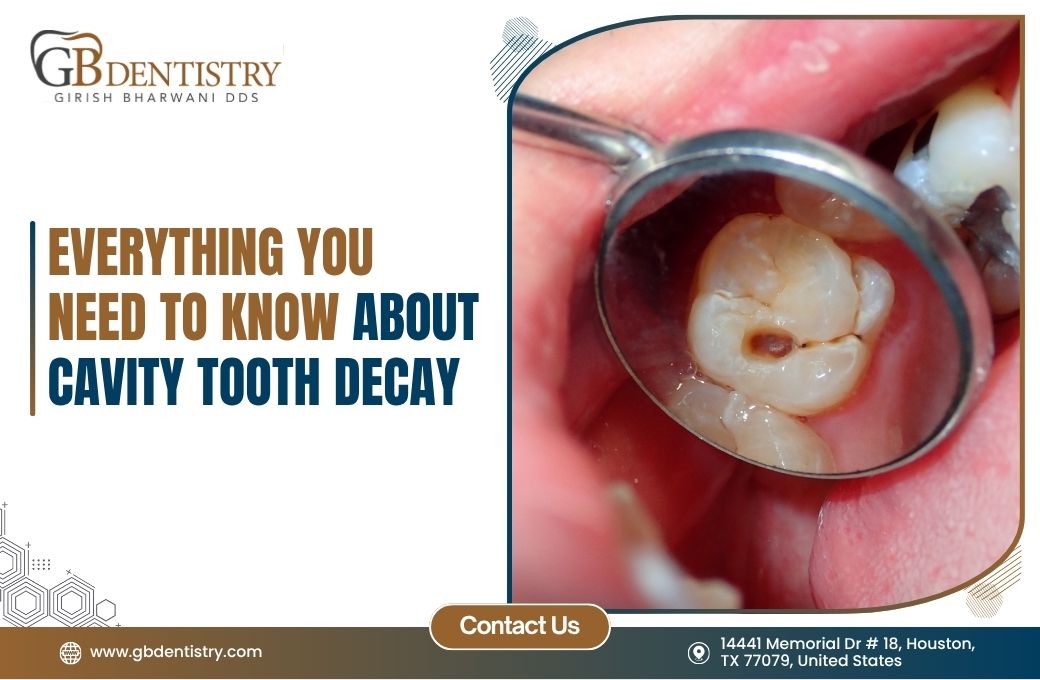
Cavity tooth decay is one of those problems that can start quietly and then become much harder to ignore. If you are noticing sensitivity, dark spots, food catching in a tooth, or pain when you chew, it is worth understanding what is happening before the problem gets deeper.
This guide explains how cavity tooth decay develops, what early signs to watch for, what treatment options are commonly used, and how the dentists at GB Dentistry help patients in Memorial make practical decisions before a small issue turns into a larger one.
Cavity tooth decay in Memorial is the breakdown of tooth structure caused by acids produced when bacteria feed on sugars and starches left on the teeth. Over time, those acids weaken the enamel, then move deeper into the tooth if the decay is not treated.
Understanding that process matters because a cavity is not just a surface stain or a minor flaw. Once decay reaches a certain point, it usually needs professional treatment. The earlier you identify it, the more options you often have.
That is why cavity tooth decay deserves attention before it becomes painful.
The first stage is often invisible. Plaque builds up on the teeth, especially around grooves, gumlines, and tight spaces between teeth. If plaque is not removed well, acids begin to dissolve minerals from the enamel.
At this stage, a tooth may still look normal, but the surface is already changing. That is why routine exams are so valuable: Dr. Bharwani and the dentists at GB Dentistry can often spot early trouble before it becomes a cavity that needs more involved care.
Early cavity tooth decay can be easier to treat when it is found during a routine visit.
Not all teeth decay at the same speed. Back teeth often face more risk because they have deeper grooves and are harder to clean thoroughly. That is one reason tooth decay back teeth is such a common concern.
Dry mouth, frequent snacking, sugary drinks, reflux, crowding, old fillings, and missed cleanings can also make decay more likely. In real life, it is usually a mix of habits, tooth shape, and oral conditions rather than one single cause.
A cavity does not happen all at once. It usually moves through a series of stages: early mineral loss, enamel breakdown, deeper decay into dentin, and then possible involvement of the nerve if the problem keeps progressing.
That progression is important because treatment choices change along the way. A small area may be managed conservatively, while a deeper cavity may require a dental filling for cavities or, in more advanced cases, additional restorative care.
For cavity tooth decay, the stage of the problem guides how conservative treatment can be.
Tell us about your smile goals, and let’s find the care that fits you.
Many patients wait because they expect cavity tooth decay to hurt right away, but early decay often stays quiet. Knowing the subtle warning signs can help you schedule care before the tooth becomes more sensitive or damaged. Seeking tooth decay treatment solutions at the first signs of decay helps preserve more of the natural tooth structure, reduce the need for extensive procedures, and support long-term oral health.
The signs are not always dramatic. Sometimes the earliest clues are easy to overlook during daily brushing or eating. Cavity tooth decay can be subtle, so even small changes deserve attention.
Brief sensitivity to cold, sweets, or biting pressure can be an early warning sign. If it comes and goes, that does not mean it is harmless. It often means the tooth is reacting to changes in the enamel or dentin.
If sensitivity starts to linger, becomes sharper, or appears in the same tooth more often, it is a good time to have it checked. Waiting usually narrows your treatment choices.
A chalky white spot, a brown area, or a rough patch can signal mineral loss or breakdown of the enamel. Some people notice a tiny pit, a dark line in a groove, or food catching in one area more often than usual.
These changes are especially important on chewing surfaces and between teeth. A cavity filling near me search may be what brings you to care, but the real goal is to confirm whether the tooth still has a small, manageable issue or a deeper one.
Pain with pressure can mean decay has moved past the enamel and affected the deeper tooth structure. If chewing on one side suddenly feels uncomfortable, the tooth should be examined rather than assumed to be “just sensitive.”
That is especially true if the discomfort is focused in the same back tooth each time. Tooth decay back teeth can progress quietly because those teeth do the hardest work and are harder to clean well.
A careful exam is about more than confirming that a cavity exists. The dentists at GB Dentistry look at the size, depth, location, and risk factors surrounding the tooth so treatment can match the actual problem.
This step matters because two cavities that look similar from the outside can require different approaches depending on how deep they go and whether nearby teeth are also at risk. That context helps cavity tooth decay treatment stay precise rather than overly aggressive.
Dr. Bharwani may check for visible changes, rough surfaces, soft spots, trapped food, gum irritation, and bite-related discomfort. The exam can also show whether the decay is affecting the tooth structure in a way that makes restoration more urgent.
A careful exam also helps distinguish decay from worn enamel, staining, old dental work, or a crack. That distinction matters because the treatment plan should match the cause, not just the symptom.
Cavities between teeth and under existing restorations can be difficult to see without imaging. X-rays help show how far decay has spread and whether nearby teeth are affected.
This is one reason people searching for tooth decay treatment in Memorial often benefit from a full evaluation instead of guessing based on symptoms alone. The earlier the decay is mapped correctly, the easier it is to choose the right treatment.
A careful diagnosis of cavity tooth decay can keep treatment focused on the actual depth of damage.
In some cases, early enamel changes may be watched closely if the tooth has not formed a true cavity yet. That is different from a softened, open area that already needs restoration.
The decision depends on whether the tooth surface is intact, whether symptoms are present, and whether the area is likely to progress. Dr. Bharwani can explain which category the tooth falls into and what that means for your next step.

Treatment for cavity tooth decay depends on how far the decay has progressed. The main goal is to remove damaged tooth structure, protect the remaining tooth, and prevent the problem from spreading further.
The best choice is not always the most extensive one. It is the one that matches the condition of the tooth today and the risk of future breakdown. With cavity tooth decay, the simplest effective option is usually the best starting point.
If the tooth only shows early mineral loss and there is no true hole, a fluoride treatment for cavity risk may help strengthen the enamel and slow progression. This is most useful when the decay has not yet created a structural defect.
Fluoride does not rebuild a large cavity, but it can be valuable in the right situation. That is why timing matters so much; early care gives you more options.
When decay has created a cavity, a dental filling for cavities is one of the most common treatments. The damaged tissue is removed, and the tooth is restored so it can function again.
The exact material and approach depend on the size and location of the cavity, the amount of healthy tooth left, and the biting forces on that tooth. Back teeth often need special attention because they handle stronger chewing pressure.
If decay has moved close to the nerve or compromised a larger part of the tooth, a simple filling may not be enough. In those situations, the dentists at GB Dentistry may discuss more protective restorative options based on the tooth’s condition.
The key point is not to wait for severe pain before getting evaluated. Deeper decay is often more complex to treat and may require more planning than a small early cavity. Advanced cavity tooth decay may need more than one visit if the tooth has lost strength.
Treating one cavity is important, but preventing the next one is what protects your smile over time. Most recurring decay comes down to a few patterns that can be improved with better daily habits and regular professional care.
Prevention should be realistic, not perfect. Small changes done consistently usually matter more than major changes that do not last. That matters because cavity tooth decay often returns when daily patterns stay the same.
Consistent brushing with fluoride toothpaste, cleaning between the teeth, and limiting how often you sip sugary or acidic drinks all help reduce cavity risk. It is not only how much sugar you eat, but how often your teeth are exposed to it.
If you snack frequently during the day, your teeth spend more time under acid attack. Cutting back on constant grazing can make a real difference, especially for people prone to tooth decay back teeth.
Professional cleanings remove plaque and buildup that home care can miss, especially around hard-to-reach areas. Exams also catch early changes before they become painful or expensive to repair.
For many patients, the value of routine care is not just cleaning. It is the chance for Dr. Bharwani to spot patterns, update recommendations, and help you avoid repeat decay in the same areas.
Depending on your risk level, the dentists at GB Dentistry may discuss fluoride support, sealants for certain teeth, or other preventive steps that help protect vulnerable areas. As part of their preventive dentistry in memorial services, they create personalized care plans designed to reduce the risk of cavities, strengthen enamel, and support long-term oral health.
These are not necessary for everyone, and they are not a replacement for home care. But for patients with repeated cavities, dry mouth, or deep grooves in the back teeth, preventive measures can be worth discussing.

Let’s talk about your concerns and create a care plan that fits you.
You do not need to wait for severe pain to seek help. In fact, many cavity problems are easier to manage when they are caught early, before the tooth becomes more sensitive or the decay reaches deeper layers. With cavity tooth decay, earlier care can protect more natural tooth structure.
This section helps you judge urgency so you can decide whether to schedule soon, call for a prompt exam, or seek faster attention if symptoms are worsening.
If you have lingering sensitivity, visible dark spots, a rough or pitted area, food trapping in one tooth, or pain when chewing, it is time to be evaluated. These signs often mean the tooth is already changing in a way that will not improve on its own.
The same is true if a filling feels different, a tooth suddenly becomes more sensitive, or you notice a recurring problem in the same spot. Small changes can signal a larger breakdown underneath.
Searching for cavity filling near me often means you want care that fits your schedule and location. For Memorial-area patients, it helps to have a dental team that can evaluate the tooth, explain options clearly, and plan treatment without unnecessary delays.
That practical convenience matters, especially when the concern is already affecting eating, sleep, or day-to-day comfort.
Your visit usually starts with an exam and any imaging that is needed to see the full extent of the decay. After that, Dr. Bharwani or the dentists at GB Dentistry can explain whether the tooth needs monitoring, fluoride support, a filling, or another restorative plan.
A good first visit should leave you with a clear understanding of what is happening, what could happen if it is left alone, and what the next step should be.
Cavity tooth decay is often easier to manage when patients act on the early signs instead of waiting for pain to force a decision.
The most useful step is usually the simplest one: get the tooth examined, understand how far the decay has gone, and choose treatment that fits the condition of the tooth today.
At GB Dentistry, we focus on helping you make that decision with clear information and careful evaluation. If you are dealing with sensitivity, a suspicious spot, or a tooth that just does not feel right, I encourage you to have it checked sooner rather than later.
For cavity tooth decay, clear guidance can make the next step feel less intimidating.


Cavity tooth decay is the breakdown of tooth enamel and deeper layers caused by acids from bacteria. It usually starts small, but it can progress if the tooth is not treated early.
Early signs often include brief sensitivity to cold or sweets, a chalky white spot, a brown mark, or discomfort when chewing. Some cavities cause little or no pain at first. In Memorial, GB Dentistry helps patients understand cavity tooth decay before it becomes more complex.
Very early enamel damage may be slowed or sometimes remineralized with fluoride and better home care. Once a true cavity forms, it usually needs a filling or other treatment.
Tooth decay back teeth can be harder to detect and clean because those teeth have deep grooves and heavy chewing force. They often need prompt evaluation and a durable restoration.
A dental filling for cavities removes decayed tooth structure and restores the tooth with a filling material. The goal is to stop further breakdown and protect normal function.
Yes, fluoride treatment for cavity risk can help some adults, especially those with dry mouth, early decay, or a history of frequent cavities. It works best before a cavity gets deeper.
If you notice sensitivity, pain when chewing, or a visible dark spot, it is time to schedule an exam. Searching for cavity filling near me is a good first step when symptoms are becoming noticeable.
Yes, GB Dentistry helps patients in Memorial and nearby areas with tooth decay treatment in Memorial. Dr. Bharwani and the dentists at GB Dentistry can evaluate the tooth and discuss the most appropriate next step.