Looking for a way to get your smile again? Memorial Dental Crowns and Bridges could be the solution. They are modern dentistry solutions that can replace damaged or missing teeth and enhance your oral health and appearance. In this blog, you’ll learn about the process of getting dental crowns and bridges, step by step, and the benefits and challenges of these procedures.
Understanding Dental Crowns
Dental Crowns are custom-made restorations that cover and protect damaged or weakened teeth. Available in a wide range of materials including ceramic, porcelain, metal or composite resin. There are many reasons why people get dental crowns and bridges. Some of the reasons are:
- Recreating the shape, size and strength of a tooth
- Improvement of tooth appearance
- Support for your teeth bridge
- Encapsulating an implant in
- Saving a tooth after a root canal
- Dental Bridges Basics 101
Exploring Dental Bridges
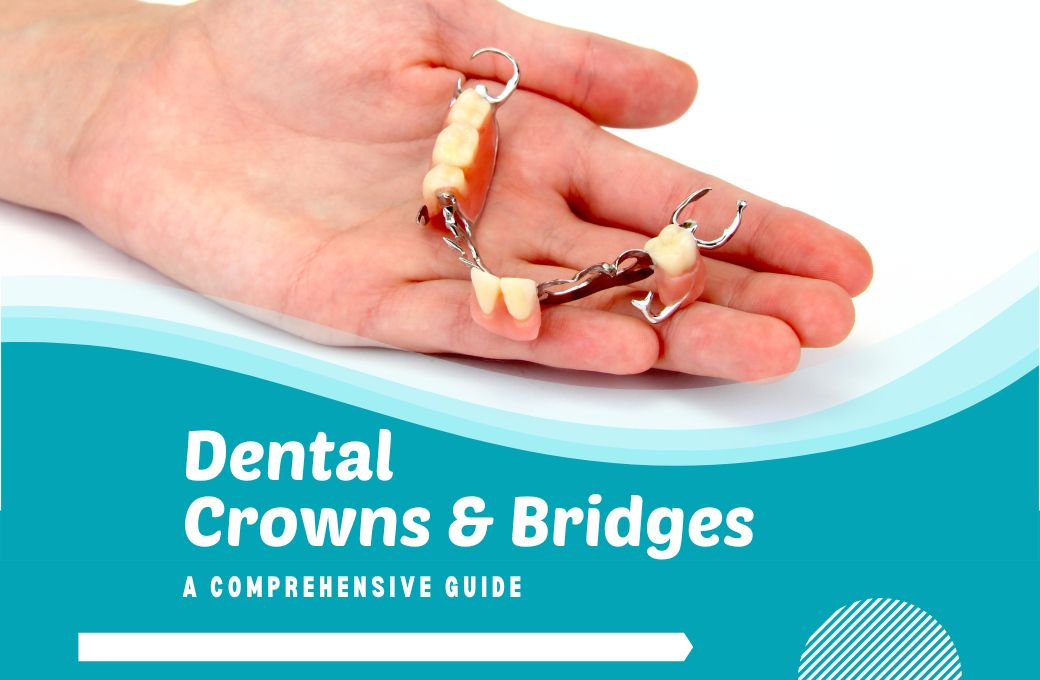
Dental bridges are a restorative device used to replace one or more missing teeth. They are made of artificial teeth, called pontics, which are anchored to the natural teeth or implants, called abutments, on either side of the gap. Four types of dental bridges exist, depending on their support:
Conventional Bridges: This is the most common type of bridge. Crowns and bridges are supported by the abutment teeth .
Cantilever bridges: When there is only one abutment tooth available, a cantilever bridge is used. On one side of the space, supported by a dental prosthesis.
Maryland bridges: Front teeth replacement They are supported by bonding metal or porcelain “wings” to the back of the abutment teeth.
Bridges on implants: When there are several missing teeth or teeth that are not strong enough to support a bridge, a bridge on implants is the best option. They are secured in place with dental implants , which are surgically placed into the jaw bone .
Dental crowns and bridges can offer several benefits, such as:
- Restoring the function and appearance of your smile
- Preventing Teeth from Moving Into the Space
- Uniform bite force distribution
- Keeping your face shape
- Chewing & speech 2010
Step-by-Step Process: Dental Crowns
Initial consultation and assessment
The first step is to tell Dr. Bharwani about your dental concerns and goals. Dr. Bharwani will evaluate your tooth to determine if you are a candidate for dental crowns and bridges . You will also be asked about the material, color and shape of your crown.
Tooth preparation
Then your tooth will be prepared for the crown. Dr. Bharwani at Memorial will remove any decay or damage and shape your tooth to fit the dental crowns and bridges. We’ll numb the area with local anesthetic, and make you comfortable.
Impressions and digital scans
Step 3: Impressions or digital scans are taken of your tooth and the teeth around it. These will be used to create a model of your mouth and to create your custom made crown. Dr. Bharwani will even match your crown to the color of your natural teeth.
Temporary crown placement
The fourth step is to place a temporary crown on your prepared tooth. This protects your tooth and allows you to eat and speak normally while you wait for your permanent crown. Dr. Bharwani will instruct you on how to care for your temporary crown.
Custom fabrication of the permanent crown
Obtain Your Permanent Dental Crowns and Bridges. Dr. Bharwani will send your impressions or digital scans to a dental laboratory, where a skilled technician will create your crown in the material and specifications you choose. It could be a few weeks.
Final placement and adjustments
The last step is “crown” your tooth with your permanent crown. Dr. Bharwani will remove your temporary crown and check the fit and appearance of your permanent crown. When your crown is ready, Dr. Bharwani will make the necessary adjustments and cement your crown in place. You’ll also be given advice on how to care for your new crown.
Step-by-Step Process: Dental Crowns and Bridges
Preliminary examination and treatment plan
First, you’ll meet with Dr. Bharwani for a consultation about your concerns and goals for your teeth. Dr Bharwani will check your mouth and tell you if dental crowns and bridges is the correct choice. You will also tell us about your bridge type, material and design.
Preparation of adjacent teeth (if necessary)
Next, teeth adjacent to the gap will be prepared for the bridge. Depending on the bridge you choose, Dr. Bharwani may need to shape your abutment teeth to fit the bridge. A local anesthetic will be used to numb the area for your comfort.
Impressions and digital scans
Step 3: We take impressions or digital scans of your teeth and the gap. These will be used to make a model of your mouth and to design your custom made bridge. Dr. Bharwani will also color match your bridge to the color of your natural teeth.
Temporary bridge placement
Step 4: Place a temporary bridge over your gap. This will shield your teeth and enable you to eat and talk normally until your permanent dental crowns and bridge is ready. Dr. Bharwani will show you how to care for your temporary bridge.
Fabrication of the permanent bridge
Step 5: Build your permanent bridge. Next, your impressions or digital scans are sent to a dental laboratory where a skilled technician will fabricate your bridge. You get to choose the specs and material. Could be a couple of weeks.
Final placement and adjustments
The last step is to place your permanent bridge. Dr. Bharwani will remove your temporary bridge and check the fit and appearance of your permanent bridge. Dr. Bharwani will make any adjustments and cement your bridge in place. Also, you will be shown how to care for your new bridge.
Also Read: Bridge for Back Teeth vs. Implants
Aftercare and Maintenance
Once you have your dental crowns and bridges, you will need to follow some aftercare and maintenance tips to help with their longevity and health. These are :-
brush twice a day and floss once a day
with a non-abrasive tooth paste and a soft tooth brush.
Swish an antibacterial mouthwash around your mouth.
Avoid hard, sticky or chewy foods that could damage your crown or bridge.
Routine visits to GB Dentistry for examinations and cleanings
If you have any trouble or feel uncomfortable, tell Dr. Bharwani right away.
Potential Challenges and Solutions
Dental crowns and bridges are generally safe and successful, but may have some possible disadvantages or complications.
Tooth or gum pain or sensitivity
Bridge or crown dislodgment or loosening
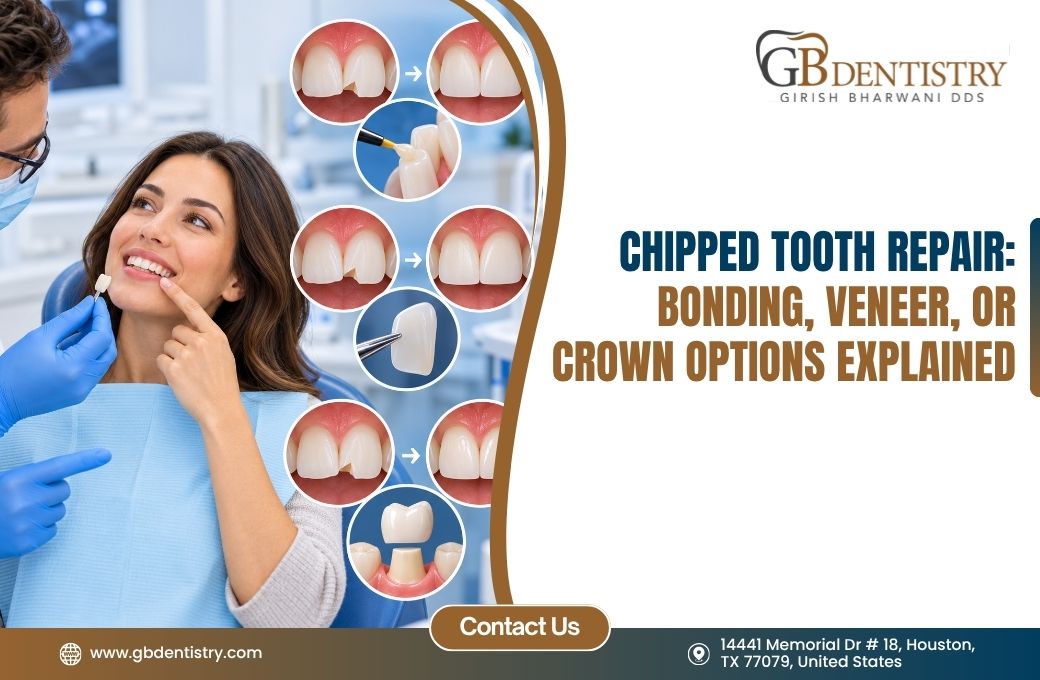
Cracks or chips in dental crowns and bridges
Infection or decay in the tooth or gums
Allergy to the material of crown or bridge
If you are experiencing any of these problems, you should see Dr. Bharwani right away. Dr. Bharwani will examine the inside of your mouth and provide you with the perfect treatment/solution. If the problem is severe enough, Dr. Bharwani may need to repair, replace or remove your dental crowns and bridges.
Conclusion
Dental crowns and bridges are great dental options to help rejuvenate your smile and improve your oral health. Understanding the steps of these restorations will help you feel prepared for a successful and satisfying dental experience.
Looking for dental crowns and bridges in Memorial? Make an appointment with Dr Bharwani today. You deserve a beautiful and healthy smile you can be proud of. You can also like us on Facebook and follow us on Instagram.
Also Read: