
Root Canal vs Extraction: Which Is Better for Your Tooth?
Root canal vs extraction explained by GB Dentistry. Learn about infection, recovery, retreatment, driving, and choosing care in Memorial, Texas, with clarity.
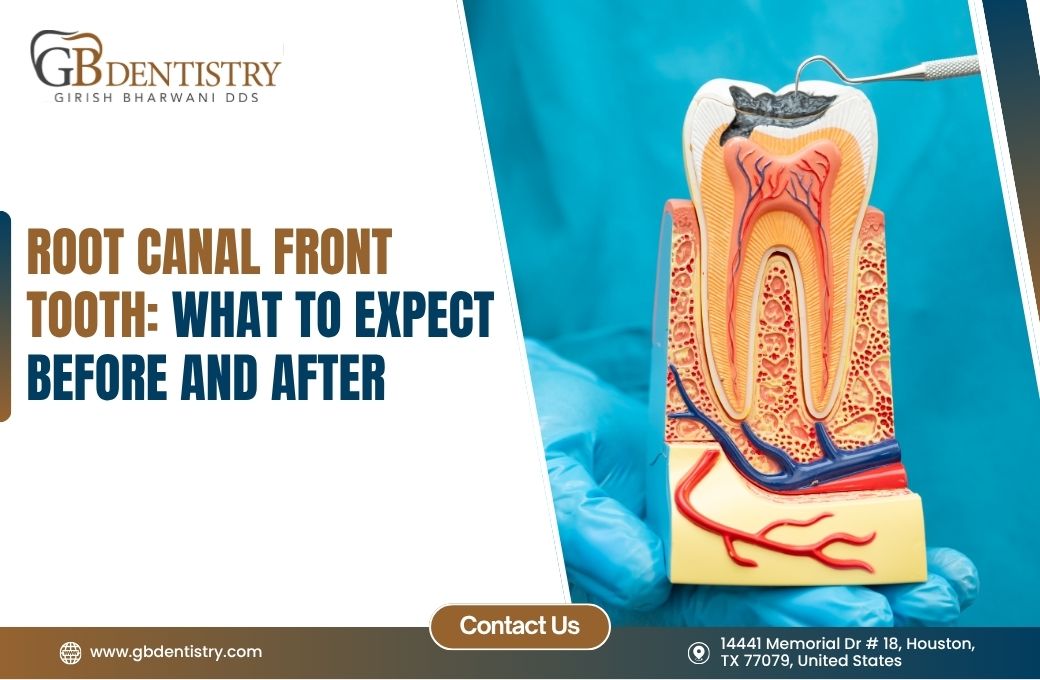
A root canal front tooth can feel urgent and confusing, especially if the tooth is visible every time you speak or smile.
If you are dealing with pain, sensitivity, darkening, or a cracked front tooth, you probably want to know what the treatment involves, what it looks like afterward, and whether the tooth can still look natural.
This article walks through what usually happens before and after treatment, what recovery is like, and what questions to ask before you decide on care.
It also explains when a front tooth root canal is often recommended, what can affect the final result, and how the dentists at GB Dentistry help patients in Memorial, Texas make a practical, informed plan.
A root canal front tooth plan should also protect the way your smile looks in everyday life.
A root canal on a front tooth is done to remove infected or inflamed pulp from inside the tooth and protect the tooth from further damage.
Front teeth usually have a simpler root structure than molars, but the procedure still needs careful planning because the tooth sits in the smile zone and the final appearance matters. A root canal treatment plan should consider both infection control and cosmetic stability.
The pulp can become irritated or infected after deep tooth decay in memorial, trauma, a crack, or repeated dental work. Front teeth are especially vulnerable after a hard bump, sports injury, or biting something unexpectedly firm.
When the pulp becomes damaged, the tooth may stay sensitive, ache on its own, or change color over time. A root canal front tooth concern is especially common after an injury that seemed minor at first.
The root canal procedure on a front tooth often takes less time than a back tooth procedure because the tooth usually has one canal instead of several.
Even so, the dentists at GB Dentistry still need to confirm how far the problem has spread, clean the inside of the tooth thoroughly, and decide whether the tooth will need a filling or crown afterward.
A careful root canal front tooth exam helps avoid treating the wrong source of pain.
Not every painful front tooth needs a root canal, but some symptoms deserve prompt attention.
If these signs are present, a root canal treatment specialist can examine the tooth, take x-rays if needed, and help determine whether the nerve is still healthy enough to avoid treatment or whether the tooth needs intervention.
For a root canal front tooth, early diagnosis can make the final restoration easier to plan.
Tell us about your smile goals, and let’s find the care that fits you.
Before treatment, the goal is to confirm the source of the pain and decide whether the tooth can be saved predictably. A careful exam matters because front tooth discomfort can sometimes come from gum irritation, a bite issue, or a nearby tooth rather than the obvious tooth itself.
That is why a root canal front tooth evaluation should not be based on symptoms alone.
The dentists at GB Dentistry usually evaluate the tooth, the surrounding gum tissue, and the bite. X-rays help show infection, changes around the root, previous dental work, or damage that is not visible during a visual exam.
This step is important because a front tooth can look only mildly affected on the surface while the nerve is already compromised. A root canal front tooth can sometimes hide damage that only imaging reveals.
A good treatment discussion should help you understand the trade-offs before you commit.
Waiting too long can allow an infection to worsen, which may make the tooth harder to restore later. In some cases, delaying treatment can also increase the chance that nearby tissues become irritated.
Getting evaluated early gives the root canal dentist in Memorial more options and often makes the planning process more straightforward. A root canal front tooth appointment in Memorial can help clarify whether urgent care is needed.

The procedure itself is usually straightforward from the patient’s perspective, even though the internal work is detailed. The dentists at GB Dentistry focus on keeping the area numb, removing the damaged tissue, disinfecting the canal, and sealing the tooth so bacteria have less chance to reenter.
A root canal front tooth procedure also has to protect the visible part of the smile.
The appointment generally follows a predictable sequence. First, the tooth is numbed. Then an opening is made in the tooth so the inside can be cleaned. The infected pulp is removed, the canal is shaped and disinfected, and the space is sealed with filling material.
A temporary or permanent restoration is then used to protect the tooth.
Patients often want to know whether the procedure will feel dramatic or complicated. Most people notice pressure, vibration, and time in the chair more than pain once the tooth is numb.
If the tooth is already inflamed, the area may stay sore for a short time afterward, even when the procedure goes well.
A front tooth root canal may later need cosmetic attention because the tooth is visible. If the natural color changes, the tooth may be restored with a filling, dental bonding, or crown depending on how much tooth structure remains.
That decision is usually based on strength, appearance, and how much of the tooth was affected before treatment. After a root canal front tooth procedure, the restoration choice can shape the final appearance.
Eat as directed before your appointment, based on the instructions you receive
These small steps can make the appointment and the first day after treatment much easier to manage.

Let’s talk about your concerns and create a care plan that fits you.
The recovery period is often the part patients worry about most, especially when the tooth is in a visible location. Knowing what is normal afterward can help you avoid unnecessary stress and spot the signs that need a follow-up call.
A root canal front tooth recovery plan should make normal soreness easier to understand.
Mild soreness, gum tenderness, or pressure around the tooth is common for a few days. The tooth and surrounding tissues may also feel a little different when you bite.
This does not always mean something is wrong; it can simply reflect healing after the tissue around the root has been irritated.
Because the tooth is in the front of the mouth, many patients notice the area when speaking or smiling before they notice it while eating.
Soft foods are usually easier for the first day or two, and it is wise to avoid biting directly into hard foods until the dentists at GB Dentistry confirm that the tooth is ready for full use.
After a root canal front tooth treatment, gentle chewing helps protect the area while it settles.
Some symptoms should not be ignored.
If something does not feel right, a follow-up visit can help determine whether the tooth needs an adjustment or whether another issue is affecting healing.
Appearance is often the biggest concern for a front tooth root canal. The treatment can save the tooth, but the final look depends on the tooth’s original color, how much structure remains, and whether the nerve damage has already caused discoloration.
A root canal front tooth result often depends on both the internal treatment and the visible restoration.
A tooth may darken before treatment because the nerve has been injured or the inside of the tooth has changed over time. After treatment, color differences can still happen if the tooth had trauma, old filling material, or internal staining. The final restoration also influences how natural the tooth looks.
For some front teeth, a strong filling or bonding may be enough. In other cases, a crown may be recommended if the tooth is weak, heavily restored, or more likely to fracture. The right choice depends on structure, bite forces, and cosmetic goals, not on appearance alone.
A root canal specialist near me search often brings up clinics quickly, but appearance questions deserve a real conversation, not a rushed decision.
When the treatment plan is built carefully, a front tooth can often be restored in a way that looks natural in everyday conversation and photos. A root canal front tooth can often look natural when each step is planned carefully.
Once the root canal is complete, the goal shifts to protecting the tooth so it can stay functional and stable. A front tooth often survives well when the inside is cleaned properly and the outer structure is restored in a way that fits the bite.
A root canal front tooth still needs routine care because the outside of the tooth remains vulnerable.
Brush twice a day with a soft-bristled brush, floss carefully, and keep up with routine dental visits. Good home care matters because the treated tooth still depends on the surrounding gum tissue and neighboring teeth staying healthy.
Some front-tooth habits create avoidable stress.
The dentists at GB Dentistry may recommend a follow-up visit to confirm that the tooth is healing and the restoration is functioning properly. This is especially important after trauma, because front teeth can look stable at first and still need close observation later.
If the tooth has unusual anatomy, a previous failed treatment, or signs of deeper structural damage, a root canal treatment specialist may be the right next step. The goal is not just to remove infection, but to preserve the tooth in a way that makes sense for the long term.
A root canal front tooth can feel stressful because it affects both comfort and appearance, but timely treatment often gives you more options than waiting and hoping the problem settles down.
The most useful next step is a careful exam that confirms what is happening inside the tooth and what kind of restoration will protect it afterward.
At GB Dentistry, we help patients in Memorial understand the procedure, the recovery process, and the decisions that affect the final result.
If you are noticing pain, discoloration, or injury in a front tooth, it is worth having it evaluated sooner rather than later so you can make a confident plan with Dr. Bharwani or the dentists at GB Dentistry.
A root canal front tooth visit at GB Dentistry can help you understand those choices before symptoms worsen.


A front tooth root canal often takes less time than treatment on back teeth because the canal structure is simpler. The exact visit length depends on infection, access, and whether a same-day restoration is possible. For a root canal front tooth, the dentists at GB Dentistry can explain the sequence before you begin.
The procedure is usually done with local numbing, so most patients feel pressure more than pain. Some tenderness afterward is normal, especially if the tooth was already inflamed before treatment.
A root canal treatment specialist may be helpful when the tooth has a complex infection, previous failed treatment, or signs of a crack or trauma. Careful planning can affect the long-term result. A root canal front tooth with trauma or unusual anatomy may need extra planning.
Some front teeth darken after nerve damage or trauma, and discoloration can also show up after treatment. If appearance is a concern, ask the dentists at GB Dentistry about restoration options that help improve color match.
Soft foods are usually easiest at first, and it is wise to avoid biting hard foods with the treated tooth until it is fully restored. If a temporary filling is in place, extra caution helps protect it.
Not always. Some front teeth can be restored with bonding or a filling, while others need a crown if the tooth is weak, heavily damaged, or likely to fracture.
Look for a provider who can evaluate pain, trauma, and appearance together, not just the infection. The dentists at GB Dentistry can help determine whether the tooth needs root canal care and what restoration makes sense.
Call if pain gets worse, swelling increases, your bite feels off, or a temporary filling comes loose. Those signs can mean the tooth needs a prompt check before a bigger problem develops.