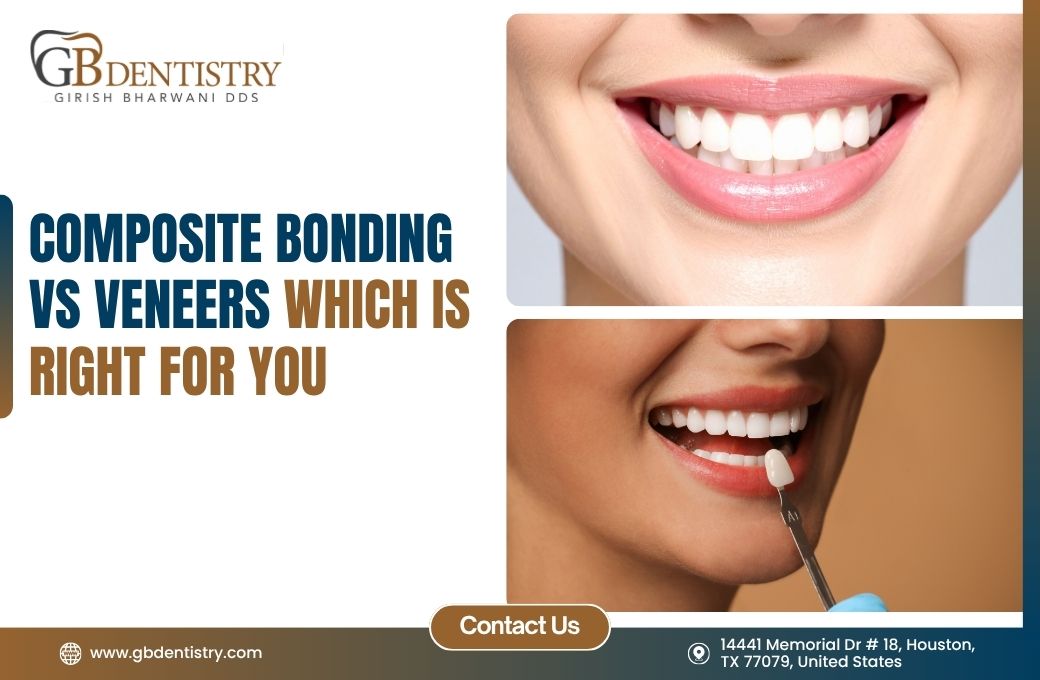
Composite Bonding vs Veneers: Which Is Right for You?
Compare composite bonding vs veneers for chips, gaps, and discoloration, including prep, durability, maintenance, cost, and options at GB Dentistry in Memorial.
Swollen gum between teeth can make eating, brushing, or flossing uncomfortable, especially when the swelling appears suddenly or bleeds easily. The cause may be minor irritation, trapped food, gum inflammation, an infection, or a problem involving a nearby tooth.
Because similar symptoms can require very different treatment, knowing what to watch for matters.
This guide explains common causes, warning signs, swollen gum relief options, how braces can affect the area, and when the dentists at GB Dentistry in Memorial, Texas may recommend treatment such as a tooth extraction. It also covers how cosmetic dentistry in Memorial may address certain concerns related to the appearance of the teeth and gums.
The triangular piece of gum between two teeth is called the interdental papilla. It can become enlarged or tender when bacteria, food particles, pressure, or infection irritate the tissue.
The appearance of the swelling alone does not identify the cause, so the location, duration, and accompanying symptoms all matter.
Food caught tightly between teeth is one of the simplest explanations for localized swelling. Fibrous foods, popcorn hulls, seeds, and other small particles can press into the gum and create irritation.
The area may feel as though something is stuck, and the gum may bleed when you try to clean it.
Careful flossing or using an appropriately sized interdental cleaner may remove the irritant. Avoid snapping floss forcefully into the gum, using sharp objects, or repeatedly digging at the area. Those actions can create a second injury and make swelling last longer.
Plaque is a sticky film of bacteria that collects along the gumline and between teeth. If it is not removed consistently, the gum may become red, puffy, tender, and more likely to bleed.
This early inflammation is commonly associated with gingivitis. A swollen gum between teeth can have more than one contributing factor.
Gingivitis may affect several areas rather than only one small space, but one location can appear worse if plaque collects there or cleaning is difficult.
Gingivitis gum disease treatment generally focuses on professional evaluation and cleaning, improved daily plaque removal, and monitoring for signs that inflammation is not resolving.
A cavity between teeth can trap food and bacteria where the problem is difficult to see. A cracked tooth or rough filling can also irritate nearby gum tissue.
Sensitivity to cold, sweets, biting pressure, or repeated food trapping may point to a tooth-related cause rather than gum irritation alone.
The dentists at GB Dentistry may need to examine the tooth surfaces and, when appropriate, use dental imaging to assess areas hidden from view.
Treating the tooth may be more useful than repeatedly treating the swollen tissue around it. If a swollen gum between teeth persists, the underlying cause matters more than temporary relief.
A localized gum swelling can sometimes be associated with an infection around a tooth. Possible signs include throbbing pain, a bad taste, drainage, increasing pressure, facial swelling, or sensitivity when biting.
In some cases, the visible gum bump is only the surface sign of a deeper problem.
An abscess should not be treated by squeezing or puncturing the swelling. Dental infections can spread into surrounding tissues, and the appropriate treatment depends on where the infection started and whether the tooth can be restored.
If you’re wondering, “Why are my gums swollen?” common causes include aggressive brushing, sharp foods, accidental biting, tobacco or vaping irritation, and poorly fitting dental appliances, all of which can inflame the gum between teeth.
Hormonal changes may also make gum tissue more reactive to plaque. These causes may improve after the irritant is removed, but persistent or recurrent swelling still deserves an evaluation.
A swollen area that repeatedly returns in the same location should not be dismissed simply because it is not severely painful.
Recurrence can indicate a hard-to-clean space, a tooth problem, or gum disease that needs more focused care. The right treatment for a swollen gum between teeth depends on what is irritating the tissue.

Tell us about your smile goals, and let’s find the care that fits you.
Mild irritation often improves after the area is cleaned gently and the source of pressure is removed. However, swelling that persists, worsens, or appears with pain may require professional assessment.
The goal is not to diagnose the cause at home; it is to recognize when waiting could allow a treatable problem to progress.
Inflamed gum treatment depends on the pattern of symptoms. Common signs of irritation or gingivitis include:
Early evaluation may identify a problem that can be addressed with cleaning, home-care changes, or treatment directed at a tooth or restoration. A swollen gum between teeth that keeps returning deserves a dental evaluation.
Contact GB Dentistry promptly when swelling is accompanied by worsening toothache, pus or drainage, fever, facial swelling, a swollen jaw, or difficulty opening the mouth. These signs can indicate an infection requiring timely care.
Seek emergency medical attention if swelling affects breathing or swallowing, spreads rapidly through the face or neck, or causes severe difficulty opening the mouth. Those symptoms can represent a serious infection that needs urgent evaluation beyond routine home care.
Some dental infections cause significant pain, but others produce pressure, a small bump, or intermittent discomfort. Pain can also decrease temporarily if an infection drains, even though the underlying source remains.
For that reason, a painless lump that does not resolve should still be discussed with Dr. Bharwani or the dentists at GB Dentistry.
A clinical examination can help distinguish temporary irritation from a condition that needs treatment. With a swollen gum between teeth, changes in pain, drainage, or swelling can guide urgency.

Home care can reduce irritation while you arrange an evaluation, but it cannot remove decay, repair a cracked tooth, or eliminate an established infection.
The safest approach is gentle cleaning and avoiding actions that injure the gum further. A swollen gum between teeth that keeps returning deserves a dental evaluation.
Rinse with warm salt water if it feels soothing, and continue brushing with a soft-bristled toothbrush. Clean between the teeth carefully with floss or an interdental cleaner that fits without force.
Drink water and choose softer foods if chewing is uncomfortable. A recurring swollen gum between teeth is a reason to look for food traps or dental problems.
If you normally can take over-the-counter pain medicine, follow the product label and consider asking a physician or pharmacist about safety with your health history and current medications.
Do not place aspirin directly against the gum; it can irritate or burn the tissue. Cleaning gently is important when a swollen gum between teeth feels tender or bleeds.
Do not pop, cut, or squeeze a swollen gum area. Do not use leftover antibiotics, someone else’s medication, concentrated peroxide, rubbing alcohol, or other harsh substances on the tissue.
Antibiotics are not a substitute for treating the dental source, and using them without clinical guidance may delay appropriate care. Dr. Bharwani can evaluate a swollen gum between teeth and the nearby tooth surfaces.
It is also a mistake to stop cleaning the area completely because it bleeds. Brushing and interdental cleaning should remain gentle and controlled unless Dr. Bharwani gives you different instructions.
Avoiding the area allows more plaque to accumulate and may prolong inflammation. The right treatment for a swollen gum between teeth depends on what is irritating the tissue.
Brackets, wires, and clear aligners can make plaque and food harder to remove. A swollen gum with braces may result from trapped food, plaque buildup, pressure from an appliance, or irritation from a wire or bracket.
Continue following the cleaning instructions provided for the appliance, using tools designed for the spaces around it. A recurring swollen gum between teeth is a reason to look for food traps or dental problems.
If a wire is rubbing the gum, an attachment is loose, or swelling is isolated near one bracket, contact the appropriate dental or orthodontic care team for guidance. Do not cut or bend a wire unless a qualified provider specifically instructs you to do so.
Persistent swelling around braces may require both appliance-related adjustments and evaluation for gum inflammation or tooth decay. If a swollen gum between teeth persists, the underlying cause matters more than temporary relief.
Minor irritation should begin to settle after the area is gently cleaned and the trigger is removed.
There is no universal timetable for every cause, so swelling that remains, returns, or becomes more painful should be assessed rather than repeatedly self-treated. A swollen gum between teeth that keeps returning deserves a dental evaluation.
At GB Dentistry, an appointment can help determine whether the issue is localized irritation, gingivitis, decay, a restoration concern, or a deeper infection.
Bringing information about when the swelling began and what makes it better or worse can make the evaluation more efficient. A swollen gum between teeth may look minor even when the nearby tooth needs attention.

Let’s talk about your concerns and create a care plan that fits you.
Treatment starts with identifying the source. Dr. Bharwani may review your symptoms, inspect the gum and nearby teeth, check for bleeding or drainage, assess the bite, and recommend imaging when the suspected problem cannot be evaluated fully by looking alone.
Cleaning gently is important when a swollen gum between teeth feels tender or bleeds.
When plaque and tartar are contributing to the swelling, care may involve a professional cleaning and a more targeted daily hygiene routine.
The dentists at GB Dentistry can show you how to angle the toothbrush, guide floss around the contact point, and choose an interdental tool that fits your anatomy. A swollen gum between teeth can have more than one contributing factor.
Improvement depends on consistent plaque control and the condition of the surrounding gums. If inflammation extends below the gumline or there are signs of periodontal disease, the recommended treatment may be more involved than routine cleaning.
Home care for a swollen gum between teeth should not delay treatment for infection.
A cavity between teeth may require restorative treatment, while a damaged or cracked tooth may need a different approach based on its location, severity, and remaining healthy structure.
Treating the source helps prevent the gum from being repeatedly irritated by food, bacteria, or an uneven surface. Dr. Bharwani can evaluate a swollen gum between teeth and the nearby tooth surfaces.
A tooth that cannot be predictably restored may require removal. Extraction is not automatically the first choice, but it can be considered when preserving the tooth is not a reasonable option or when the tooth is contributing to infection and cannot be repaired adequately.
With a swollen gum between teeth, changes in pain, drainage, or swelling can guide urgency.
Tooth extractions may be recommended for a severely decayed, fractured, infected, or otherwise non-restorable tooth. The decision should follow an examination and discussion of alternatives, risks, healing considerations, and possible plans for replacing the missing tooth when appropriate.
Removing a tooth does not necessarily treat every cause of gum swelling. If the swelling comes from generalized gingivitis, trapped food, or a neighboring tooth, extraction would not address the underlying issue.
That is why the dentists at GB Dentistry evaluate the entire area rather than making a decision based only on the visible gum tissue. A swollen gum between teeth may look minor even when the nearby tooth needs attention.
Before treatment, ask what is causing the swelling, whether the tooth can be restored, what alternatives exist, and what follow-up will be needed. You can also ask how the recommendation may affect chewing, nearby teeth, cleaning, and future replacement options.
The right plan varies by the tooth involved, your oral health, medical history, symptoms, and examination findings. A clear explanation from Dr. Girish Bharwani can help you compare treatment choices without assuming that the most visible symptom tells the whole story.
Prevention is less about brushing harder and more about cleaning the areas where plaque and food collect. The best routine is one you can perform consistently without injuring the gum or avoiding difficult spaces.
Brush twice daily with a soft-bristled toothbrush and clean between teeth every day using floss, interdental brushes, or another method recommended for your mouth.
If you have braces, bridges, implants, or crowded teeth, your cleaning tools may need to be adjusted as your oral conditions change. Home care for a swollen gum between teeth should not delay treatment for infection.
Pay attention to repeated food trapping. If one space consistently catches food, do not simply accept it as normal. The cause could be tooth shape, gum changes, decay, a filling contour, or tooth movement, and an examination may identify a way to manage the problem.
Regular dental visits allow the dentists at GB Dentistry to monitor gum health, check areas that are difficult to see at home, and identify changes before they become more disruptive.
The appropriate visit schedule depends on your oral health and risk factors rather than a single schedule for everyone.
Tell the care team about bleeding, sensitivity, appliance irritation, bad taste, recurring swelling, or changes in how your teeth fit together. Small details can help direct the examination toward the likely source.
A swollen gum between teeth that is brief and clearly linked to minor irritation may settle with gentle care. Swelling that persists, recurs, spreads, drains, or affects eating should not be managed indefinitely with rinses alone.
For patients in Memorial, Texas and nearby areas, GB Dentistry can help evaluate the area and explain whether the next step involves preventive care, gum swelling treatment, restorative treatment, emergency evaluation, or consideration of tooth extraction.
Contact the practice to arrange an appointment and describe any urgent symptoms when scheduling.
A swollen gum between teeth is a symptom, not a diagnosis. It may reflect something as simple as trapped food, but it can also signal gum inflammation, decay, a damaged tooth, or infection.
The most useful next step is to avoid irritating the area, keep it gently clean, and seek an evaluation if it does not improve or if warning signs develop.
At GB Dentistry, we look beyond the visible swelling to understand what is affecting the gum and nearby teeth.
If tooth extraction becomes part of the discussion, I believe you should understand why it is being considered, what alternatives may exist, and what follow-up care may involve. Clear information helps you make a decision that fits your oral health needs.


Common causes include trapped food, plaque-related gingivitis, decay, a damaged filling, irritation from braces, or an infection near a tooth. Persistent or recurring swelling should be evaluated by Dr. Bharwani or the dentists at GB Dentistry.
Gently brush and clean between the teeth, rinse with warm salt water if soothing, and avoid squeezing the swelling or using harsh chemicals. Home care may reduce irritation but cannot treat decay or an established dental infection.
It can be. Gingivitis often causes red, puffy, bleeding gums, but swelling in one space may also result from trapped food, decay, trauma, or infection. An examination is needed to identify the cause and choose appropriate gum disease treatment.
Clean carefully around brackets and wires using the tools recommended for your appliance. If swelling is isolated near a bracket, a wire is rubbing, or symptoms persist, contact the dentists at GB Dentistry or your orthodontic care team for guidance.
Arrange dental care when swelling persists, returns, becomes painful, bleeds repeatedly, drains, or occurs with bad taste or tooth sensitivity. Facial swelling, fever, or trouble swallowing requires prompt attention and may need emergency evaluation.
Yes. Decay between teeth can trap food and irritate the nearby gum, sometimes with cold sensitivity or biting pain. Dr. Bharwani may recommend an examination and imaging before discussing restorative treatment or, when necessary, tooth extraction.
No. Treatment may involve cleaning, improved plaque control, gum care, or restoration. Extraction is considered only when a tooth is severely damaged, infected, or not reasonably restorable after the dentists at GB Dentistry assess it.
GB Dentistry serves Memorial, Texas and nearby areas and can evaluate localized gum swelling, tooth-related concerns, and urgent symptoms. Contact the practice to discuss your symptoms and determine the appropriate appointment type.