
How Dental Appliances for Sleep Apnea Can Improve Your Sleep
Dental appliances for sleep apnea may help you sleep more comfortably when snoring, nighttime breathing interruptions, or CPAP challenges are affecting your rest.
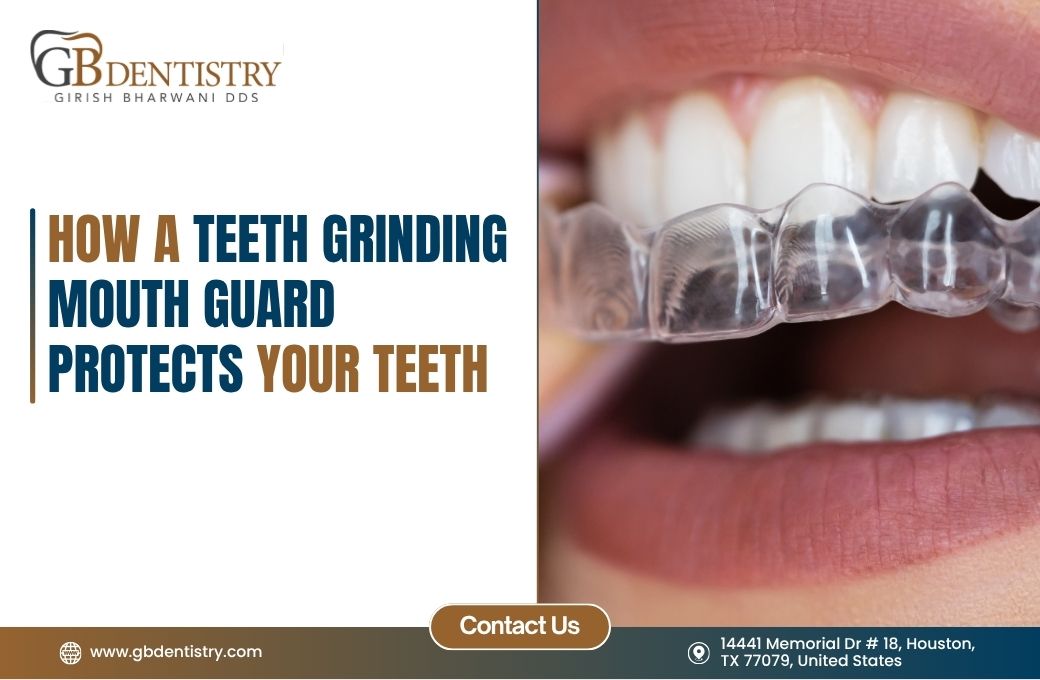
A teeth grinding mouth guard can help protect your teeth when clenching or grinding happens during sleep, but choosing the right type matters.
Waking with jaw soreness, headaches, sensitive teeth, chipped edges, or tight facial muscles can be signs that nighttime grinding is placing more force on your teeth than they can comfortably handle.
At GB Dentistry in Memorial, Texas, Dr. Bharwani can evaluate the condition of your teeth, jaw, and existing dental work before you decide whether a mouth guard for grinding teeth is appropriate.
This guide explains how grinding causes damage, how a guard helps, which options involve important trade-offs, and when to schedule an evaluation.
A teeth grinding mouth guard creates a protective barrier between the upper and lower teeth. It does not necessarily stop the muscle activity that causes clenching or grinding, but it can reduce direct tooth-to-tooth contact and help distribute pressure across a broader surface. The benefits of using a night mouth guard include protecting teeth from excessive wear, reducing pressure on dental restorations, and helping minimize some discomfort associated with nighttime grinding and clenching.
That distinction is important: a guard protects the teeth while the underlying cause is evaluated separately.
During normal chewing, the teeth meet briefly and the pressure is controlled by the food between them. Grinding is different.
The jaw may stay tightly clenched, or the teeth may slide against one another repeatedly for hours. Sleep-related grinding can be difficult to notice because it happens outside your awareness.
Without a protective layer, this repeated contact may gradually flatten chewing surfaces, wear away enamel, create small chips, or contribute to temperature sensitivity.
A night mouth guard for grinding teeth gives the opposing teeth a smooth material to contact instead of allowing enamel to rub directly against enamel.
A guard cannot rebuild enamel that has already worn away. Its main value is helping limit additional mechanical contact while Dr. Bharwani looks for signs of current damage and discusses ways to manage the contributing factors.
An effective teeth grinding mouth guard is more than a generic barrier between the teeth.
A properly designed guard can help distribute biting forces instead of concentrating them on a few teeth.
This may be particularly relevant when you have a filling, crown, veneer, implant restoration, tooth that has been weakened by tooth decay, or areas of uneven contact. The ideal design depends on your bite and the condition of your mouth.
This is one reason a custom night guard for teeth grinding is not simply a thicker version of an over-the-counter tray. The fit, material, thickness, and contact pattern all influence how the appliance feels and how forces are directed.
More material is not automatically better if it creates discomfort or changes the way your jaw closes. For comfort, a teeth grinding mouth guard should not create sharp pressure or lasting bite changes.
Grinding can affect restorations as well as natural teeth. A crown or filling may be strong, but it is still exposed to repeated force.
Porcelain Veneers in Memorial and other cosmetic restorations can be especially frustrating to repair when they chip or loosen because of an unrecognized grinding habit.
A mouth guard may help reduce the mechanical stress placed on these surfaces. However, protection is not a guarantee that a restoration will never fracture or require maintenance. Existing damage, the severity of grinding, the design of the restoration, and everyday habits all matter.
If you are considering teeth whitening or other cosmetic dentistry, it is sensible to discuss grinding first.
A whitening plan may improve tooth color, but it does not address wear, chips, cracks, or the forces that can affect future cosmetic work. A teeth grinding mouth guard works best when its fit and bite contacts are checked.

Tell us about your smile goals, and let’s find the care that fits you.
Grinding is not always a emergency dentistry in memorial, but persistent or forceful grinding deserves attention. Many people first notice a symptom rather than the grinding itself.
A partner may hear nighttime sounds, or you may discover that your jaw feels tired when you wake up. Other signs become apparent only during a dental examination.
Possible clues include morning jaw stiffness, facial tenderness, frequent tension headaches, tooth sensitivity, flattened biting edges, small fractures, or a feeling that your teeth no longer fit together as they once did.
You may also notice indentations along the sides of your tongue or cheeks, although these findings can have other explanations. The design of a teeth grinding mouth guard should match your teeth and symptoms.
One symptom alone does not prove that grinding is the cause. Sensitivity can result from decay, gum recession, enamel erosion, teeth whitening products, or other conditions.
Jaw pain can also involve the jaw joints or surrounding muscles for reasons unrelated to tooth contact. Dr. Bharwani can assess the full pattern rather than relying on one complaint.
Tooth wear often develops gradually. You may adapt to a slightly flatter tooth surface and not recognize a meaningful change until sensitivity, cracking, or a cosmetic concern appears.
Repeated force can also make a small defect more important over time, particularly if the tooth already has a large restoration or weakened structure.
The amount of damage varies. Some people grind occasionally without obvious injury, while others generate enough force to cause significant wear.
Stress, sleep disruption, medication changes, bite characteristics, alcohol or caffeine habits, and certain sleep-related issues may influence the pattern, but the cause is not always clear. The design of a teeth grinding mouth guard should match your teeth and symptoms.
Contact GB Dentistry for guidance if you have a cracked tooth, a broken restoration, sudden difficulty biting, swelling, significant pain, or sensitivity that is worsening. Severe facial swelling, difficulty breathing or swallowing, uncontrolled bleeding, or a serious injury requires urgent medical attention.
Do not keep wearing an appliance that causes sharp pain, leaves a sore spot, changes your bite for an extended period, or feels loose enough to create a swallowing concern.
A mouth guard should be checked if it becomes damaged or uncomfortable rather than modified at home with scissors, heat, or abrasive tools. A teeth grinding mouth guard also requires cleaning, storage, and periodic fit checks.

The right appliance depends on the amount of grinding, your bite, your dental history, and how consistently you can wear and care for it.
Store-bought guards can be accessible and useful for some short-term situations, but a custom appliance may offer more individualized fit and control.
The decision should be based on function and safety, not thickness alone. For comfort, a teeth grinding mouth guard should not create sharp pressure or lasting bite changes.
Over-the-counter guards are generally available in several forms, including stock trays, boil-and-bite materials, and adjustable designs. They may be a practical temporary option while you arrange an evaluation, especially if you need a guard quickly.
Their limitations include bulk, poor retention, uneven contact, and difficulty accommodating existing dental work. A properly selected teeth grinding mouth guard can help reduce direct contact between teeth.
A loose appliance may be distracting or may not stay in place during sleep. An overly bulky design can make breathing or speaking feel different and may make some people less likely to use it.
If the material is softened and shaped incorrectly, the result may be uncomfortable or may not provide consistent coverage. The design of a teeth grinding mouth guard should match your teeth and symptoms.
If you use a noncustom guard, follow the product instructions carefully and stop using it if it causes pain or a persistent bite change.
Bring it to an appointment so Dr. Bharwani can see whether its fit and condition raise concerns. A teeth grinding mouth guard works best when its fit and bite contacts are checked.
A custom appliance is made from impressions or digital records of your mouth and is designed around your teeth and bite.
The dentists at GB Dentistry can consider existing restorations, missing teeth, sensitive areas, and the way your upper and lower teeth contact when discussing this option. Follow-up helps confirm that a teeth grinding mouth guard is protecting the intended areas.
The practical benefit is individualized fit. A well-fitting appliance should remain stable without excessive tightness, cover the intended teeth appropriately, and feel manageable enough for regular use.
It may also be easier to adjust when your bite or dental work changes. Dr. Bharwani can determine whether a teeth grinding mouth guard suits your specific pattern.
Custom does not mean risk-free or suitable for every person. It still requires cleaning, periodic inspection, and professional review. Material can wear down, and the appliance may need adjustment or replacement as your mouth changes.
The cost and process also vary according to the design and your needs, so ask for details before proceeding. Dr. Bharwani can determine whether a teeth grinding mouth guard suits your specific pattern.
Soft materials may feel more comfortable initially, but some people find that a soft surface encourages additional chewing or clenching. Harder materials may offer more durability or allow more precise bite adjustment, but they can take longer to get used to.
Some appliances combine materials to balance comfort and stability. The condition of your restorations matters when choosing a teeth grinding mouth guard.
There is no universal best material. The appropriate choice depends on the clinical findings and your response to the appliance.
Tell Dr. Bharwani if you have gagging, dry mouth, jaw joint symptoms, sensitive teeth, or difficulty sleeping with an appliance. Those details can influence the discussion. A teeth grinding mouth guard also requires cleaning, storage, and periodic fit checks.
Even a well-designed guard works only when it is worn as directed and maintained properly.
Care also provides useful information: recurring soreness, new bite awareness, or visible wear on the appliance may show that the design or your grinding pattern needs review. A properly selected teeth grinding mouth guard can help reduce direct contact between teeth.
Wear the appliance according to the instructions from GB Dentistry. If you have not used a guard before, it may take time to become familiar with the sensation.
Insert it with clean hands, make sure it is seated correctly, and do not force it into place if the fit has changed. An effective teeth grinding mouth guard is more than a generic barrier between the teeth.
Before sleep, clean your teeth as usual and rinse the guard. After removing it, rinse away saliva and debris, clean it using the recommended method, and allow it to dry fully before placing it in a ventilated case.
Avoid storing it in a hot car or exposing it to hot water, which can distort some materials. A teeth grinding mouth guard works best when its fit and bite contacts are checked.
Do not share the appliance. Keep it away from pets, who may chew through it, and bring it to appointments so the dentists at GB Dentistry can inspect wear and fit when appropriate.
A teeth grinding mouth guard may protect dental surfaces even when grinding itself continues.
Toothpaste can be abrasive for some guard materials, and household cleaners may leave residues or damage the surface.
Use the cleaning instructions supplied with the appliance or ask the GB Dentistry team which method is appropriate for its material. A teeth grinding mouth guard may protect dental surfaces even when grinding itself continues.
Replace or review the guard when it develops cracks, sharp edges, deep grooves, discoloration that does not clean away, or obvious thinning.
A guard that no longer fits because of new dental work, tooth movement, or damage should not be treated as interchangeable with a new one. A teeth grinding mouth guard may protect dental surfaces even when grinding itself continues.
For the first few weeks, note whether you wake with jaw soreness, headaches, tooth sensitivity, or muscle fatigue. Also pay attention to whether the guard remains stable and whether you notice a change in your bite after removing it.
This information can make follow-up more productive. A properly selected teeth grinding mouth guard can help reduce direct contact between teeth.
A guard is one part of a broader plan. Dr. Bharwani may also discuss habits and conditions that could be contributing to symptoms.
Do not attempt to permanently change your bite by filing teeth or adjusting the appliance yourself. Those changes can create new problems that are harder to reverse.

Let’s talk about your concerns and create a care plan that fits you.
The right time to ask about an appliance is before damage becomes extensive, but you do not need to wait for a long list of symptoms.
An evaluation is especially useful when you have recurring morning discomfort, visible tooth wear, repeated chips, damaged dental work, or reports of loud grinding during sleep. Follow-up helps confirm that a teeth grinding mouth guard is protecting the intended areas.
Dr. Bharwani may review your symptoms, medical and dental history, sleep-related concerns, medications, habits, and previous appliances. The examination can include looking for wear patterns, cracks, tenderness, changes in the bite, gum recession, and the condition of fillings, dental crowns, veneers, or other restorations.
The goal is not simply to hand you an appliance. It is to determine whether a guard makes sense, identify problems that need attention first, and choose a design that fits your current mouth.
If your symptoms suggest a concern outside the teeth or jaw muscles, you may need guidance about discussing that concern with an appropriate medical professional. The condition of your restorations matters when choosing a teeth grinding mouth guard.
A productive consultation should leave you clear about why a particular design is being considered and what to do if it feels uncomfortable.
Ask how the appliance should fit, how to clean it, what signs require a follow-up, and how existing dental work may affect the plan.
You can also ask how frequently the guard should be checked and what may cause it to wear out. Requirements vary by appliance and by patient, so specific instructions from GB Dentistry should take priority over general advice found online.
Searching for a dentist in Memorial Houston often means you want care that is convenient, but location should not be the only factor. Look for an office where you can explain your symptoms, discuss alternatives, and receive guidance that accounts for your actual dental condition.
GB Dentistry serves patients in Memorial, Texas and nearby areas. If grinding symptoms are affecting your comfort, teeth, or restorations, contact the practice to discuss whether an evaluation with Dr. Bharwani or the dentists at GB Dentistry is appropriate.
Bring any current mouth guard and a list of symptoms or questions so the visit can focus on decisions that apply to you.
A teeth grinding mouth guard may be a useful protective tool, but it is not a substitute for diagnosing tooth damage, treating dental disease, or investigating persistent jaw symptoms.
The safest choice is the one that fits your mouth, your needs, and a plan for follow-up.
When patients ask me about a teeth grinding mouth guard, I first want to understand what their teeth and jaw are experiencing.
A guard can help reduce direct contact and protect vulnerable surfaces, but the fit, material, existing dental work, and symptoms all matter. An appliance that is uncomfortable or poorly matched to your bite may not be a practical long-term solution.
If you notice morning jaw soreness, tooth sensitivity, worn edges, chips, or a damaged restoration, do not wait for the problem to become more complicated before asking for guidance.
At GB Dentistry, we can review your concerns and help you understand which next step is appropriate for your situation in Memorial, Texas. A careful evaluation is the starting point for protecting your teeth and making informed decisions about future care.


It places a protective layer between the upper and lower teeth, reducing direct contact and helping spread pressure. It does not necessarily stop clenching, so Dr. Bharwani should also evaluate possible causes and existing damage.
No. Sports guards are designed mainly for impact protection, while appliances for grinding are designed around tooth contact and nighttime wear. The appropriate design depends on your bite, symptoms, and dental history.
A custom appliance may provide a more individualized fit and bite design, but it is not automatically right for everyone. Dr. Bharwani can compare fit, material, comfort, existing restorations, and expected maintenance with you. For comfort, a teeth grinding mouth guard should not create sharp pressure or lasting bite changes.
Possibly, but the appliance should account for your restorations and current bite. Crowns and veneers can experience grinding forces, so discuss the design with Dr. Bharwani before using a new guard.
Morning jaw soreness, headaches, tooth hypersensitivity, flattened edges, chips, or reports of nighttime grinding are reasons to schedule an evaluation. These signs can have other causes, so an assessment is important before choosing an appliance.
Usually, a guard protects teeth rather than guaranteeing that grinding or clenching will stop. Persistent symptoms may require discussion of contributing habits, sleep concerns, medications, jaw symptoms, or other factors.
Rinse it after use, clean it according to its material-specific instructions, let it dry, and store it in a ventilated case. Avoid hot water, abrasive products, household cleaners, and leaving it where pets can chew it.
Patients in Memorial, Texas and nearby areas can contact GB Dentistry to discuss an evaluation with Dr. Bharwani or the dentists at GB Dentistry. Bring your appliance, symptom details, and questions about fit or dental work.