
Is Dental Bonding for Gaps Right for Your Smile?
Learn whether dental bonding for gaps fits your smile, including candidacy, treatment, cost factors, durability, repairs, and questions to ask in Memorial, TX.
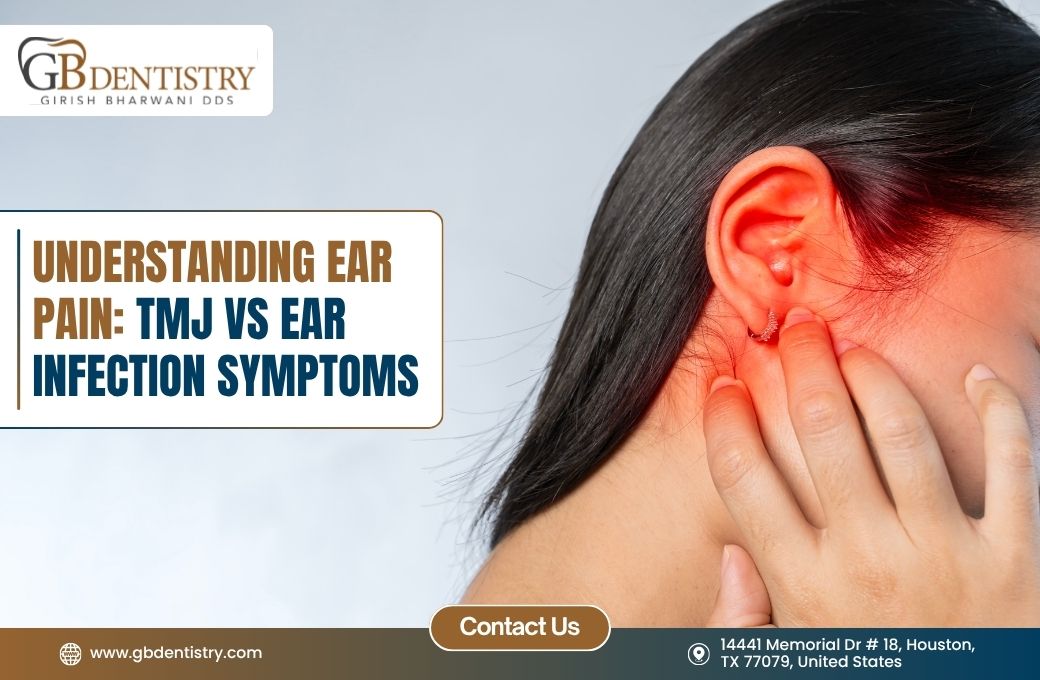
TMJ vs ear infection symptoms can feel surprisingly similar, especially when aching near the ear occurs alongside jaw soreness, pressure, headache, or difficulty chewing.
Because the ear and jaw joint sit close together, it is not always obvious whether the problem begins in the ear, the jaw muscles, or the temporomandibular joint. This detail matters when comparing TMJ vs ear infection symptoms.
Knowing the differences can help you choose the right next step instead of waiting for symptoms to worsen or assuming you need antibiotics.
This guide explains common TMJ symptoms, signs that may point toward an ear infection, when jaw pain can affect the ear, and how Dr. Bharwani and the dentists at GB Dentistry provide TMJ Relief in Memorial, Texas, by evaluating your concerns and recommending appropriate care.
The first challenge is understanding why two different conditions can create pain in nearly the same area. The temporomandibular joints are positioned just in front of the ears, and several muscles involved in chewing attach around the jaw, temple, and face.
Irritation in these structures may be felt as ear pain even when the ear itself is healthy. A careful TMJ vs ear infection evaluation should account for this pattern.
An ear infection can also cause discomfort that spreads toward the jaw. The result is a confusing pattern: ear pressure may be related to inflammation inside the ear, or it may reflect muscle tension and joint irritation near the ear canal.
TMJ-related discomfort often involves the jaw joint, chewing muscles, or both. It may appear on one side or both sides and can fluctuate depending on chewing, clenching, stress, sleep position, or prolonged talking. TMJ dentist services can help evaluate these symptoms and identify appropriate treatment options to improve jaw comfort and function.
Some people notice the problem after waking, while others feel it later in the day as the jaw muscles become fatigued. This is one reason TMJ vs ear infection symptoms should be considered in context.
Common TMJ symptoms may include:
A sound from the joint does not automatically mean damage or require treatment. The importance of clicking or popping depends on the complete pattern, including pain, locking, reduced movement, and changes in function. In a TMJ vs ear infection comparison, details like this can influence the next step.
An ear infection involves inflammation or infection in part of the ear. Symptoms can vary based on whether the outer, middle, or inner ear is affected, so an online symptom list cannot confirm the cause.
Ear-related concerns may include ear pain, reduced hearing, drainage, fever, congestion, dizziness, or a feeling of pressure.
Pain that becomes worse when the outer ear is touched or moved may suggest an issue involving the ear canal, although only an appropriate clinical evaluation can determine what is happening.
Fever, drainage, or a sudden change in hearing deserves particular attention because those signs are less typical of uncomplicated TMJ discomfort. Understanding this point makes a TMJ vs ear infection discussion more useful.

Tell us about your smile goals, and let’s find the care that fits you.
It is easy to focus on the most noticeable symptom, such as ear pain, and overlook the trigger. If pain increases while biting or clenching, the jaw may be involved.
If it follows a respiratory illness and comes with fever or drainage, an ear-related condition may be more likely. These patterns are clues, not diagnoses.
When symptoms overlap, Dr. Bharwani can assess the jaw joints, chewing muscles, bite-related strain, and oral structures while considering whether the symptoms require medical or ear-focused evaluation.
If the findings do not fit a dental source, the safest plan may include referral or coordination with an appropriate medical professional. Questions about TMJ vs ear infection symptoms often depend on patterns like this.
Comparing symptom patterns can help you organize what you are experiencing before an appointment. It cannot replace an examination, but it can make the conversation with Dr. Bharwani more precise and help identify symptoms that should not wait. This factor is worth discussing when comparing TMJ vs ear infection symptoms.
TMJ symptoms often change with jaw activity. Pain may increase when you chew tough foods, clench your teeth, yawn, sing, or hold your mouth open for an extended period. You may also notice tenderness when pressing the muscles along the cheek, temple, or jawline.
Morning jaw soreness can be an important clue. Nighttime clenching or grinding, also called bruxism, may overload the chewing muscles and jaw joints while you sleep. Some people do not realize they clench because it happens outside conscious awareness.
Signs can include worn tooth surfaces, chipped teeth, jaw fatigue, temple pain, or repeated headaches. At GB Dentistry, TMJ vs ear infection concerns are considered alongside jaw and oral examination findings.
A TMJ headache is often related to muscle tension or joint irritation. It may feel like pressure near the temples, forehead, or side of the head rather than a headache that begins deep in the ear.
However, headache patterns vary, and persistent or severe headaches should not automatically be attributed to TMJ problems.
Ear infection symptoms may include ear drainage, fever, noticeable hearing reduction, pronounced congestion, dizziness, or pain that is not affected by chewing or jaw movement.
Children may show irritability, trouble sleeping, or pulling at the ear, while adults may describe pressure, muffled hearing, or sharp pain. That context can matter when reviewing TMJ vs ear infection symptoms.
The absence of fever does not rule out an ear problem, and the presence of jaw pain does not prove that TMJ dysfunction is responsible. Some ear conditions require timely medical treatment, particularly when hearing changes, drainage, significant dizziness, or severe pain occur.
| Symptom pattern | May be more consistent with TMJ involvement | May be more consistent with an ear-related condition |
|---|---|---|
| Pain changes with chewing, clenching, or yawning | Often | Less typical |
| Jaw clicking, locking, or limited opening | Possible | Not typical |
| Tenderness in the temple or chewing muscles | Common | Less typical |
| Fever or ear drainage | Not typical | More concerning for an ear problem |
| Hearing change or significant dizziness | Not typical | Needs medical evaluation |
| Ear fullness without fever or drainage | Possible | Also possible |
The key is not one isolated symptom but the combination, timing, and progression.
Writing down when the pain began, what makes it worse, whether hearing has changed, and whether you have had congestion or fever can make the evaluation more efficient. This point can help clarify a TMJ vs ear infection evaluation.

Yes, an ear infection can cause jaw pain, and TMJ irritation can create ear-related symptoms. The direction of the discomfort is one reason these conditions are frequently confused. Understanding the difference helps you avoid treating the wrong source or delaying care that belongs with a medical provider. How TMJ disease treatment can help depends on the underlying cause and may include appropriate dental evaluation and treatment to relieve jaw discomfort, improve joint function, and manage related symptoms.
The ear, jaw, and nearby tissues share closely connected nerves and sit within a small area of the head. Inflammation in or around the ear may make nearby movement uncomfortable, including chewing and opening the mouth.
A person with an ear infection may therefore describe pain near the jaw even though the primary problem is not the joint. This detail matters when comparing TMJ vs ear infection symptoms.
Pain may also lead to temporary muscle guarding. When movement feels uncomfortable, the jaw may become tense, which can add soreness around the cheek or joint.
Treating the underlying ear condition may be necessary before it becomes clear how much jaw discomfort remains. A careful TMJ vs ear infection evaluation should account for this pattern.
The jaw joints sit immediately in front of the ears. Irritation in a joint or muscle can therefore feel like a deep earache, pressure, fullness, or discomfort with no visible ear infection. Some people also report ringing or sensitivity around the ear, although these symptoms have many possible causes.
TMJ-related ear discomfort often has a mechanical pattern. It may appear with chewing, clenching, wide opening, or direct pressure over the joint.
It may also improve when the jaw rests, although temporary improvement does not confirm the diagnosis. This is one reason TMJ vs ear infection symptoms should be considered in context.
Not every pain near the ear comes from TMJ dysfunction or an infection. Sinus congestion, dental infection, tooth damage, nerve irritation, muscle tension, and other medical conditions can produce overlapping symptoms. Severe or unusual pain should not be explained away based only on location.
At GB Dentistry, evaluation for TMJ concerns may include questions about jaw function, clenching, grinding, headaches, sleep, and symptom triggers. Dr. Bharwani may also examine jaw movement, joint sounds, chewing muscles, teeth, and surrounding oral structures.
If symptoms suggest a source outside dental care, medical evaluation may be the appropriate next step. In a TMJ vs ear infection comparison, details like this can influence the next step.

Let’s talk about your concerns and create a care plan that fits you.
TMJ treatment depends on what the examination shows and how symptoms affect daily function.
The goal is not to select the most aggressive option immediately; it is to identify contributing factors, protect the teeth and joints when appropriate, and choose care that matches the severity and pattern of the problem. Understanding this point makes a TMJ vs ear infection discussion more useful.
While waiting for an evaluation, temporary changes may reduce stress on the jaw. Choose softer foods if chewing is painful, avoid gum and very chewy foods, and try not to open the mouth extremely wide.
Keep the teeth slightly apart when you are not eating rather than holding them together throughout the day.
Warm or cool compresses may help some people, but comfort measures should be used cautiously and stopped if they worsen symptoms. Over-the-counter pain medication may not be appropriate for everyone.
Follow product directions and ask a qualified medical professional or pharmacist about safety if you have health conditions, take other medications, or are unsure what is suitable. Questions about TMJ vs ear infection symptoms often depend on patterns like this.
A TMJ mouth guard, sometimes called an occlusal appliance, may be considered when clenching or grinding appears to contribute to tooth wear, muscle soreness, or joint strain. A professionally evaluated appliance is different from assuming that any over-the-counter guard will fit or address the underlying problem.
A mouth guard may protect teeth or change how forces are distributed, but it is not automatically the right choice for every jaw complaint. Fit, design, wear schedule, and follow-up matter.
An appliance that increases discomfort, changes the bite noticeably, or makes the jaw feel worse should be discussed with Dr. Bharwani rather than used indefinitely without review. This factor is worth discussing when comparing TMJ vs ear infection symptoms.
TMJ jaw exercises can be helpful in selected situations, particularly when limited movement or muscle coordination is part of the problem. However, exercises are not universal. Stretching an already irritated joint or repeatedly forcing the jaw through painful movement may increase symptoms.
Gentle, controlled movement is generally more appropriate than aggressive stretching. Stop if an exercise causes sharp pain, locking, increased swelling, or a lasting increase in symptoms.
The dentists at GB Dentistry can help determine whether exercises make sense for your presentation and whether a physical therapy referral or medical assessment should be considered. At GB Dentistry, TMJ vs ear infection concerns are considered alongside jaw and oral examination findings.
Treatment planning may involve more than the joint itself. Stress-related clenching, sleep habits, posture, recent dental work, tooth sensitivity, missing teeth, and bite changes can all be relevant pieces of the evaluation. Not every suspected factor needs to be corrected, but each should be considered in context.
A practical plan may include observation, habit changes, an appliance, targeted exercises, restorative care, or coordination with another provider. The appropriate approach depends on examination findings rather than the label alone. That context can matter when reviewing TMJ vs ear infection symptoms.
The right timing depends on the intensity, duration, and associated symptoms. Mild jaw soreness after unusual chewing may settle with rest, but recurring pain, restricted movement, or symptoms affecting sleep and eating deserve a structured evaluation.
Early attention can also help distinguish a jaw problem from an ear or medical concern. This point can help clarify a TMJ vs ear infection evaluation.
Consider contacting GB Dentistry if you repeatedly experience jaw pain, clicking with discomfort, morning soreness, a TMJ headache, tooth wear, difficulty opening your mouth, or ear pressure that seems connected to jaw movement.
A dentist for TMJ concerns can assess whether the symptoms appear related to the joints, muscles, teeth, or another oral condition.
Bring useful details to the appointment: when symptoms started, whether they occur on one or both sides, what movements trigger them, whether you clench or grind, and whether hearing or balance has changed.
A brief symptom record is often more useful than trying to remember every detail in the treatment chair. This detail matters when comparing TMJ vs ear infection symptoms.
Some symptoms should not wait for a routine TMJ consultation. Contact an appropriate medical professional promptly for significant hearing loss, ear drainage, high fever, severe dizziness, swelling around the ear, severe or rapidly worsening pain, or symptoms following an injury.
Emergency care may be appropriate for facial weakness, confusion, difficulty breathing, or other sudden serious symptoms.
These warning signs do not establish a diagnosis, but they can signal a need for medical evaluation beyond dental care. If ear symptoms are prominent, medical assessment may need to occur before or alongside TMJ evaluation. A careful TMJ vs ear infection evaluation should account for this pattern.
At GB Dentistry in Memorial, Texas, Dr. Bharwani and the dentists at GB Dentistry can discuss the relationship between jaw symptoms, bruxism, tooth wear, headaches, and discomfort near the ears.
The evaluation is intended to clarify the likely source and identify reasonable next steps, not to assume that every earache is a TMJ problem. This is one reason TMJ vs ear infection symptoms should be considered in context.
Depending on the findings, the plan may involve conservative TMJ care, monitoring, a TMJ mouth guard discussion, jaw exercises, or coordination with a medical provider. Ask what the examination showed, what symptoms should prompt follow-up, and how you will know whether the plan needs adjustment.
When ear pain and jaw pain occur together, it is understandable to feel uncertain about where to begin.
TMJ vs ear infection symptoms can overlap, but the pattern of pain, jaw movement, hearing changes, fever, drainage, and related symptoms can provide useful direction. In a TMJ vs ear infection comparison, details like this can influence the next step.
I recommend avoiding self-diagnosis based on ear pain alone. If discomfort changes with chewing or clenching, or if jaw stiffness, headaches, or grinding are present, a TMJ evaluation may be helpful.
If fever, drainage, hearing loss, or dizziness occurs, medical evaluation is important. At GB Dentistry, we can help assess oral and jaw-related contributors and guide you toward the appropriate next step.


Yes. Irritation in the jaw joint or chewing muscles can feel like ear pain, pressure, or fullness because the TMJ sits directly in front of the ear. Jaw-related pain often changes with chewing, clenching, or wide opening. Understanding this point makes a TMJ vs ear infection discussion more useful.
Yes. Inflammation in or around the ear can spread discomfort toward the jaw and may make chewing uncomfortable. Fever, drainage, hearing changes, or significant dizziness should prompt medical evaluation rather than assuming TMJ dysfunction.
Common TMJ symptoms include jaw tenderness, clicking or popping with pain, stiffness, limited opening, chewing discomfort, temple soreness, TMJ headache, and ear fullness that may change with jaw movement. Questions about TMJ vs ear infection symptoms often depend on patterns like this.
TMJ symptoms often worsen with chewing, clenching, or jaw movement. Ear infections may involve fever, drainage, congestion, hearing changes, or dizziness. Because symptoms overlap, an evaluation is needed when pain persists or is severe.
No. A TMJ mouth guard may help selected people with clenching, grinding, or tooth wear, but fit and design matter. Dr. Bharwani should evaluate the cause of symptoms before recommending an appliance or wear schedule. This factor is worth discussing when comparing TMJ vs ear infection symptoms.
They may be appropriate in some cases, but not every exercise fits every condition. Avoid forcing painful movement, and stop if symptoms worsen, locking occurs, or sharp pain develops. Ask the dentists at GB Dentistry for individualized guidance. At GB Dentistry, TMJ vs ear infection concerns are considered alongside jaw and oral examination findings.
Schedule an evaluation for recurring jaw pain, painful clicking, limited opening, morning soreness, tooth wear, TMJ headaches, or ear pressure linked to jaw movement. GB Dentistry can assess oral and jaw-related contributors.
The best starting point depends on the symptom pattern. GB Dentistry can evaluate jaw, muscle, tooth, and bruxism-related causes, while fever, drainage, hearing loss, or dizziness may require prompt medical assessment. That context can matter when reviewing TMJ vs ear infection symptoms.