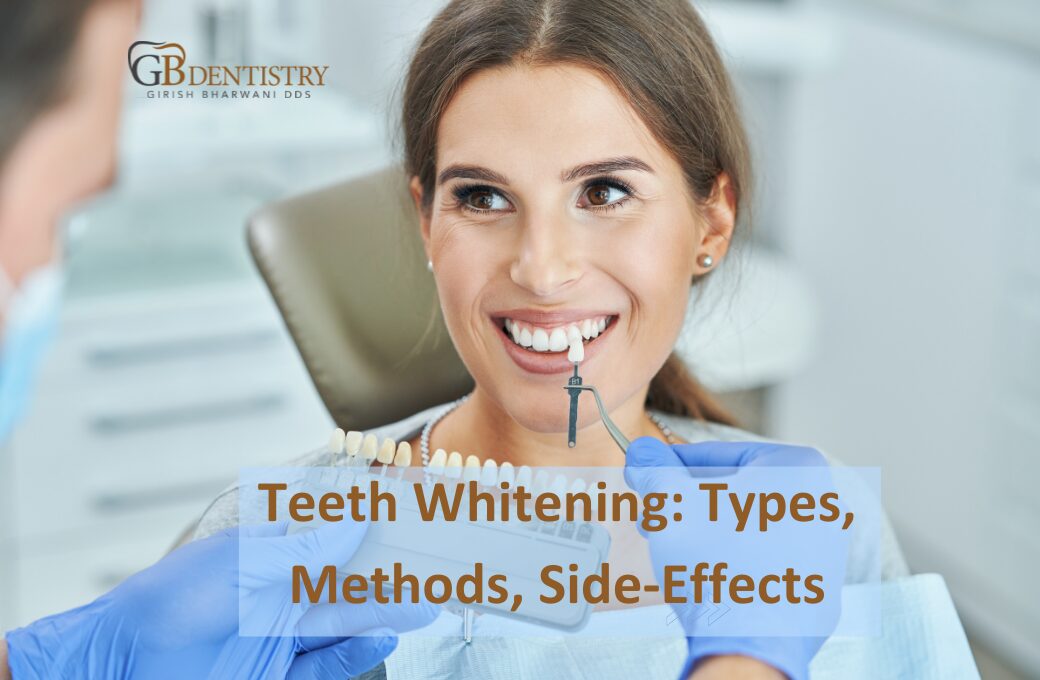
Teeth Whitening: Types, Methods, Side-Effects

Imagine you walk into a room and light it up with your smile. In the busy social world, there is nothing better than a bright white smile which will not only improve your looks but also boost your confidence and open doors in your personal and business dealings. This promises that teeth whitening is one of the most wanted cosmetic dental procedures and has this transformational effect.

If you are getting ready for a special occasion or if you just want to brighten your everyday smile, learning about the different types of teeth whitening treatments can help you get on the road to that much-desired glow.

We take you into the dazzling world of teeth whitening, ready to show you how easy it can be to brighten your smile safely and effectively. Let’s get back to basics on teeth whitening, including its advantages, the processes involved and what you need to know to make a sensible choice.

What is Teeth Whitening?

Imagine teeth whitening as a face-lift for your teeth, a way to freshen up your smile and make it look younger. Whitening teeth is a cosmetic procedure that helps to remove stains and lighten the color of teeth, making them appear brighter and whiter.

Teeth whitening is more than just a cosmetic thing. It is a scientifically proven procedure for the elimination of stains caused by food, lifestyle choices and the natural aging process, and improves the appearance of your teeth. However, it doesn’t change the natural structure of the teeth or require invasive treatment. It does have whitening agents that penetrate the enamel to remove staining and improve the overall color of the teeth.

Let’s go deeper into how well this actually works, who benefits most from teeth whitening, and what kinds of stains this procedure can treat.

Girish Bharwani - GB Dentistry in Memorial
Let’s Take Care of Your Smile

Tell us about your smile goals, and let’s find the care that fits you.

Does Teeth Whitening Really Work?

Teeth whitening is well known to be effective with many leaving with dramatically whiter smiles after a range of treatments. But how good is it? It all depends on the kind of stain, and what whitening method you chose.

Take Julia, for instance. She’s a property agent from Memorial who had her teeth whitened and feels a lot more confident. Julia’s smile looked better, but she also felt her self-confidence boosted at work and in social situations after the professional whitening. Mark is a public speaker and found that whitening his teeth made him look more polished and professional. It made a dramatic difference in his public presentations.

All of these are examples that show teeth whitening is more than simply looking good, it’s an investment in your personal and professional image. In the next section, we’ll look at who this revolutionary treatment would be best for

Who Can Benefit from Teeth Whitening?

Everybody can benefit from whitening their teeth. It is a cosmetic treatment with multiple uses. How much good it does you depends on the health of your teeth and your lifestyle habits. Now, let’s see who benefits the most from this procedure:

Most Beneficial

  • Yellow Toned People: People with naturally yellow teeth tend to see the most dramatic results from whitening treatments. That’s because bleach works best on yellow stains
  • Discoloration with Age: Teeth can become darker or yellow over time. These natural changes make these people great candidates for teeth whitening, which can successfully take years off their smile.
  • Regular coffee, tea and wine drinkers – Obvious culprits that can cause staining if you drink on a regular basis. Teeth whitening will remove these stains and restore the natural whiteness of your teeth.

Moderately Beneficial

  • Smokers: Heavy staining occurs over time due to smoking. Smoking stains teeth and whitening can improve their appearance, but not as dramatically as with other stains. If you continue to smoke, your teeth will quickly become stained again.
  • Mild Fluorosis – Mild fluorosis (white streaks or spots on teeth due to excess fluoride) may sometimes be improved, but results vary.

Not Recommended


  • Severe Fluorosis or Tetracycline Stains These stains are intrinsic to the teeth and are not easily removed with regular whitening methods.
  • Sensitive Teeth, Eroded Enamel or Gum Disease: Patients who have sensitive teeth, eroded enamel or active gum disease should avoid whitening treatments as there is a potential for increased sensitivity and irritation.
  • Existing Restorations If you have any dental restorations (crowns, veneers or fillings) then you should avoid whitening as these materials will not bleach and can give an uneven coloration of the smile.

This classification helps people in deciding easily whether teeth whitening can be a good option for them or not. It’s important to see a dental professional like Dr. Bharwani at GB Dentistry to see if you are eligible and find out what is the best way for you to go about your dental health and cosmetic goals.

What Types of Teeth Stains Can Teeth Whitening Fix?

It’s important to know what type of stain your teeth have when deciding the best teeth whitening method. There are two general types of tooth stain – intrinsic and extrinsic. Different types of teeth will react differently to whitening treatments and this will affect the results you get from your whitening process.

Extrinsic Stains:

  • Surface Stains – These are the stains that appear on the outer surface of the tooth enamel. Coffee, tea, wine, colas and tobacco are common causes. Extrinsic stains are usually easier to remove and respond well to professional cleanings and home whitening products that contain bleaching agents such as hydrogen peroxide or carbamide peroxide.
  • Dietary Habits: Surface staining may be caused by highly pigmented foods such as sauces or berries In general, routine cleaning and whitening procedures minimize these stains well.

Intrinsic Stains:

  • Deep Stains: These stains sink deeper into the tooth enamel, making them more difficult to treat. Certain medications, childhood illness or excess fluoride intake when the teeth are still developing can cause intrinsic stains.
  • Aging As you age, the enamel on your teeth starts to thin, exposing the yellow dentin underneath. If the stains are intrinsic (for example, caused by aging), then stronger whitening solutions might be necessary, including professional bleaching procedures that can penetrate deeper down into the enamel.

Special Cases:

  • Tetracycline They are dark, deep stains. They are caused by taking tetracycline antibiotics during the development of the teeth. They are notoriously difficult to whiten. Often it is necessary to have more than one professional treatment or other cosmetic procedures such as veneers.
  • Fluorosis: Caused by excess fluoride, it results in white or brown flecks on teeth. Mild cases may be treated with bleaching, but deeper stains may require more invasive procedures.

Before you consider teeth whitening, it’s important to have a dental professional evaluate the type of staining. At GB Dentistry, our experts can help determine what kind of stains you have, and recommend the best way to whiten them so you can achieve the best possible results, without compromising the health and integrity of your teeth.

Girish Bharwani - GB Dentistry in Memorial
Let’s Take Care of Your Smile

Tell us about your smile goals, and let’s find the care that fits you.

What Are My Options for Teeth Whitening?

If you are looking to brighten your smile, there are many teeth whitening options available. Each option has its own benefits and considerations. At GB Dentistry we provide a wide range of treatments to suit a variety of needs, preferences and budgets. Here’s a complete rundown of the teeth whitening options available to you:

Method Duration Effectiveness Best For
Professional In-Office Whitening 1 hour High Immediate results, professional oversight
At-Home Whitening Kits (Dentist) Several weeks Moderate to high Gradual whitening, professional guidance
Over-the-Counter Products Varies Low to moderate Minor improvements, maintenance
Alternative Methods Ongoing Variable Natural preferences, supplementary care

Professional In-Office Whitening:

  • Fast Results – Dentist quality high concentration peroxide gel. The process takes about an hour and can lighten teeth a few shades in a single visit.
  • Safety and Accuracy: Professionals do the work and this protects the gums from the effects of bleaching agent thus optimizing safety and reducing sensitivity.

At-Home Whitening Kits Provided by a Dentist:

  • Custom-Fit Trays: You will receive a tray that is specifically designed to fit the precise contours of your teeth, ensuring even distribution of the whitening product.
  • Results Over Time: These kits are not as fast as the treatments done at the dentist, but you can see visible results in a few weeks. This gives you a gradual, measured whitening experience.

Over-the-Counter Whitening Products:

  • Accessibility & Convenience: Products such as whitening strips, toothpastes and rinses are readily available and can be used at home without professional supervision.
  • Variable Results: OTC products have lower concentrations of whitening agents and are therefore less powerful than professional products. Results are often fairly variable and are more subtle.

Alternative Whitening Methods:


  • Whitening toothpastes and rinses. These products contain mild abrasives and chemicals that scrub away surface stains. They work best as a preventative or to keep your brightness up after a professional whitening treatment.
  • Natural Treatment: Oil pulling or baking soda are some natural remedies that some prefer. These can be effective for surface stains but not very effective in changing the overall color of the teeth.

What Are the Side Effects of Teeth Whitening Types?

Teeth whitening is safe when done properly, but it’s good to learn about the potential side effects. Although these side effects tend to be mild and temporary, awareness can help you better manage them and make informed decisions about your teeth whitening treatments.

Common Side Effects:

  • Tooth sensitivity: This is one of the most common side effects of teeth whitening. Temporary sensitivity to hot and cold may occur from bleaching agents (especially hydrogen peroxide). Usually, this sensitivity goes away within a few days after your treatment is over.
  • Gum Irritation: This is also called gingival irritation and happens when the whitening gel comes in contact with your gum tissue. The professional applications do take care of the gums so this risk is minimized, but you may still experience some sensitivity, especially with the home kits.

Managing Side Effects:

  • Sensitive Teeth. If you have sensitive teeth, use a toothpaste that is made for sensitive teeth. The toothpastes include compounds that help block the transmission of pain signals from the tooth surface to the nerve. Also, lowering the number of whitening treatments or using a lower concentration of whitening agent can help reduce sensitivity.
  • Gum irritation. If you are using an at-home kit, make sure to get a whitening tray that fits properly to minimize gum irritation. Whitening products may leak from poorly fitted trays onto the gums. If your gums are inflamed, rinse with salt water to help ease the tenderness.

Rare Side Effects:

  • Enamel Damage Whitening products used too often or with very high concentrations can damage the enamel. Hence, it is important to follow the recommended length and frequency of the treatment as suggested by the dental professionals.
  • White, unlevel. Fillings, crowns or veneers will not lighten like your natural teeth – this can cause uneven whitening. This can result in a splotchy color that may require further cosmetic work to fix.

A Note on Over-the-Counter Products:

Follow directions on over-the-counter whitening products. Taking more than the recommended dose increases the chance of side effects. Severe pain or long-term side effects should be discussed with a dental professional.

At GB Dentistry, we’ll take the time to evaluate your dental health before suggesting a teeth whitening regimen. We want to make sure you get what you want with the least possible pain and risk. With the help of the professionals and the products approved by dental health organizations you can get a whiter smile and maintain your gums and teeth healthy.

Girish Bharwani - GB Dentistry in Memorial
Ready to Feel Good About Your Smile?

Let’s talk about your concerns and create a care plan that fits you.

A Note from Dr. Bharwani

As a final note, a brighter smile is a great esthetic goal but your health of your teeth and gums should always be your top priority. Here at GB Dentistry, we believe in teeth whitening that is customized for you, delivers great results and puts your dental health first.

  • Custom Consultations: I suggest a full consultation before you make a decision on your teeth whitening solution. In this appointment we will discuss your general dental health, discuss any previous dental work you may have had and discuss your esthetic goals. This allows us to create a treatment plan that is safe and effective, with no unnecessary risks and a focus on your oral health for the long-term.
  • Eco-friendly Methods: Teeth whitening is not a one-time fix. To maintain your results, be sure to keep up with good oral hygiene habits like brushing and flossing regularly, and avoid foods and drinks that stain your teeth. Depending on the initial method used and your personal habits, we also recommend routine touch up treatments.
  • Education Commitment We are committed to educate our patients on all things dental health. We want to make sure you understand the procedures you select, any maintenance that might be needed and how they fit into a larger scope of oral health care. Our team is always here to help you and answer your questions.
  • We’d love to talk to you about this more. If teeth whitening is something you are interested in, or if you have any inquiries about your dental health, please do not hesitate to contact us at GB Dentistry. Our goal isn’t just a whiter smile. It’s a healthier smile.” Schedule your consultation today and let us help you achieve a confident, glowing smile that will light up any room you walk into.

Thanks for trusting us with your dental care. We look forward to serving you and helping you maintain a beautiful healthy smile for years to come. We are on Instagram too, and you can Like our page on Facebook.

Author
Dr. Girish Bharwani

Dr. Girish Bharwani is the founder of GB Dentistry and an experienced general and cosmetic dentist dedicated to providing patient-focused dental care. He shares expert insights on preventive, restorative, and cosmetic dentistry to help patients make informed decisions and maintain lifelong oral health.

Save Time and Summarize with AI
Call Us Now - GB Dentistry

Call Us Now

FAQs - Teeth Whitening in Memorial, Houston

The fastest and most dramatic way to whiten teeth is in-office professional whitening. At GB Dentistry we offer bespoke whitening treatments to help you achieve a brighter smile in a safe and effective way.

There are three popular types: office bleaching, home bleaching kits and over-the-counter products. For best results and safety, GB Dentistry recommends professional choices.

In-office whitening is the safest, done under the supervision of a dentist. GB Dentistry makes your treatment comfortable and with minimum risk.

The price can range anywhere from $200-$1,000 depending on the method. GB Dentistry has affordable whitening to keep your smile shining.

The best results will come from combining in-office treatments with routine maintenance. At GB Dentistry, we create custom whitening plans that provide long-lasting brilliance.

Today, laser teeth whitening is the most modern method that guaranties fast and effective results. GB Dentistry keeps up-to-date with the latest dental technology and offers the latest treatments.

There is no whitening that is 100% permanent, but you can achieve long lasting results with professional treatments and good oral hygiene. GB Dentistry keeps your smile bright for years to come.

Related Blogs

Can an Apnea Mouth Guard Help With Sleep Apnea?

Learn how an apnea mouth guard may help sleep apnea, who may qualify, how it compares with CPAP, and what to expect at GB Dentistry in Memorial, Texas.
Read More

Swollen Gum Between Teeth: Causes, Symptoms & Treatment

Learn what causes a swollen gum between teeth, home relief, warning signs, braces concerns, and when to see GB Dentistry in Memorial, Texas for treatment.

Read More

Composite Bonding vs Veneers: Which Is Right for You?

Compare composite bonding vs veneers for chips, gaps, and discoloration, including prep, durability, maintenance, cost, and options at GB Dentistry in Memorial.

Read More
Back To Top
Request an Appointment