Are Bruxism Treatments Right for Your Teeth Grinding?
Learn how bruxism treatments may protect teeth, ease jaw strain, and manage grinding, with mouth guard and care options at GB Dentistry in Memorial, Texas.
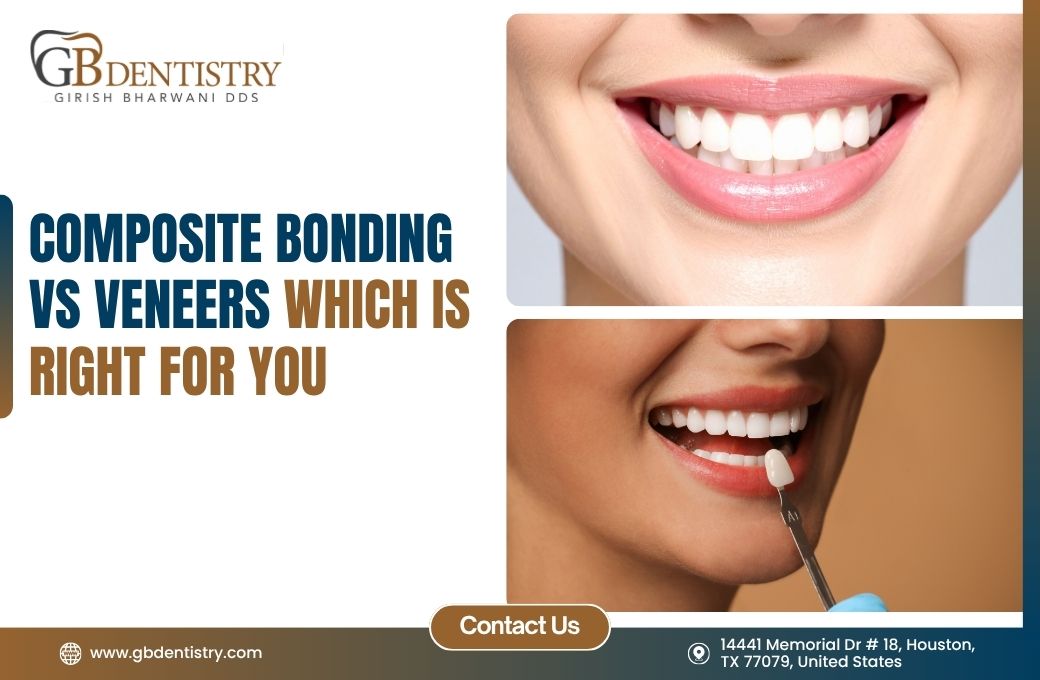
Composite bonding vs veneers can be a difficult choice when you want to improve a chipped, discolored, uneven, or slightly misshapen tooth without committing to the wrong treatment.
The right option depends on your tooth structure, cosmetic goals, bite, oral health, budget, and how much maintenance you are comfortable managing.
At GB Dentistry, we help patients in Memorial, Texas, and nearby communities compare cosmetic dental bonding and porcelain dental veneers in practical terms.
This guide explains how each treatment works, what it can and cannot correct, how dental bonding for a broken tooth differs from a veneer, and what to discuss with Dr. Bharwani before deciding.
Composite bonding and veneers can both improve the appearance of teeth, but they are not interchangeable treatments. The materials, preparation, repair options, expected maintenance, and suitability for different dental problems vary.
Understanding those differences makes a consultation more productive and helps prevent choosing a treatment based only on photographs or an advertised price.
Composite dental bonding uses a tooth-colored resin that is carefully shaped and attached to the tooth.
The dentists at GB Dentistry may use bonding to address small chips, minor gaps, worn edges, slight shape concerns, or discoloration that can be improved without covering the entire visible surface of the tooth.
The resin is placed directly on the tooth and sculpted to blend with the surrounding enamel. Dr. Bharwani then adjusts the shape and bite before the material is hardened and polished.
Because the material is applied directly, cosmetic bonding can often be more conservative than a restoration that requires removing more natural tooth structure.
The amount of preparation depends on the condition of the tooth and the desired result. For composite bonding vs veneers, the amount of change you want can influence the recommendation.
Bonding is especially useful when the change needed is limited. For example, a small chip on an otherwise healthy front tooth may not require a full-coverage cosmetic treatment.
Bonding can also be considered when a patient wants to make a modest change or prefers a treatment that can usually be repaired or modified more easily than porcelain. A personalized composite bonding vs veneers discussion can clarify which tradeoffs matter most to you.
Porcelain dental veneers are thin, custom-made shells designed to cover the front surfaces of selected teeth. They are bonded to prepared tooth surfaces after the shape, shade, fit, and overall smile design have been evaluated.
Veneers may be considered for more extensive cosmetic concerns, such as persistent discoloration, multiple uneven teeth, visible wear, or shape changes that bonding may not address as predictably.
Veneers require careful planning. The dentists at GB Dentistry must evaluate enamel, gum health, the bite, tooth position, existing restorations, and habits such as clenching or nail biting.
Some enamel preparation may be needed, and the treatment is generally considered irreversible because the teeth may not return to their original condition after preparation.
Porcelain can provide a different optical appearance from composite resin, but it is not indestructible. Veneers can chip, fracture, or become affected by an unhealthy bite or excessive force.
They also do not prevent decay or gum disease around the treated teeth. Good home care and regular dental visits remain important. The choice between composite bonding vs veneers should reflect the tooth, bite, and cosmetic goal.
The better option is usually the one that matches the actual dental problem, not simply the treatment that looks most appealing in a social media image.
A conservative repair for one tooth may call for a different approach than a coordinated change involving several teeth. Your goals, the condition of your teeth, and the way your teeth function all matter.
Composite bonding may be worth discussing when you have a small or moderate cosmetic concern and enough healthy tooth structure to support the resin. Common situations include:
Dental bonding for a broken tooth can be appropriate when the break is limited and the tooth remains structurally sound. However, not every broken tooth should be repaired with cosmetic bonding.
A crack that extends deeper into the tooth, pain when biting, sensitivity, extensive loss of structure, or signs of infection may require a different restorative plan. GB Dentistry evaluates composite bonding vs veneers in the context of your overall oral health.
Bonding may also be useful for a patient who wants to test a modest cosmetic change before considering a more involved treatment.
That does not mean bonding is a trial version of veneers in every situation. The two materials behave differently, and the final recommendation should be based on the tooth and the planned result.
Porcelain veneers may be considered when several visible teeth need coordinated changes or when the concern involves color, shape, and proportion across a broader area.
They may be discussed for teeth with discoloration that cannot be predictably improved through whitening, uneven contours, or cosmetic concerns that would require a large amount of composite resin.
Veneers are not automatically appropriate for every smile. Untreated cavities, gum inflammation, inadequate enamel, significant tooth grinding, and an unstable bite can affect candidacy.
In some cases, the first step is to improve oral health or address function before cosmetic treatment is planned. When comparing composite bonding vs veneers, this difference can affect treatment planning and maintenance.
A useful way to think about the comparison is this: bonding adds and shapes material directly on the tooth, while a veneer creates a custom outer surface intended to change the tooth’s visible appearance more comprehensively.
Neither approach should be selected without evaluating how the teeth meet and how much force they experience during daily use. Cost should be considered alongside longevity and maintenance when comparing composite bonding vs veneers.
Cosmetic dentistry treatment should not hide an untreated dental problem. Active decay, gum disease, unexplained sensitivity, or a damaged tooth may need attention before bonding or veneers are considered.
Placing cosmetic material over an unhealthy foundation can complicate future care and may not address the source of discomfort. GB Dentistry evaluates composite bonding vs veneers in the context of your overall oral health.
During an evaluation, Dr. Bharwani may consider the teeth, gums, bite, existing fillings, tooth wear, habits, and the appearance you want to achieve. Photos or digital planning may be useful in some cases, but they do not replace an in-person assessment.
A treatment that looks suitable in a photograph may be inappropriate if the tooth has a crack, insufficient support, or a bite-related concern. Your existing enamel and restorations can also shape a composite bonding vs veneers plan.
Tell us about your smile goals, and let’s find the care that fits you.
Knowing what the process involves can help you compare cosmetic dental bonding vs veneers beyond the final appearance. The number of visits, amount of preparation, ability to make changes, and type of follow-up may differ.
A careful process also reduces the risk of making a cosmetic decision before important functional questions have been answered. A personalized composite bonding vs veneers discussion can clarify which tradeoffs matter most to you.
Composite bonding commonly begins with an examination and a conversation about the specific change you want. The dentists at GB Dentistry assess the tooth’s shade, shape, position, bite, and surrounding teeth.
If the tooth is broken, the evaluation also focuses on whether the damage is limited to the visible edge or extends into the tooth. For composite bonding vs veneers, the amount of change you want can influence the recommendation.
The tooth may be cleaned and prepared so the composite resin can adhere properly. The material is then layered, shaped, hardened, adjusted, and polished.
Dr. Bharwani pays attention to the transition between the resin and natural enamel, the contact with neighboring teeth, and whether the repaired edge interferes with your bite. For composite bonding vs veneers, the amount of change you want can influence the recommendation.
One practical advantage of direct bonding is that the shape can be sculpted during the appointment.
That can be helpful for a small repair, but it also means the final result depends heavily on careful shade selection, artistic shaping, moisture control, and the amount of healthy tooth available. Treatment goals matter when weighing composite bonding vs veneers for your smile.
Veneer treatment generally involves more planning because the shells are custom-made before final placement. The dentists at GB Dentistry evaluate the desired shade and shape alongside your facial proportions, smile line, gum display, tooth position, and bite.
If several teeth are involved, consistency from one tooth to the next becomes especially important. A personalized composite bonding vs veneers discussion can clarify which tradeoffs matter most to you.
Preparation may involve removing a limited amount of enamel, although the amount varies by tooth position, alignment, and the planned design. Impressions or digital records may be taken so the laboratory can create the veneers.
Temporary protection may be used during the period between preparation and final placement, depending on the treatment plan. Your existing enamel and restorations can also shape a composite bonding vs veneers plan.
At the placement visit, the fit and appearance are evaluated before the veneers are bonded. This is an important point in the process: a veneer should not be permanently attached until the shape, shade, contacts, and bite have been reviewed carefully.
Patients should ask what changes can still be made at each stage. Cost should be considered alongside longevity and maintenance when comparing composite bonding vs veneers.
A useful consultation is not only about asking whether bonding or veneers are available. It should clarify why one approach may be safer or more suitable for your teeth. Consider asking:
At GB Dentistry, patients can discuss these considerations with Dr. Bharwani or the dentists at GB Dentistry before making a treatment decision.
The goal is a plan that fits the health and function of your teeth, not simply a quick cosmetic change. GB Dentistry evaluates composite bonding vs veneers in the context of your overall oral health.

Patients often compare composite bonding vs veneers by asking which lasts longer or costs less.
Those questions are understandable, but the answer depends on the number of teeth, the extent of the repair, the material selected, the condition of the teeth, the bite, and the care provided over time.
Exact fees and treatment details must be determined after an examination and personalized plan.
Composite resin can be more susceptible to surface staining and wear than porcelain, particularly around the margins or on teeth exposed to frequent coffee, tea, red wine, tobacco, or strongly colored foods.
The degree of staining varies, and polishing or repair may sometimes be discussed if the material becomes rough, chipped, or discolored. Cost should be considered alongside longevity and maintenance when comparing composite bonding vs veneers.
Porcelain is generally resistant to many types of surface staining, but the natural tooth and the bonding margins still require care.
Gum recession, decay, or changes in neighboring teeth can affect the overall appearance even if the porcelain itself remains unchanged. Veneers also need protection from excessive force. When comparing composite bonding vs veneers, this difference can affect treatment planning and maintenance.
For both treatments, brush with a soft-bristled toothbrush, clean between the teeth, and attend recommended dental visits. Avoid using treated teeth to open packages or bite hard objects.
If you clench or grind, ask Dr. Bharwani whether a protective appliance or another strategy should be considered. When comparing composite bonding vs veneers, this difference can affect treatment planning and maintenance.
One reason some patients prefer bonding is that a small chip may be repairable without replacing an entire shell. Composite can also be adjusted in some situations.
However, repeated repairs may change the shade or contour, and a repair is not always possible if the underlying tooth has developed a deeper problem. The choice between composite bonding vs veneers should reflect the tooth, bite, and cosmetic goal.
Veneers can sometimes be repaired in limited circumstances, but a damaged veneer may need to be replaced. Replacement can involve additional planning, especially if the tooth has lost more structure or the surrounding teeth have changed.
Veneers should therefore be viewed as a long-term restorative commitment rather than a temporary coating. Durability is only one factor in a composite bonding vs veneers decision.
Neither treatment should be described as permanent. Natural teeth continue to age, gums can change, habits can affect restorations, and materials can eventually require maintenance.
Asking about future repair and replacement before treatment helps you evaluate the total commitment more realistically. Durability is only one factor in a composite bonding vs veneers decision.
The initial cost of composite bonding may be lower than porcelain veneers in some treatment plans, especially when only one tooth needs a small repair.
Veneers may involve laboratory fabrication, multiple appointments, and a larger cosmetic design, which can affect the overall fee. These are general considerations, not a quote. Appearance, tooth preparation, and repair needs also matter when comparing composite bonding vs veneers.
The lowest initial cost may not be the lowest long-term cost if the treatment is poorly matched to the bite or the condition of the tooth. Conversely, porcelain may be more treatment than you need for a limited chip.
Ask for a written explanation of what is included, how many teeth are being treated, what follow-up may be needed, and what future maintenance could involve.
Insurance coverage also varies because cosmetic procedures and medically necessary repairs may be handled differently. Durability is only one factor in a composite bonding vs veneers decision.

Let’s talk about your concerns and create a care plan that fits you.
The decision becomes clearer when you separate your priorities instead of trying to identify one universally better treatment. Consider the condition of the tooth first, then the scope of the cosmetic change, followed by preparation, maintenance, and future repair.
This approach keeps the decision grounded in your needs. Treatment goals matter when weighing composite bonding vs veneers for your smile.
For a small chip, minor gap, or limited shape concern, composite bonding may provide a reasonable conservative option. For several teeth with significant color or shape concerns, porcelain veneers may offer a more coordinated approach.
These are starting points for discussion, not automatic treatment rules. Your existing enamel and restorations can also shape a composite bonding vs veneers plan.
If a tooth is painful, loose, badly broken, or sensitive after an injury, cosmetic appearance should not be the first consideration.
Contact GB Dentistry for an evaluation so Dr. Bharwani or the dentists at GB Dentistry can determine whether the tooth needs urgent restorative care or another type of treatment. When comparing composite bonding vs veneers, this difference can affect treatment planning and maintenance.
A person who frequently bites hard foods, chews ice, clenches, or grinds may need to address those forces before choosing either treatment. The material cannot compensate for every damaging habit.
Similarly, if you expect a major change in tooth position or smile color, a limited bonding repair may not meet your expectations. Appearance, tooth preparation, and repair needs also matter when comparing composite bonding vs veneers.
Be specific about what you want to change. Do you want one tooth to blend into the smile, or do you want several teeth to look more uniform?
Are you comfortable with possible polishing or repair, or do you prefer a laboratory-made surface with a different maintenance profile? Clear answers help the treatment plan stay realistic. Appearance, tooth preparation, and repair needs also matter when comparing composite bonding vs veneers.
Before scheduling cosmetic treatment, review these four questions with Dr. Bharwani:
There may be more than one clinically reasonable path. In some cases, no cosmetic treatment is needed immediately. In others, whitening, orthodontic evaluation, restorative care, or gum treatment may affect the final recommendation. A careful comparison should include those possibilities when relevant.
Patients searching for dental bonding near me in Memorial or nearby areas can use a consultation at GB Dentistry to discuss whether composite bonding is appropriate for their specific concern.
Bring questions, describe the result you hope to achieve, and share any history of tooth injury, sensitivity, grinding, or previous cosmetic work. Those details can change the recommendation. Treatment goals matter when weighing composite bonding vs veneers for your smile.
The next step is an evaluation rather than choosing a material online. Dr. Bharwani can examine the teeth and gums, assess the bite, discuss your goals, and explain the benefits and limitations of the available options.
If you are considering cosmetic dental bonding or porcelain dental veneers, ask how each option would affect tooth structure, appearance, maintenance, and future care.
The best decision is one you understand before treatment begins. A thoughtful plan should explain what the treatment is intended to change, what it cannot change, and what you can reasonably expect from caring for your teeth afterward.
When patients ask me about composite bonding vs veneers, I encourage them to look beyond the material and focus first on the health, structure, and function of the teeth involved. A small chip and a multi-tooth cosmetic concern may require very different solutions.
My recommendation is to have the concern evaluated before choosing a treatment based on cost, photographs, or a comparison chart.
At GB Dentistry, we can discuss composite dental bonding, porcelain dental veneers, and other relevant options in the context of your oral health and goals. The right next step is a careful conversation that leaves you informed about preparation, maintenance, possible repairs, and future care.


Composite bonding uses tooth-colored resin shaped directly on the tooth, while veneers are custom-made shells placed over the front surface. Bonding is often more conservative; veneers may address broader cosmetic changes.
It depends on the size and depth of the break. Limited damage may be repairable with bonding, while a severely weakened or cracked tooth may need another restoration. Dr. Bharwani must evaluate the tooth first.
The service life varies with bite forces, habits, tooth location, oral hygiene, and maintenance. Bonding can chip or stain and may need polishing or repair over time, so outcomes differ between individuals. The choice between composite bonding vs veneers should reflect the tooth, bite, and cosmetic goal.
Veneer preparation varies by tooth position, alignment, enamel thickness, and the planned design. Some enamel may need to be removed, so Dr. Bharwani should explain the preparation and long-term commitment beforehand.
Bonding may close some small gaps by adding and shaping composite resin. Larger spaces or gaps caused by tooth position, gum changes, or bite concerns may require a different evaluation and treatment approach.
Bonding is often more conservative than veneers, but reversibility depends on preparation, the original tooth condition, and how the material was placed. Ask the dentists at GB Dentistry how your proposed treatment would affect enamel.
Fees vary by the number of teeth, complexity, material, laboratory work, and the care required first. GB Dentistry can provide treatment-specific financial information after evaluating your teeth and discussing the proposed plan.
Patients in Memorial and nearby communities can contact GB Dentistry to discuss cosmetic bonding. An evaluation with Dr. Bharwani or the dentists at GB Dentistry can determine whether bonding fits your needs.