How a Teeth Grinding Mouth Guard Protects Your Teeth
Learn how a teeth grinding mouth guard protects enamel and dental work, compare guard options, and know when to seek care at GB Dentistry in Memorial, Texas.
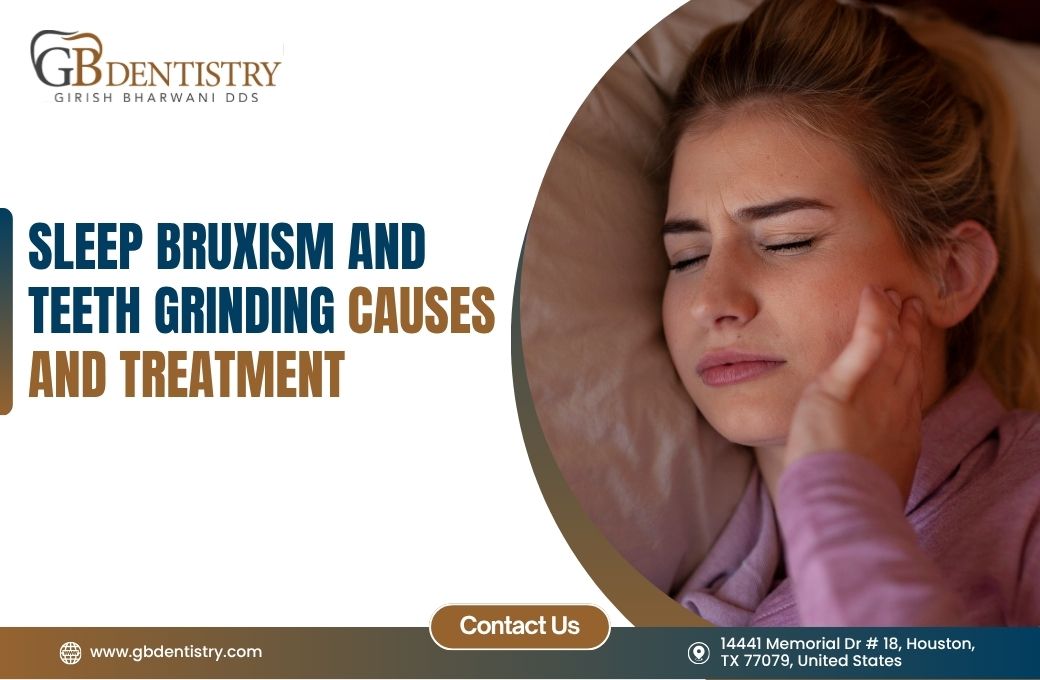
Sleep bruxism can leave you with a sore jaw, sensitive teeth, morning headaches, or a partner who hears grinding teeth in sleep. Because the grinding happens while you are unconscious, it can be difficult to recognize until symptoms begin affecting your comfort or dental health.
The right response depends on what is driving the problem and whether another condition, such as sleep-disordered breathing, may be involved.
This guide explains common causes, warning signs, evaluation, treatment options, and when to discuss Bruxism Relief in Memorial with Dr. Bharwani or the dentists at GB Dentistry.
Sleep bruxism is a sleep-related movement in which you clench or grind your teeth during sleep. It may occur briefly and occasionally, or it may happen often enough to place repeated stress on the teeth, jaw muscles, and temporomandibular joints.
The sound of grinding is not the only concern; sustained clenching can create pressure even when no noise is present.
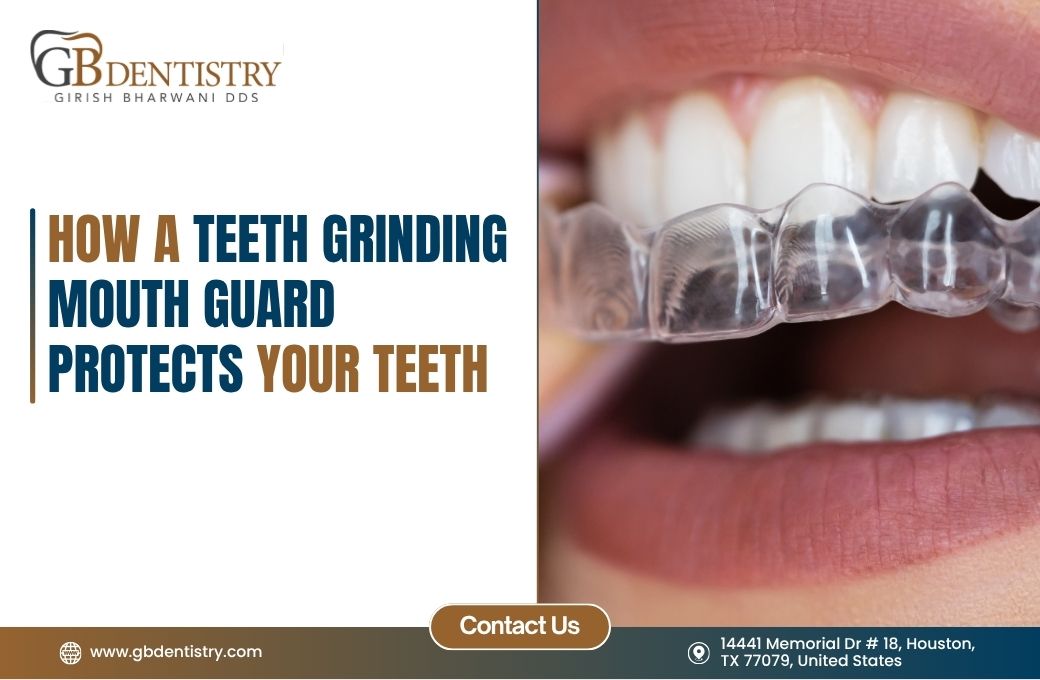
Many people notice symptoms before they realize they grind their teeth. You may wake with tightness in the cheeks or temples, jaw fatigue, or a feeling that your bite is not settling normally. A bruxism mouth guard can help protect your teeth from direct grinding and reduce the pressure placed on the teeth and jaw during sleep.
Some people also experience tooth sensitivity, chipped edges, worn chewing surfaces, facial tenderness, or discomfort when chewing.
Morning headaches do not prove that sleep bruxism is the cause, but headaches near the temples or forehead can occur when the jaw muscles remain active overnight.
Ear-area discomfort may also be related to the jaw, although ear infections and other conditions can cause similar sensations.
A partner or family member may report clicking, clenching, or grinding sounds. However, quiet clenching is common, so the absence of noise does not rule out the condition. Wear patterns, muscle tenderness, and dental damage may provide more useful clues during an examination.
Teeth are built to handle normal chewing, but repeated force outside mealtimes can gradually change their surfaces.
Bruxism may contribute to small cracks, fractured fillings, chipped enamel, or increasing sensitivity. It can also overload the jaw muscles and joints, particularly when clenching occurs for long periods.
Not every worn tooth is caused by bruxism. Acid erosion, tooth-to-tooth contact from an uneven bite, aggressive brushing, and normal aging can create similar findings. That is why treatment should begin with identifying the likely source rather than automatically choosing a mouth guard.
If symptoms are mild and occasional, monitoring may be reasonable. If pain, tooth damage, restricted jaw movement, or frequent morning symptoms are developing, a timely evaluation can help prevent a small concern from becoming a more complicated treatment decision.
Sleep bruxism usually has more than one contributing factor. Stress may play a role, but it is not the only explanation, and telling someone simply to relax does not address every cause.
A useful evaluation considers sleep quality, medications, habits, dental findings, and jaw function together.
Emotional stress and anxiety can increase muscle activity in some people. The effect may continue into sleep, particularly after demanding days or during periods of poor rest. Understanding how bruxism treatment works can help address nighttime grinding by reducing strain on the teeth and jaw while supporting better sleep habits.
Concentrating, driving, working at a computer, or frequently holding the teeth together during the day can also reinforce a clenching habit.
Pay attention to daytime tooth contact. Teeth generally do not need to remain touching when you are resting. Keeping the lips gently together while allowing the teeth to separate can reduce unnecessary daytime loading, although this does not replace professional evaluation when symptoms persist.
Relaxation practices, regular physical activity, and a consistent wind-down routine may reduce overall tension.
They are supportive measures, not proof that stress is the sole cause or a guarantee that grinding will stop. Treatment for sleep bruxism should reflect both dental findings and possible contributing factors.
Interrupted sleep, snoring, gasping, and repeated awakenings can be relevant when someone grinds at night. Sleep-related breathing problems may alter arousal patterns and muscle activity. Bruxism does not diagnose sleep apnea, and not everyone with sleep apnea grinds; the two concerns simply can overlap.
Alcohol, nicotine, caffeine late in the day, and an inconsistent sleep schedule may affect sleep quality for some people.
Certain medications and medical conditions may also be associated with jaw clenching or movement during sleep. Do not stop or change prescribed medication without speaking with the prescribing clinician.
A bite that feels uncomfortable, a recent dental change, missing teeth, or a damaged restoration may affect how the jaw closes.
These factors do not automatically cause sleep bruxism, but they can influence symptoms and deserve consideration when discomfort begins after dental treatment or a change in the mouth.
At GB Dentistry, the dentists can consider tooth wear, cracks, sensitivity, muscle tenderness, jaw motion, and the timing of symptoms when discussing TMJ and Bruxism Relief in Memorial.
The goal is to distinguish active bruxism from other causes of tooth or jaw discomfort before recommending treatment.

There is no single home test that confirms sleep bruxism. Diagnosis typically combines your symptom history with an examination of the teeth, jaw muscles, joints, and bite. In selected situations, a sleep evaluation may be appropriate, especially when breathing-related symptoms are present.
Before an appointment, note when symptoms occur and what you notice in the morning.
Useful details include jaw soreness, headaches, tooth sensitivity, broken dental work, snoring, witnessed pauses in breathing, waking with a dry mouth, daytime sleepiness, and whether symptoms started after a medication or life change.
Also mention whether clenching occurs while awake. Daytime clenching and sleep bruxism can require different strategies, and treating one pattern may not resolve the other.
Dr. Bharwani or the dentists at GB Dentistry may examine areas such as:
These findings are interpreted in context. Tooth wear alone cannot establish when the wear occurred or whether grinding is currently active. A careful history helps prevent overdiagnosis and avoids treating an old finding as if it were an ongoing problem.
If you snore loudly, wake choking or gasping, experience witnessed breathing pauses, or remain unusually tired during the day, discuss those symptoms with a medical clinician or qualified sleep professional.
Sleep apnea can affect health beyond the teeth and jaw, so it should not be managed solely with a dental appliance or a self-selected product.
A sleep study may be performed at home or in a laboratory depending on the clinical situation. The appropriate test and interpretation come from the medical or sleep team.
Dental evaluation remains useful when jaw pain, tooth wear, or an oral appliance is being considered, but it does not replace sleep-medicine care.
Treatment is not always about making grinding disappear. In many cases, the practical goals are to protect the teeth, reduce harmful loading, improve comfort, and address contributing factors. The appropriate plan depends on symptoms, dental findings, jaw function, and any underlying sleep or medical concern.
An oral appliance may help separate the teeth and reduce direct tooth-to-tooth contact. It should be selected and adjusted carefully because a poorly fitting or inappropriate appliance can worsen discomfort, alter the bite, or make joint symptoms harder to interpret.
A night guard protects against some effects of grinding, but it does not necessarily address why the muscles are active. It also is not automatically a treatment for snoring or obstructive sleep apnea.
An appliance intended for sleep apnea has a different purpose and should be considered only after appropriate evaluation. Sleep bruxism should be evaluated alongside tooth wear, jaw symptoms, and sleep concerns.
If an appliance is recommended, follow-up matters. Changes in comfort, bite, jaw pain, tooth sensitivity, or the fit of the device should be reported rather than ignored. A cracked or heavily worn appliance may also need assessment.
For temporary jaw soreness, softer foods, avoiding gum chewing, and using heat or cold as directed may be helpful. Gentle jaw movement within a comfortable range can be preferable to forceful stretching.
Medication choices should account for your health history and other medicines; ask a qualified clinician or pharmacist when unsure. Sleep bruxism should be evaluated alongside tooth wear, jaw symptoms, and sleep concerns.
Physical therapy or guided jaw exercises may be considered for selected TMJ symptoms. The emphasis should be on controlled movement and muscle coordination, not aggressive attempts to force the jaw into a new position.
A regular sleep schedule, a calmer pre-bed routine, and reducing late-day stimulants may support better sleep. Daytime reminders can help you notice whether your teeth are touching unnecessarily. These steps are most useful when combined with an evaluation that clarifies what else may be contributing.
Avoid trying to permanently change your bite at home or using unverified devices that promise to stop bruxism. A quick online solution may overlook cracked teeth, joint inflammation, medication effects, or sleep apnea symptoms.
Persistent tooth damage may require restorative care, but repairing worn or broken teeth without addressing ongoing force can leave the underlying problem unresolved.
Likewise, jaw procedures or irreversible bite changes are not routine first steps for ordinary sleep bruxism and require careful diagnosis and discussion of risks.
At GB Dentistry, the dentists can help you understand whether protection, monitoring, symptom management, restorative care, or additional evaluation best fits your findings.
The safest plan is usually the one that matches the actual source and severity of the problem rather than the most aggressive option.
If sleep bruxism occurs alongside snoring, gasping, witnessed pauses in breathing, or significant daytime fatigue, sleep apnea deserves attention. The connection is not simple: grinding does not prove sleep apnea, and treating jaw symptoms does not substitute for diagnosing a breathing disorder.
Some people search for sleep apnea treatment without CPAP because of mask discomfort, travel concerns, noise, claustrophobia, or difficulty adapting to the device.
CPAP remains appropriate for many people, but treatment decisions depend on the type and severity of sleep apnea, anatomy, health history, and results of a sleep evaluation.
For selected adults with certain forms of obstructive sleep apnea, a physician-prescribed oral appliance may be considered.
It is different from a standard bruxism guard and should be coordinated with a qualified sleep clinician and a dental professional experienced in evaluating oral-appliance suitability. Follow-up testing may be needed to determine whether treatment is effective.
Other approaches may include positional strategies, weight-related care when clinically appropriate, treatment of nasal or airway issues, or surgery in selected cases.
These options are not interchangeable, and no single approach is suitable for everyone. Managing sleep bruxism may require more than one strategy over time.
When looking for sleep apnea treatment near me in Memorial, start with an evaluation rather than purchasing an over-the-counter device.
Ask who will confirm the diagnosis, how the treatment will be selected, what follow-up is expected, and how jaw symptoms or bite changes will be monitored.
GB Dentistry can be a useful place to discuss the dental and jaw aspects of nighttime clenching, including whether your symptoms warrant further evaluation.
Bring any sleep-study results, medication information, and observations from a sleeping partner. If breathing symptoms are present, make sure a qualified medical or sleep professional is included in the plan.
Seek prompt dental or medical guidance for a broken tooth, facial swelling, severe or rapidly worsening pain, inability to open or close the mouth, or breathing concerns. Jaw discomfort that repeatedly interrupts sleep or limits eating also deserves more than self-treatment.
A practical next step is to schedule an evaluation for sleep bruxism treatment in Memorial and describe the complete pattern: what happens during sleep, what you feel upon waking, and whether you have symptoms of disrupted breathing.
Dr. Bharwani can then help clarify which questions should be answered first.
Sleep bruxism is often manageable, but the right plan begins with understanding what your teeth, jaw, muscles, and sleep patterns are showing.
A night guard may be useful for protection in some situations, yet it should not be treated as a universal answer or as a substitute for evaluating possible sleep apnea.
If you wake with jaw soreness, notice repeated tooth damage, or hear grinding teeth in sleep, bring those details to GB Dentistry.
I can help you review the findings, discuss reasonable options, and determine whether additional sleep or medical evaluation belongs in your next step. The goal is a careful plan that protects your oral health while addressing the concerns that matter most to you.
Sleep bruxism is involuntary clenching or grinding during sleep. It may cause morning jaw soreness, headaches, tooth sensitivity, worn enamel, or damaged dental work, although some people have no obvious symptoms.
A sleeping partner may hear grinding, but quiet clenching is also common. Morning jaw fatigue, temple headaches, sensitive or chipped teeth, and flattened chewing surfaces can be clues that warrant evaluation.
Possible contributors include stress, poor sleep, daytime clenching, medications, alcohol or nicotine use, and sleep-related breathing problems. More than one factor may be involved, so an evaluation is important.
Treatment depends on the cause and findings. Options may include a properly selected oral appliance, habit and sleep-routine changes, symptom management, restorative care, or evaluation for sleep apnea. No single treatment fits everyone.
A night guard may protect teeth from direct contact and reduce some effects of grinding, but it may not stop muscle activity or address sleep apnea. Fit and follow-up are important, especially when jaw pain is present.
For selected people with certain forms of obstructive sleep apnea, alternatives such as a prescribed oral appliance may be considered. A sleep evaluation must guide the choice, and follow-up is needed to assess effectiveness.
Residents seeking sleep bruxism treatment in Memorial can discuss jaw pain, tooth wear, and protective options with Dr. Bharwani or the dentists at GB Dentistry. Breathing symptoms may also require sleep-medicine evaluation.
Consider an evaluation when grinding causes recurring jaw pain, headaches, tooth sensitivity, cracks, worn teeth, or damaged restorations. Seek prompt care for severe pain, swelling, limited jaw movement, or breathing concerns.